
SS304/SS316L; UPVC; CS/FRP housing; PP/PES/PVDF/PTFE; EPDM/FKM seals
Cartridge Security Filter – RO Guard & Micron Filtration
Stainless steel cartridge (security) filter housing for RO guard, ultrapure terminal and process water polishing: PP melt-blown, wound or pleated membrane cartridges, 0.1–100 μm, with differential-pressure monitoring, vent and drain.
A cartridge security filter is a closed pressure housing that holds replaceable cylindrical cartridges — PP melt-blown, wound or pleated membrane — which capture micron-scale particles, colloids and microorganisms so the outlet water meets the cleanliness required by the downstream process. It is the final particle guard before a high-pressure pump and membrane, the terminal polishing unit on an ultrapure or electronics loop, and a precision step for food, beverage and pharmaceutical process water. Rated accuracy is selectable across 0.1–100 μm.
LONGCOM supplies the housing, cartridge configuration, manifold and instrumentation as a single unit or a parallel multi-vessel skid. We size cartridge count, flux and material from the design flow, feed water and SDI target, and adapt the vessel to available space, connection standard and automation requirements. Final configuration follows the approved drawing.
Where the filter sits in the treatment train
The cartridge security filter is installed after pretreatment — multimedia or sand filtration, activated carbon, softening or ultrafiltration — and before the high-pressure pump, membrane or point of use. It is the last non-bypassable particle barrier, not the main clarification unit.
In an RO system it sits ahead of the high-pressure pump as the guard filter. It catches sand grains, carbon fines, resin fragments, pipe scale and colloids that survive pretreatment, protecting membrane sheets from scratching and the element channels from clogging; membrane makers generally require an inlet SDI15 below 5, and some systems target below 3. Breakthrough particles can come from media wear, carbon powdering, resin crushing, valve cycling and pipe corrosion, so the guard filter exists to absorb this intermittent particle load.
It must not be used to compensate for failed pretreatment. High-turbidity or high-SDI feed should first be carried by a sand/multimedia filter or coagulation clarification; pushing that load through fine cartridges sends the change-out cost out of control. The filter works as one stage in a chain: coarse, high-dirt-holding media upstream, fine disposable cartridges downstream, regenerable media before consumables.
| Method | Mechanism | Typical accuracy | Regeneration | Position in the chain |
|---|---|---|---|---|
| Sand / multimedia filter | Depth interception on granular media | Turbidity-rated, about 10–50 μm class | Backwashable, reusable | First-stage pretreatment, high solids load |
| Bag filter | Woven/needle felt bag retention | 1–1000 μm | Bag change, no backwash | Coarse-to-fine process liquid and reuse polishing |
| Ultrafiltration | Membrane pore straining | 0.01–0.1 μm class | Backwash + chemical cleaning | Deep pretreatment, stable SDI control |
| Cartridge security filter | Depth interception / membrane straining by cartridge | 0.1–100 μm | Cartridge change, no backwash | Membrane guard, terminal precision filtration |
Cartridge media and capture mechanism
Cartridge behavior is set by how the fiber or membrane is formed; the nominal micron number alone does not describe the capture curve. At the same rated 5 μm, a pleated membrane strains on a steep surface curve while a melt-blown PP cartridge traps particles through a gradual depth gradient, and the downstream particle count can differ by an order of magnitude.
| Cartridge type | Formation | Capture mechanism | Common lower bound | Typical duty |
|---|---|---|---|---|
| PP melt-blown | Melt-blown fibers laid as a 3-D gradient web | Depth interception and adsorption; graded porosity from outer to inner layer | 0.5 μm class | Pre-filter, RO guard, general industrial water |
| Wound (PP / cotton) | Fibre wound in layers over a perforated core | Groove settling plus gap straining; density controls accuracy | 1 μm class | Solids-bearing liquids, somewhat higher temperature |
| Pleated membrane | Pleated flat membrane on a core, with flow channels between pleats | Surface straining, narrow pore distribution, steep curve; 10 in area about 0.5–0.7 m² | 0.1 μm | Precision and terminal filtration, sterilizing-grade duty |
| High-flow pleated | Large diameter, high pleat count | Same surface straining; optimized flow path; 2.5–5 m² per cartridge | 0.5 μm class | High flow, low cartridge count |
| Metal sintered (SS / titanium) | Powder sintered at high temperature into a porous body | Surface straining through inter-particle pores; backwashable and chemically regenerable | 0.5 μm | High temperature, strong corrosion, reusable duty |
Surface straining vs depth capture. A surface strainer has a steep retention curve: particles above the pore are almost all held, particles below almost all pass, with a narrow transition band. A depth cartridge changes retention gradually: particles below the rated size are still partly captured, falling probability as size drops but not to zero; larger particles are mostly held though some can pass as surface pores open. The trade-off is consistent: membrane surface filtration gives a cleaner outlet but a smaller dirt-holding capacity, because solids collect on the face and quickly raise the pressure drop; depth cartridges hold solids through the thickness, so the pressure rise is gentler but the outlet is less predictable. A new membrane cartridge wins on outlet clarity; a depth cartridge wins on service life, and the two conclusions are not in conflict.
Nominal, absolute and β rating. A nominal rating states a retention level for a given particle size; it is not a guaranteed cut point and is typical of melt-blown and depth cartridges. An absolute rating corresponds to a verifiable pore size and a higher retention guarantee, associated with surface-straining membrane cartridges suitable for integrity testing. The β ratio is the upstream-to-downstream particle count at a given size; efficiency equals 1 − 1/β, for example β75 ≈ 98.7%, β100 = 99%, β1000 = 99.9% efficiency (one part in a thousand passes through).
The established multipass method for β is ISO 16889, modified by GB/T 18853 in China; it was developed for hydraulic cartridges on hydraulic oil under defined dust and contamination conditions. It is not a direct water-cartridge standard. Water viscosity is a fraction of oil, water contaminants often exist as flocs that shear apart, and disposable water cartridges are not typically tested to the hydraulic protocol. Treat any β quoted for a water cartridge as a reference figure for like-for-like comparison only, after the fluid, contamination and fabric are stated; do not convert it directly into a downstream particle count.
Micron range and downstream matching
The common accuracy series is 0.1, 0.2 / 0.22, 0.45, 0.65, 1, 3, 5, 10, 20, 30, 50, 60, 100 μm. Each band matches a class of downstream equipment; the useful question is not “as fine as possible” but “what happens if the accuracy is insufficient”.
| Protected equipment | Suggested accuracy | Basis | Consequence of under-rating |
|---|---|---|---|
| RO membrane | 1–5 μm | Membrane maker inlet particle requirement | Sheet scratching, channel clogging, pressure drop rise |
| UF membrane | 5–20 μm | Hollow-fiber bore and fiber break risk | Fibre channel blockage |
| Plate heat exchanger | 10–30 μm | Channel gap | Plate scaling, higher pressure drop |
| Precision nozzle | 1–5 μm | About one third of nozzle bore | Orifice wear, poor atomization |
| Sterilizing terminal | 0.22 μm | Bacteria retention test | Non-conforming filtrate |
A 1 μm cartridge does not reliably remove bacteria. Common bacteria have a short axis of about 0.5–1 μm, but a 1 μm nominal rating may retain only 80–90%, and bacteria deform and slip through pores with the flow. True sterilizing-grade retention needs a 0.22 μm membrane cartridge qualified by a bacteria retention test and integrity testing. Treating a 1 μm nominal cartridge as a bacteria barrier misreads a nominal rating as an absolute one, and creates a compliance risk in aseptic filling for food, beverage or pharmaceutical duty.
The cost of upgrading one accuracy step. Moving from 5 μm to 1 μm carries three costs at once: cartridge count, because the allowable flux of a 1 μm cartridge is roughly 60% of the 5 μm rating; pressure drop, because finer media have a cleaner-media resistance that raises pump head and running power; and change-out frequency, because finer cartridges hold less dirt and wear sooner. The combined cost is often more than twice the original arrangement. The upgrade pays off only when the target size band actually carries particles: a particle-count distribution showing under 20% below 5 μm makes a 1 μm choice close to worthless; over 60% justifies a review. A single inlet particle-count test costs far less than a year of unnecessary fine-cartridge consumables.
Housing, connections and instrumentation
| Parameter | Common options | Selection note |
|---|---|---|
| Housing material | SS304, SS316L, UPVC, rubber-lined carbon steel, FRP | Match corrosion and hygiene duty; water-contact compliance documentation is required for potable duty. |
| Design pressure | 0.6 / 1.0 / 1.6 MPa, higher on request | Above maximum working pressure with water-hammer margin; check transient and valve-closure surge. |
| Operating temperature | 5–60 °C for PP cartridges | Adjust to cartridge and seal material; high temperature or solvent duty needs a material review. |
| Cartridge interface | DOE double open end; SOE single open end, 222 / 226 | SOE snap-in is preferred for high-purity and integrity-test duty; confirm end-face seal and locking feedback. |
| Connections | Flange, tri-clamp, threaded; DN25–DN200 | Match the pipe standard; keep branch and cartridge-seat velocity in a sensible band. |
| Vent and drain | Top vent valve, bottom drain valve | Top point vents gas, bottom point drains liquid; the two ports must not be shared. |
| Instrumentation | Inlet/outlet pressure gauges, differential pressure transmitter | 0–0.3 MPa range common; 4–20 mA transmission when tied to PLC or SCADA. |
| Seals | EPDM, FKM, silicone O-rings | Check against CIP/SIP chemistry and sterilization temperature. |
For hygienic models, the inner wall is polished with crevice-free welding, clamp connections and a fully drainable design so no liquid stagnates in a dead leg. Inner surface roughness is typically Ra ≤ 0.8 μm, with 0.4 μm for higher-grade duty. For sterilizing-grade service, seal reliability at the cartridge seat and housing determines whether filtration is effective; this is why integrity testing is paired with the assembly.
Automation typically sets two alarm levels: level one prompts monitoring and cartridge planning; level two interlocks to derate or switch to a standby vessel. Transmitter taps are taken from straight runs away from elbows and valves, with vent and isolation valves on the impulse line to prevent gas or crystallization drift. Outdoor or low-temperature plant needs trace heating and drain-down to prevent housing and impulse-line freeze cracking.
Sizing: cartridge count and flux
Sizing fixes the accuracy, cartridge form and material, required cartridge count, vessel size and pressure rating so the unit reaches downstream cleanliness without a fast pressure rise or frequent changes. The working order is accuracy → material → flux → cartridge count → vessel → instrumentation.
Inputs to quantify. Rated and peak flow, continuous or intermittent duty; feed turbidity, SS and SDI15; viscosity, pH, temperature, oil or solvent content; downstream particle or microbial limit; available residual pressure and pump head; working pressure and surge; hygiene grade; CIP, SIP or hot-water disinfection; space, connection standard and skid option; and instrumentation or interlock requirements. Viscosity and SDI15 are the two most often missed: viscosity directly cuts per-cartridge flux, and feed that stays high in SDI puts the guard filter to work as a main treatment unit.
Cartridge count calculation.
- Set the design flow Q, separating rated and peak; size to peak where surge is clear, or add a buffer tank to flatten the peak.
- Read the allowable per-cartridge flux q from the manufacturer’s water-flux curve at the target accuracy, stated for clean water, temperature and initial pressure drop. A 10 in 5 μm PP melt-blown cartridge commonly takes about 0.4–0.8 m³/h; a 0.22 μm pleated membrane cartridge is noticeably lower. Do not borrow another brand’s curve.
- Correct q for viscosity; reduce further where solids are high, to control the pressure-rise rate.
- The theoretical count is N₀ = Q ÷ q; apply a safety factor K, N = N₀ × K, with K generally 1.15–1.30, higher where feed fluctuates, data are thin or shutdown is costly.
- Choose cartridge length and vessel from N. Where N is high, move to 20 / 30 / 40 in cartridges to cut count and seal points, or use a parallel multi-vessel skid; re-check internal velocity, connection size and initial pressure drop.
- Re-check the allowable pressure drop: clean initial drop plus expected terminal drop plus pipe friction must stay within available residual pressure. If head is short, add parallel cartridges or adjust pump head rather than forcing higher pump speed.
Worked example. A 12 m³/h pure-water system, fed after multimedia and carbon filtration, uses 10 in 5 μm PP melt-blown cartridges with q = 0.5 m³/h and K = 1.25: N = 12 ÷ 0.5 × 1.25 = 30 cartridges. If vertical space is tight, 40 in cartridges scale per length to about 8 cartridges, but this must be verified against the manufacturer’s long-cartridge curve and uniform water distribution, with the initial pressure drop kept within 0.03 MPa. A 40 in cartridge cannot simply be counted as four times the 10 in flux; drainage layer, core resistance and distribution matter.
Change-out criterion. On clean water at rated flow the initial pressure drop is about 0.01–0.03 MPa. Replace cartridges when the drop reaches 0.10–0.15 MPa, or 2–3 times the initial value, whichever applies. Sterilizing-grade cartridges are changed on a cycle that also considers service duration, sterilization batches and integrity test results, not pressure drop alone.
Venting, commissioning and standby restart
Gas collecting at the top of the housing takes up cartridge immersion length. In a 60 L housing with 4 L of gas, a 10 in cartridge loses about 25 mm of immersion; the dry section cannot pass liquid and the remaining surface carries a higher local flux, producing a false high pressure drop. A gauge reading of 0.08 MPa blamed on a loaded cartridge may in fact be trapped gas; a new cartridge vented poorly will read 0.08 MPa again. Gas also causes unstable flow and can accelerate oxidation or provide a microbial interface in hygienic duty.
Risk of opening the inlet quickly. With a fast opening, gas cannot exchange heat with the liquid and compression approaches an adiabatic process. In the 60 L example, 4 L of gas compressed to 1 L gives a compression ratio of 4; at air index 1.4 the absolute pressure is about 0.696 MPa (about 0.596 MPa gauge), already near a 0.6 MPa design rating. If 6 L of gas were compressed to 1 L, the ratio 6 reaches about 1.23 MPa absolute (1.13 MPa gauge), nearly twice design pressure. The peak depends on the compression ratio, not inlet volume; more trapped gas means a higher peak. Slow pressurization reaches the same final volume without the impact, because gas has time to leave through the vent.
Slow pressurization procedure.
- Open the vent valve fully — half-open restricts gas escape and lets liquid carry gas downward.
- Fill slowly at 1–2 times the housing volume per hour (60–120 L/h for a 60 L shell), so liquid rises gently and gas can exit.
- Watch the vent: continuous outflow with no bubbles confirms gas is gone; intermittent bubbling means keep filling at low flow.
- Close the vent and raise pressure at about 0.1 MPa per hour. If the pressure gauge flickers, residual gas remains — stop and re-vent.
- Open gradually to working flow while watching pressure drop and stability.
The vent port sits at the highest point, above the cartridge top; on a horizontal vessel the high point is a line, and the vent goes at the axial midpoint so gas from both ends gathers inward. The drain port sits at the lowest point with drainage slope; its bore is at least one third of the inlet pipe. Vent and drain cannot share a port: venting drains liquid and draining draws gas, and the two functions interfere. Ports are part of the design document and must be on the drawing, not drilled on site; site drilling breaks stress distribution and inner surface treatment, and is not allowed in hygienic duty.
Stagnant legs — low-flow zones between connections, the annulus between cartridge and shell, residual liquid below the drain — hold liquid long enough to grow biofilm and accumulate extractables. Commissioning should confirm washability, drainability and no hold-up; after shutdown, any ponding, odour or slime marks a dead leg to correct by relocating the drain, adding a guide vane or reducing the annulus.
Restart after standby. A short standby kept full and sealed: open the vent, fill one to two dead volumes at low flow, confirm no gas, then pressurize. A long standby over a week, or a system that has drained: treat as a new commissioning — wet the media slowly, vent, flush one to two dead volumes, and check TOC and conductivity before service. Where ambient may fall below freezing, drain all water or apply antifreeze; ice expands about 9% and can split cartridges and deform the shell, showing up as a sudden pressure drop or leak on restart.
If the equipment falls under the Chinese pressure-vessel regulation TSG 21 (gas or liquefied gas at ≥0.1 MPa, volume ≥30 L and inner diameter ≥150 mm), gas-hammer overpressure counts as overpressure operation and needs a relief device. Normal-temperature water filtration usually sits outside that scope; high-temperature process liquid or pressurized gas back-blow should be re-checked. Housing fabrication, welding, NDT and hydrostatic test follow GB/T 150.4; that standard covers integrity at design pressure, not gas-hammer overpressure, so a weld crack from surge is an operating cause rather than a fabrication defect.
Compliance documentation
Documentation follows the contact duty; the three legal lines do not substitute for one another, and “food grade” is not a regulated term on its own.
| Duty line | Basis | Judgement items | Deliverable |
|---|---|---|---|
| Potable water contact | GB/T 17219 safety evaluation for drinking-water equipment and protective materials | Sensory, general chemical, toxicological and microbial indices from soak testing | Hygiene safety evaluation report |
| Food contact | GB 4806.1 general requirements plus material-specific standards (plastics GB 4806.7, metals GB 4806.9) | Total migration, potassium permanganate consumption, heavy-metal migration, color and sensory | Declaration of conformity plus test report |
| Pharmaceutical | GMP and current pharmacopoeia | Extractables, endotoxin, integrity, compatibility, batch record | Validation report |
| Electronics ultrapure | Company internal control | TOC, metal ions, particles | Internal test data |
Potable-water evaluation applies to the material, not the equipment: shell, cartridge, seal and clamp are different materials and are evaluated separately; a shell report does not cover the cartridge. A device touching both water and food, such as beverage water, must meet both water-contact and food-contact sets, to the stricter applicable requirement.
Every wetted component should be checked by a materials list against the applicable items: shell and head, cartridge, seal, clamp and fastener, pressure gauge and valve. Clamps and fasteners are often treated as non-contact structure, but their wetted parts are contact materials; bought-in gauges and valves without material evidence break the compliance chain. The declaration must name the standard, version and specific clause and attach a qualified test report with measured values; packaging words such as “food grade” do not prove compliance.
For export, destination regulations apply and do not interchange with domestic documentation: the EU references framework Regulation 1935/2004 and food-contact Regulation EU 10/2011; the United States references FDA 21 CFR Part 177. Confirm destination requirements at the quotation stage, as migration conditions and limits differ. LONGCOM supplies the certificate of conformity, material certificate, pressure test report, assembly drawing, manual, cartridge specification and test report with the unit; hygienic models can add a surface-roughness record and integrity-test guidance. We do not state a licence or approval we have not provided; the compliance scope for a project is set out in the technical agreement.
Boundaries and limits
- No dissolved-solids removal. The cartridge retains insoluble particles and microbes; it cannot remove dissolved ions, organic matter, hardness or endotoxin. Those targets need softening, RO, EDI, activated carbon, distillation or UF as separate stages.
- Low dirt-holding capacity per cartridge. High turbidity or high SDI drives a fast pressure rise and short change-out intervals; this filter is a low-turbidity guard and terminal unit, not a main clarifier.
- Consumable and seal-point cost. Cartridges are single-use; long-term consumables and waste enter the life-cycle cost. High flow uses parallel cartridges, which adds seal points and bypass-leakage risk to control. Where high suspended solids dominate, a bag filter often carries the load ahead of the cartridge guard.
- Material tolerance range. Cartridges have limits against oxidizers, temperature and solvents. Strong oxidizer, high-temperature or special-solvent duty must be checked item by item; PTFE, PVDF or metal sintered may be required.
- Nominal is not absolute. Where verifiable sterilizing-grade or submicron retention is required, choose a pleated membrane cartridge paired with integrity testing; a nominal melt-blown rating cannot carry that guarantee.
Applications
RO and NF guard filtration; ultrapure and electronics terminal polishing; food, beverage and pharmaceutical process water clarification and sterilizing filtration; boiler make-up water; circulating cooling side-stream filtration; plating, coating and chemical process liquids; and reuse deep treatment. For space-constrained retrofit, the vertical housing has a small footprint and flexible connections, fitting into an existing system more readily than a backwashable media vessel.
Send the design flow, feed water analysis, downstream equipment limits, available head and connection standard for a cartridge count, material and pressure-rating proposal. LONGCOM supports non-standard vessel dimensions, hygienic polishing, clamp connections, parallel multi-vessel skids and remote differential-pressure signalling, with drawings and acceptance documentation.
Buyer terminology: what this product is called in different markets
The same product is searched under different English names in different regions. The table below records the names buyers actually use, so a specification or RFQ is not lost to a literal translation.
Primary English name: Cartridge security filter
Also searched as: cartridge filter housing · RO guard filter · security cartridge filter · pleated membrane filter · micron filter vessel · terminal cartridge filter · inline cartridge filter.
| Market | Common English search name |
|---|---|
| United States & Canada | cartridge filter; security filter; RO guard filter; cartridge filter housing |
| United Kingdom & Ireland | cartridge filter; security filter; micron filter vessel |
| Middle East & GCC | cartridge filter housing; RO guard cartridge filter |
| Southeast Asia | cartridge filter vessel; security cartridge filter |
| India & South Asia | cartridge filter; security filter housing |
| Africa | cartridge filter; micron filter vessel |
| Australia & New Zealand | cartridge filter housing; security filter |
Attribute and application terms: PP melt-blown / wound / pleated membrane cartridge, 0.1–100 μm, DOE/SOE 222/226, differential pressure, vent and drain. Typical duties include RO/NF guard, ultrapure terminal polishing, food and beverage and pharmaceutical process water, boiler make-up, cooling side-stream, plating and chemical liquids.
Long-tail search phrases
- stainless steel cartridge filter housing for RO guard.
- pleated membrane filter for ultrapure terminal polishing.
- security cartridge filter 5 μm for membrane protection.
- inline micron filter vessel for process water.
- multi-cartridge filter skid for high flow.
In engineering specs buyers search “cartridge filter” or “security filter”; “precision filter” is a literal translation of 精密过滤器 and is not the standard overseas term. The RO guard role is often called the membrane guard or guard filter.
Related products and systems
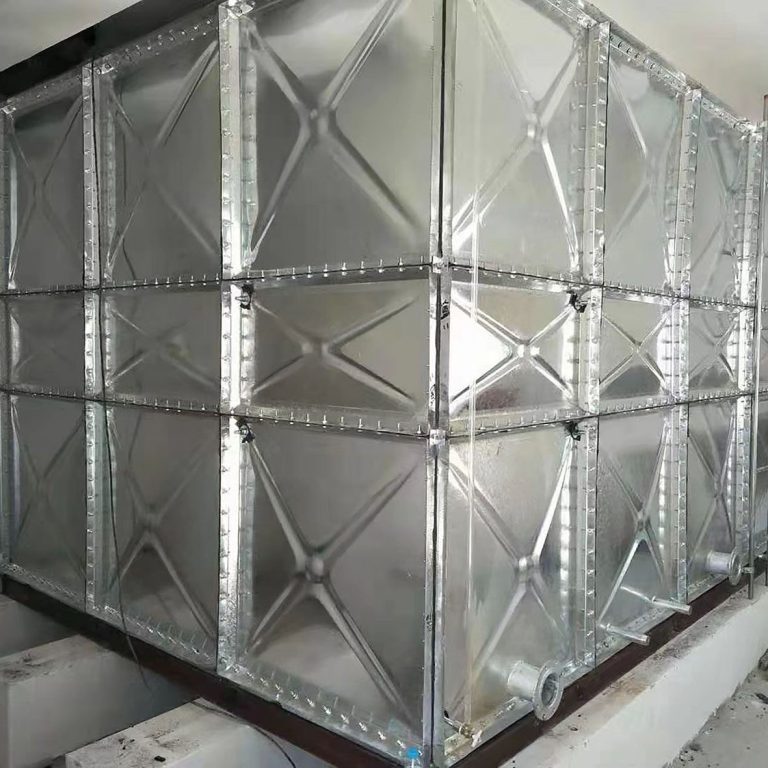
Bolted Stainless Steel Sectional Water Tank (SS304 / SS316)
Bolted stainless steel sectional water tank (SS304/316), also called modular or panel tank: flat-packed panels for potable, fire and process storage.
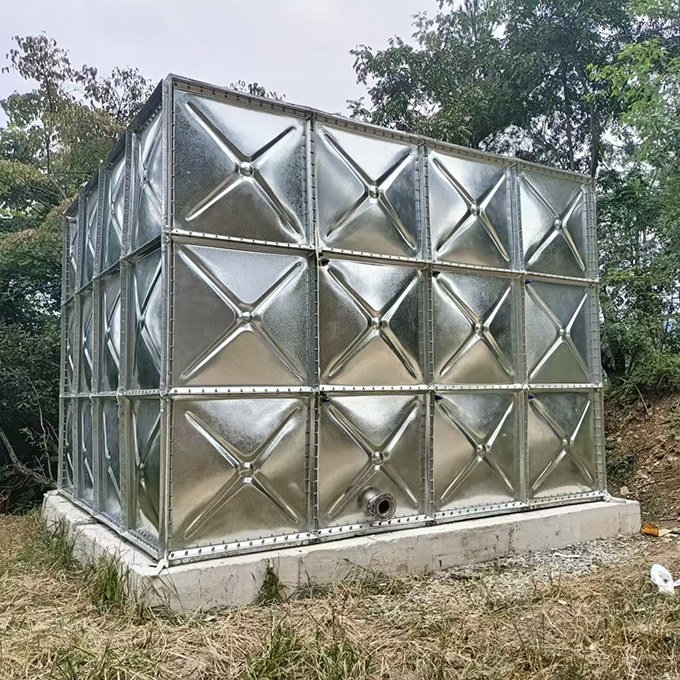
Hot-Dip Galvanized (HDG) Steel Bolted Sectional Water Tank
Hot-dip galvanized steel bolted sectional water tank (HDG / galvanised panel tank) for fire, irrigation and industrial water: flat-packed for export.
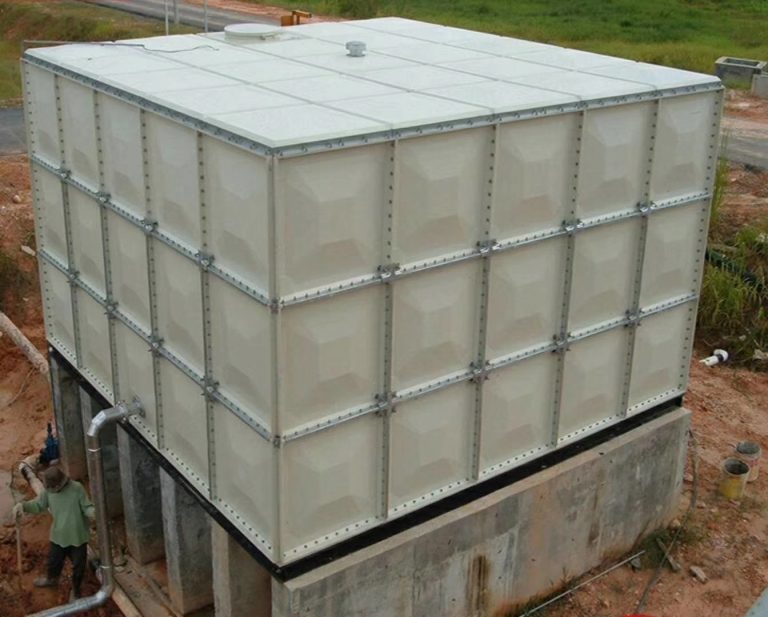
Bolted GRP/FRP Sectional Water Tank (SMC Panel)
Bolted GRP/FRP sectional water tank made from factory-molded SMC panels for potable, fire, wastewater and industrial water storage.
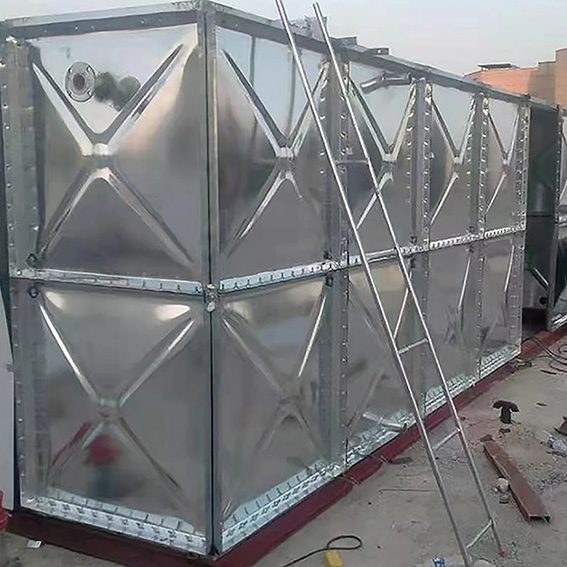
Duplex-Coated Galvanized Steel Panel Water Tank (BDF)
Duplex-coated galvanized steel panel water tank (BDF) for potable, fire and rural water: modular, flat-packed and available with a project-approved coating.
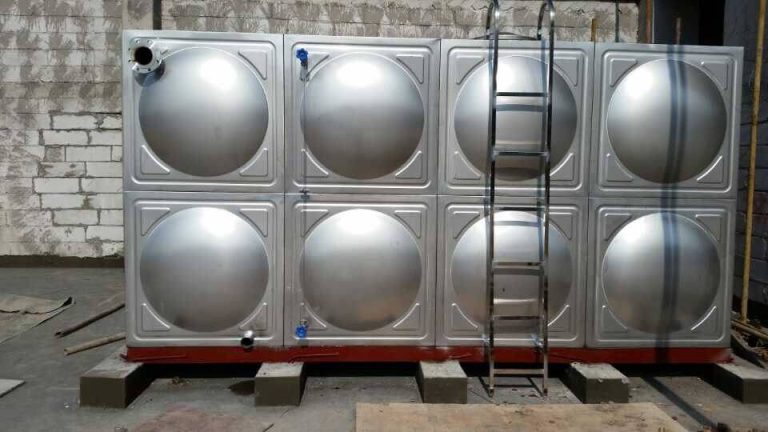
Welded Stainless Steel Water Tank (304 / 316)
Welded stainless steel water tank (SS304/316L) for potable, food, pharmaceutical and process duty, with factory or site welding and export documentation.
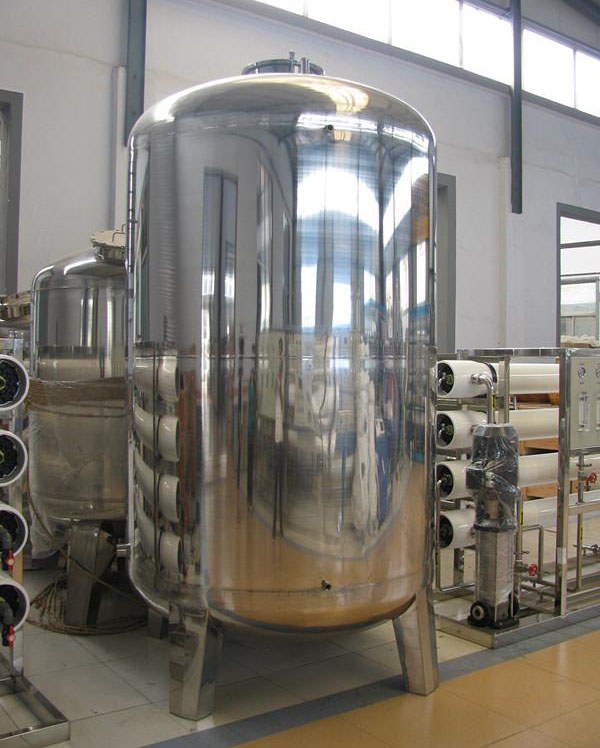
Aseptic Stainless Water Tank (SS304 / SS316L)
Aseptic stainless steel water tank (sterile/pharmaceutical purified water tank) in SS316L with 0.22 micron vent, CIP/SIP and nitrogen option.
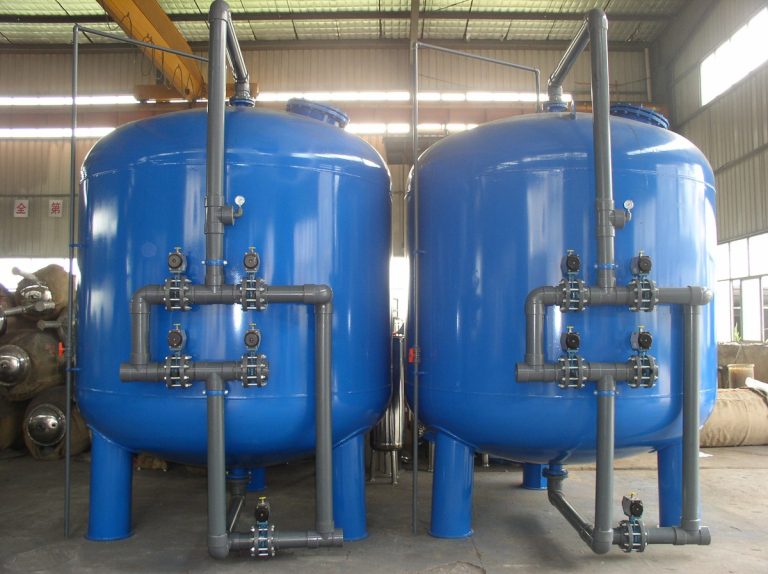
Mechanical Media Water Filter – Sand, Anthracite & Carbon
Mechanical media water filter, also called pressure sand filter or multimedia filter: steel, stainless or FRP vessels for turbidity and RO/UF pretreatment.
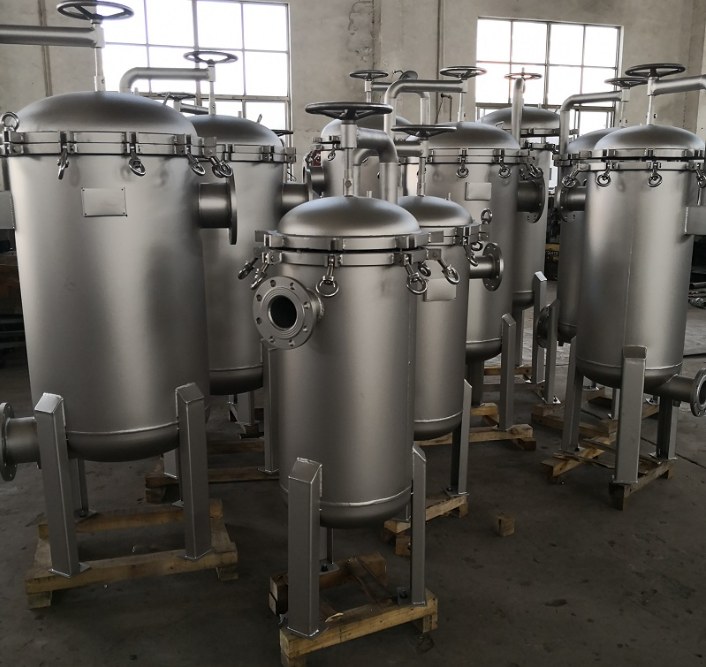
Bag Filter for Water Treatment (1-100 micron)
Liquid bag filter housing for water treatment: single and multi-bag units in carbon steel, SS304/316L or PP for RO guard and process…
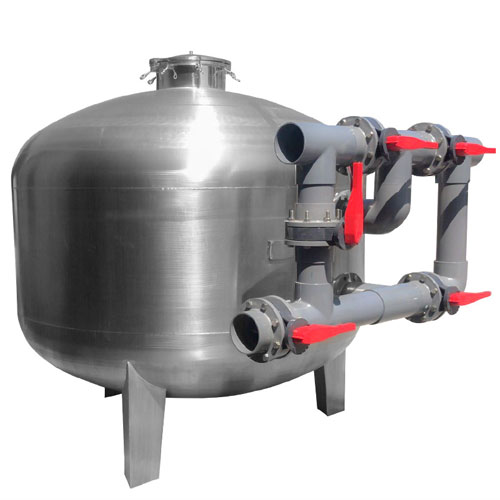
Pool Stainless Steel Sand Filter (Pressure Vessel)
Stainless steel pressure sand filter for pool circulation: SS304/316L vessel with quartz sand bed, multiport valve and manifold, 15-25 m/h and backwashable,…
Frequently asked questions
What is a cartridge security filter?
A closed pressure housing holding replaceable cylindrical cartridges — PP melt-blown, wound or pleated membrane — that capture micron particles, colloids and microorganisms. It guards RO/NF membranes and polishes ultrapure, food, beverage and pharmaceutical process water, rated 0.1–100 μm.
Nominal or absolute rating — which applies?
Nominal states a retention level at a particle size and is typical of melt-blown depth cartridges; it is not a guaranteed cut point. Absolute corresponds to a verifiable pore size and higher retention, typical of pleated membrane cartridges used for integrity testing. State the rating definition, test method and cartridge model in the technical agreement.
Can a 1 μm cartridge remove bacteria?
Not reliably. Bacteria have a short axis of about 0.5–1 μm, but a 1 μm nominal rating may retain only 80–90%, and bacteria deform through pores with the flow. Sterilizing-grade retention needs a 0.22 μm membrane cartridge qualified by a bacteria retention test and integrity testing.
How many cartridges are needed?
N = Q ÷ q × K: design flow divided by the per-cartridge allowable flux from the manufacturer’s curve, times a safety factor K of 1.15–1.30. A 10 in 5 μm PP cartridge takes about 0.4–0.8 m³/h; finer membrane cartridges are lower. Viscosity and feed SDI must be corrected before sizing.
When should cartridges be changed?
On clean water at rated flow the initial drop is 0.01–0.03 MPa; change at 0.10–0.15 MPa, or 2–3 times the initial value. Sterilizing-grade cartridges are changed on a cycle that also considers service duration, sterilization batches and integrity test results.
Why not use the guard filter for high-turbidity water?
Per-cartridge dirt-holding capacity is small; high turbidity or SDI drives a fast pressure rise and short change-out intervals. High solids should be carried first by a sand/multimedia filter or coagulation clarification, with the cartridge filter as the final low-turbidity guard.
Can a cartridge filter replace a bag filter?
In some coarse duties partly, but usually not. Bag filters hold more dirt and take high flow for higher suspended solids; cartridge filters are finer and integrity-testable for membrane guard and high-purity terminal duty. The common arrangement is series: the bag carries the load, the cartridge guards the end.
What compliance documents apply to water, food or pharmaceutical duty?
Potable water: GB/T 17219 soak-test evaluation by material. Food contact: GB 4806.1 plus plastics GB 4806.7 and metals GB 4806.9, with declaration and test report. Pharmaceutical: GMP/pharmacopoeia extractables, endotoxin, integrity and compatibility validation. Export follows destination rules such as EU 10/2011 and FDA 21 CFR Part 177.