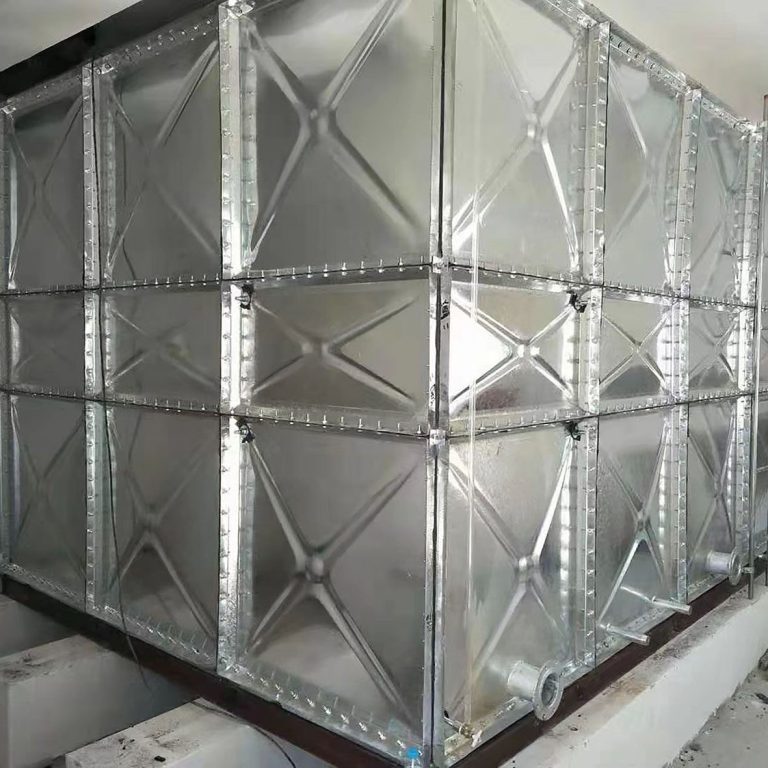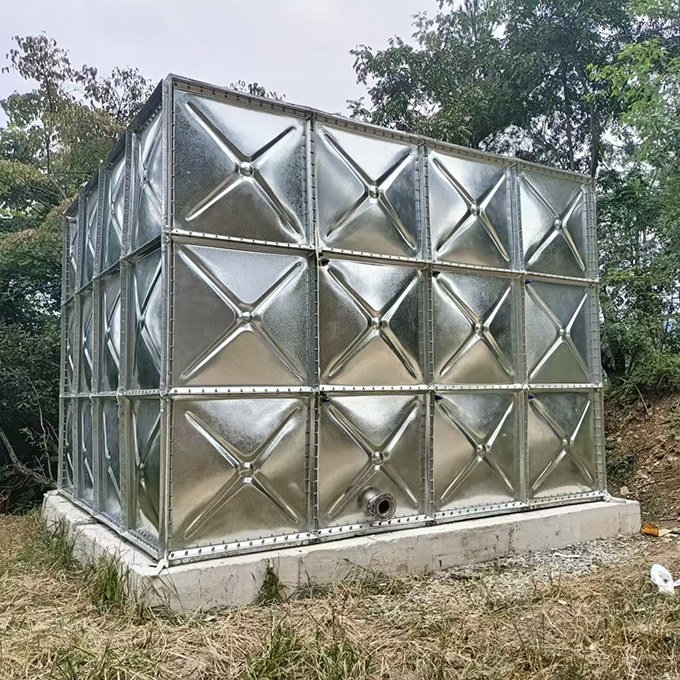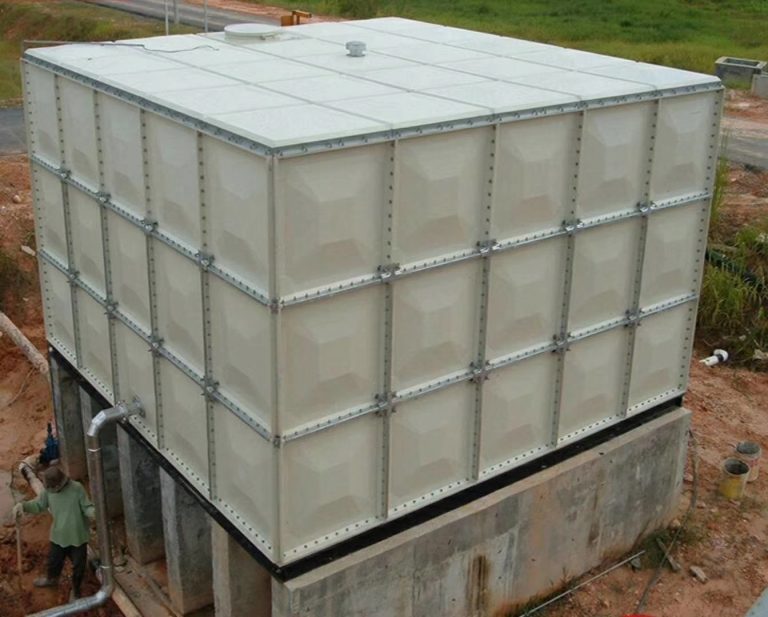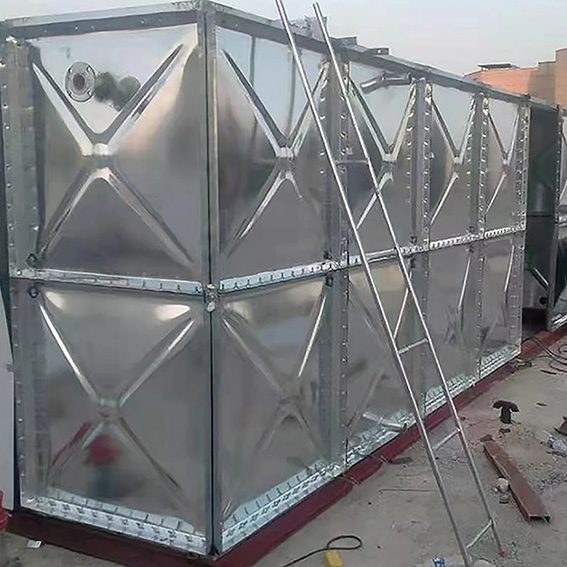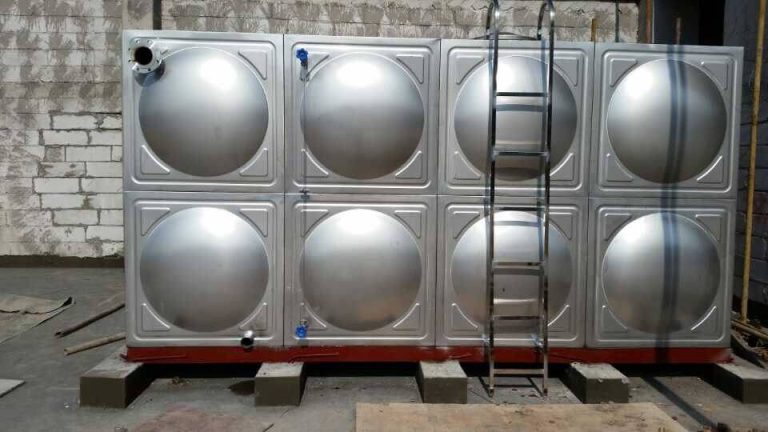
Water tanks are the storage layer of a project; the right panel system depends on the water, the site, the required service life and the installed cost — not on a generic “best tank” claim. LONGCOM supplies five tank families for export projects: bolted stainless steel, welded stainless steel, hot-dip galvanized steel, glass-fused-to-steel and BDF composite panel tanks.
All five are modular or panel-based, shipped with numbered panels, fasteners, sealing materials and erection drawings. The differences are the wetted material, the corrosion strategy, the joint detail, the site skills required and the shape flexibility. Use this page to shortlist the family, then open the product page for the specification envelope and RFQ inputs.
Compare the five tank systems
| System | Wetted material | Best fit | Watch-outs |
|---|---|---|---|
| Bolted stainless steel sectional tank | SS304 / SS316 panels, non-toxic sealing strips | Potable water, fire reserve, industrial process water, food and pharma projects that need stainless contact surfaces. | Panel thickness and tie-rod design must follow the structural check; seal and bolt materials must match the duty. |
| Welded stainless steel tank | SS304 / SS316, continuous welded shell | Hygienic duty, high-head service, irregular shapes and projects that require a seamless vessel. | Site welding, passivation and inspection are part of the scope; the site needs qualified welders and clean conditions. |
| Hot-dip galvanized bolted tank | HDG steel panels | Fire reserve, irrigation and industrial water where the lowest capital cost per cubic metre is the priority. | The coating is not a substitute for stainless in aggressive water; pH, chloride and abrasion must be checked. |
| Glass-fused-to-steel (GFS) tank | Factory-fired glass coating on steel | Municipal, wastewater, sludge and industrial storage where long coating life and large volume matter. | Coating quality, edge protection and site handling decide the service life; repair options should be planned. |
| BDF composite panel tank | Duplex-coated steel panel | Projects that need a coated panel at a cost between HDG and GFS, with good resistance to neutral water. | Confirm the coating system and warranty terms; not all BDF panels are equal. |
What decides the family
Water chemistry comes first. Chloride, pH, temperature, dissolved oxygen, disinfectant and abrasion determine whether stainless, galvanized, glass-coated or composite is appropriate. A low-cost panel that corrodes in two years is not low-cost.
Then the project duty. Fire reserve and irrigation usually favour large bolted tanks; potable and process water may need stainless; hygienic, high-head or irregular shapes may need a welded vessel. If the tank is part of a food or pharmaceutical scope, the wetted surface, cleanability and documentation requirements may override the capital cost.
Then the site. Access road, crane, foundation, assembly crew, wind/seismic load and available footprint all affect the choice. A bolted tank can be assembled in a plant room or on a remote site; a welded tank needs welding and passivation capability. The foundation is designed locally from the tank loads.
Then logistics. Panel size, container plan, crate weight and unloading method should be confirmed before fabrication. Large panels reduce site joints but may not fit the container or the access route.
What to send with a tank RFQ
| Input | Why it is needed |
|---|---|
| Effective volume or dimensions | Fixes the panel schedule, tie-rod layout and foundation loads. |
| Application and water analysis | Selects the wetted material and coating system. |
| Design pressure or head | Sets panel thickness and structural check. |
| Site country, wind/seismic load and soil report | Used by the local structural engineer for the base and connections. |
| Access, crane and assembly crew | Decides panel size, packing and erection method. |
| Destination port and Incoterm | Fixes the packing, loading plan and freight basis. |
| Documentation and certification requirement | Confirms what can be issued for the product and scope before award. |
Export packing and installation
Panels are factory-punched and marked to the erection sequence. They are packed in steel-framed crates with fasteners, sealant, washers and the erection drawing. The container plan is prepared before loading so that the unloading sequence at site matches the assembly sequence.
Site work starts with base acceptance, then panel placement, bolts and tie rods, roof and accessories, followed by water-fill test and disinfection where required. The installation manual states the torque values, seal placement, tolerance and inspection points. Do not improvise the sequence or substitute sealant; the joint is part of the wetted system.
Documentation and certification position
Material certificates, panel dimensional records, packing list, erection drawings, water-fill test record and O&M instructions can be supplied as agreed. A certification claim is made only where a valid certificate covers the proposed product, factory and scope. If a tender requires NSF/ANSI 61, WRAS, FM, UL or another approval that LONGCOM does not hold for the specific product, the quotation will state that before award.
Water tank family FAQ
Which tank is cheapest?
HDG bolted is usually the lowest capital cost for neutral water and a site that can accept a coated tank. The installed cost also includes foundation, transport, crane and assembly. GFS or stainless may be cheaper over the life cycle where corrosion or water quality is a problem.
Can I use one tank for potable water and fire reserve?
Only where the local code allows a common reserve. The fire demand, potable turnover, backflow protection and stagnation risk must be resolved together, and the water authority or AHJ should confirm the arrangement before award.
Do you supply the foundation?
The concrete base is normally designed and built locally using the tank loads and soil report. We provide the load data, base interface drawing and anchor details. We do not design the local foundation unless a separate engineering scope is agreed.
Can the tank be assembled without a crane?
Small tanks can sometimes be assembled with a telehandler or a small crane. Large panels are heavy and require a planned lifting method. Confirm the lifting equipment and assembly crew before the container arrives.