
Carbon steel, SS304/316L, PP; NBR/EPDM/FKM/silicone seals
Bag Filter for Water Treatment (1-100 micron)
Liquid bag filter housing for water treatment: single and multi-bag units in carbon steel, SS304/316L or PP for RO guard and process polishing.
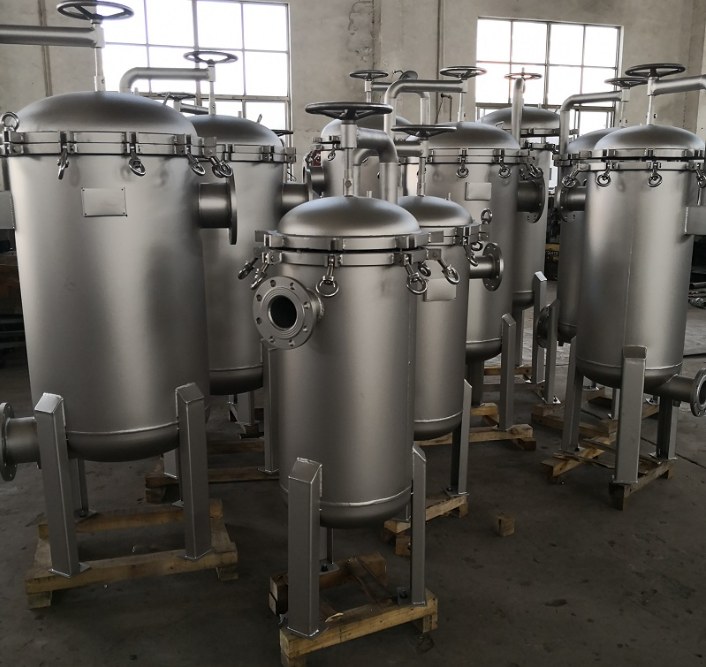
A bag filter is a pressure vessel that holds one or more filter bags; liquid passes through the bag and leaves suspended solids inside it. It is used where a project needs fine particle capture at a controlled pressure drop, quick bag change-out and a compact footprint — typically as a guard filter before membranes, heat exchangers, spray nozzles or a distribution network.
LONGCOM supplies single-bag and multi-bag housings in carbon steel, SS304/316L and PP, with bag ratings from 1 μm to 100 μm. The selection is not just “pick a micron rating”: bag count, housing material, seal compatibility and the allowable pressure drop decide whether the unit works or becomes a maintenance problem.
Where a bag filter fits in the treatment chain
A bag filter is normally a polishing or protective stage, not the main treatment. In a reuse or membrane plant, it sits after media filtration and before the RO guard; in a circulating-water loop, it can be a side-stream filter; in a food or chemical line, it protects the downstream equipment from occasional particulate excursions.
It is not a clarifier and it is not a steriliser. If the feed carries a high solids load, put a media filter or a settling step upstream. If the project needs microorganism control, add disinfection and validate it separately.
Housing and bag specification
| Parameter | Standard range | Selection note |
|---|---|---|
| Bag rating | 1, 5, 10, 25, 50, 100 μm | Finer bags capture more but load faster and raise pressure drop sooner. |
| Bag size | Size 1 and size 2 | Size 2 is the common project size: about 0.5 m² area and 33 L volume. |
| Housing material | Carbon steel (epoxy or lined), SS304/316L, PP | Stainless for potable, food, pharmaceutical or corrosive duty; PP for aggressive chemicals within its limits. |
| Design pressure | Project-specific | State working pressure, pump shut-off head and water-hammer condition. |
| Connection | Flanged, threaded or sanitary | Match the piping standard and the gasket material. |
| Flow pattern | Side-in/bottom-out, side-in/side-out, top-in/bottom-out | Bottom outlet aids drainage; top inlet suits tight spaces but needs good air venting. |
| Seal | NBR, EPDM, FKM, silicone | Check chemical and temperature compatibility, not just the nominal material name. |
| Bag support | Mesh basket | Basket welds and finish must not damage the bag; check the basket-to-bag fit. |
| Instrumentation | Differential pressure gauge or transmitter | The pressure drop is the maintenance signal; install it across the housing. |
| Options | Vent, drain, lifting lug, trolley, duplex arrangement | Duplex allows bag change without stopping the line. |
How many bags do I need?
Use the single-bag reference flow and then apply a safety factor. For a size 2 bag in clean water at 25 μm, a practical reference is about 20–40 m³/h per bag. Finer ratings take the lower end; coarser ratings take the higher end. High viscosity, high solids or a high acceptable pressure drop require a lower value.
Number of bags = design flow / reference flow per bag × safety factor. A safety factor of 1.2–1.5 is common. Round up to the next standard housing. If the result exceeds about 12 bags, split the duty into two smaller housings so that one can be isolated for maintenance without stopping the whole system.
Example: 120 m³/h, 25 μm, reference 30 m³/h per bag. 120 / 30 = 4 bags; × 1.3 = 5.2; select a 6-bag housing. Example with high viscosity: 60 m³/h, reference 8 m³/h per bag after viscosity correction; 60 / 8 = 7.5; × 1.4 = 10.5; select a 12-bag housing or two 6-bag units.
Rating selection by duty
| Duty | Typical rating | Why |
|---|---|---|
| RO/UF membrane guard | 5–10 μm | Protects the membrane from particles that could score or foul it; finer bags are changed more often. |
| Circulating-water side-stream | 25–50 μm | Balances solids capture with a reasonable bag life and pressure drop. |
| Cooling-water or nozzle protection | 50–100 μm | Coarse protection where the downstream equipment can tolerate small particles. |
| Food and beverage polishing | 5–25 μm | Depends on the product and the downstream filling or heat-treatment step. |
| Chemical process liquid | 1–50 μm | Set by the particle size to be removed and the viscosity; verify seal and bag compatibility. |
| Pre-treatment before a fine filter | 50–100 μm | Removes the coarse load so the fine stage lasts longer. |
Pressure drop and change-out
A clean bag has a low initial pressure drop; as solids accumulate, the differential pressure rises. The change-out point is a project decision, often around 0.05–0.1 MPa differential, but it must be checked against the bag rating, the housing rating and the downstream requirement. A differential-pressure gauge or transmitter is the practical way to avoid guessing.
Do not size the pump only for a clean bag. The pump and control valve must deliver the design flow at the dirty-bag pressure drop, or the system will lose flow before the bag is due for change. If the process cannot stop for a bag change, use a duplex housing or a duty/standby arrangement.
Materials and compatibility
Carbon steel with epoxy coating is the economic choice for neutral water and many industrial duties. SS304 or SS316L is used for potable water, food, pharmaceutical or corrosive service. PP is used for chemical compatibility where its pressure and temperature limits are acceptable. The bag itself also has a material and temperature limit; the housing material alone does not define the service capability.
Seals are the hidden failure point. NBR is common for water and oil, EPDM for hot water and ozone, FKM for many aggressive chemicals, and silicone for food or high/low temperature. The seal, bag and housing must be checked as a set against the actual fluid.
Installation and maintenance
- Install the housing with enough clearance to remove the bag and the basket; do not bury the cover under piping.
- Provide a vent at the high point and a drain at the low point; a bottom outlet helps emptying.
- Support the housing independently of the piping; a full multi-bag housing is heavy.
- Check the basket for burrs and the bag for a correct fit before the first run.
- Record the clean differential pressure at commissioning; use it as the baseline.
- Change the bag when the differential pressure reaches the set point or the scheduled interval, whichever comes first.
- Clean the housing and basket at every bag change; do not refit a bag into a dirty housing.
Applications
- RO and UF guard filtration: protect membranes and reduce cleaning frequency.
- Industrial circulating water: side-stream filtration to control suspended solids.
- Water reuse: polishing before disinfection or membrane stages.
- Food and beverage: process-water and product polishing with compatible materials.
- Cooling and HVAC: protect nozzles, plates and small passages.
- Chemical and process liquids: where a dry, quick-change bag is preferred to a cartridge.
Bag filter vs media filter
A media filter is a deep-bed, backwashable unit for higher solids loads and turbidity. A bag filter is a finer, non-backwashable polishing unit with quick change-out. Many projects use both: media filtration upstream for the bulk load, bag filtration downstream for membrane protection. Comparing them on purchase price alone misses the operating cost of bags, downtime and the risk to downstream equipment.
Standards and documentation
The housing is designed against the project’s pressure and structural requirements. Material certificates, dimensional inspection, pressure test, coating inspection, bag rating certificate and seal material data can be supplied as agreed. NSF/ANSI 61, WRAS, CE or other product certification is not claimed unless a valid document covers the proposed product and scope.
Send flow, micron rating and fluid data for a bag filter selection
Buyer terminology: what this product is called in different markets
The same product is searched under different English names in different regions. The table below records the names buyers actually use, so a specification or RFQ is not lost to a literal translation.
Primary English name: Bag filter for water treatment
Also searched as: liquid bag filter · bag filter housing · bag filtration system · single bag filter · multi-bag filter · polishing filter · guard filter.
| Market | Common English search name |
|---|---|
| United States & Canada | bag filter housing; liquid bag filter; bag filtration system |
| United Kingdom & Ireland | bag filter housing; liquid bag filter; bag filter vessel |
| Middle East & GCC | bag filter; bag filtration system |
| Southeast Asia | bag filter housing; filter bag housing |
| India & South Asia | bag filter; bag filter housing |
| Africa | liquid bag filter; bag filtration system |
| Australia & New Zealand | bag filter housing; liquid bag filter |
Attribute and application terms: 1–100 micron, size 1 and size 2 bags, SS316L, PP, NBR / EPDM / FKM seals, differential pressure gauge, multi-bag. Typical duties include RO membrane protection, food and beverage, chemical process, cooling water, paint and ink, oil, water reuse, final polishing.
Long-tail search phrases
- liquid bag filter housing for RO membrane protection.
- multi bag filter system for industrial water.
- SS316L sanitary bag filter for food and beverage.
- 25 micron bag filter for cooling water side stream.
- high flow bag filter housing for water reuse.
In air-pollution control, “bag filter” means a dust collector. For liquid duty use “liquid bag filter” or “bag filter housing” so the search intent is unambiguous.
Related products and systems
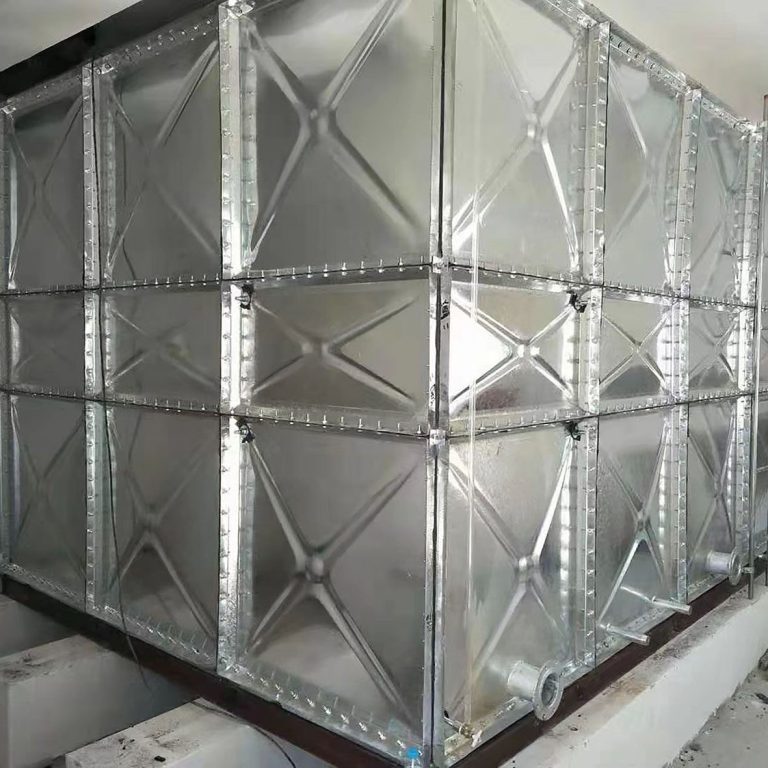
Bolted Stainless Steel Sectional Water Tank (SS304 / SS316)
Bolted stainless steel sectional water tank (SS304/316), also called modular or panel tank: flat-packed panels for potable, fire and process storage.
SS304 / SS316 stainless steel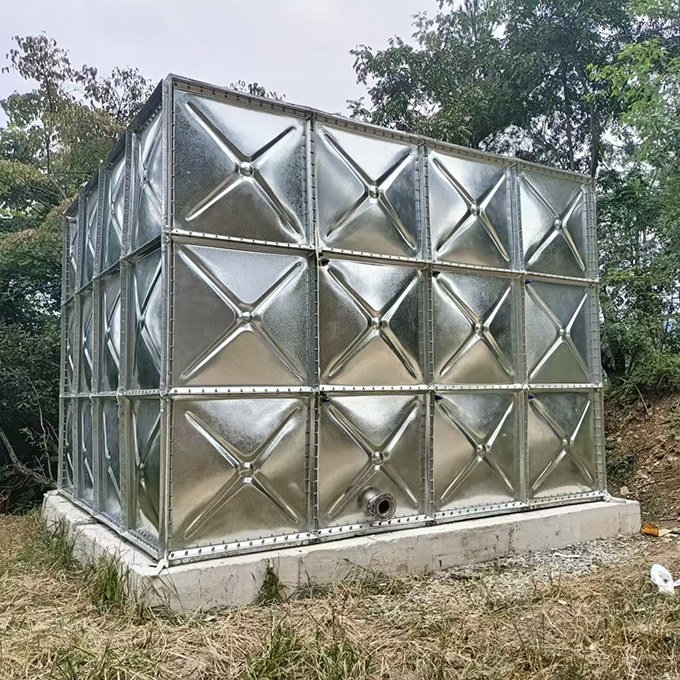
Hot-Dip Galvanized (HDG) Steel Bolted Sectional Water Tank
Hot-dip galvanized steel bolted sectional water tank (HDG / galvanised panel tank) for fire, irrigation and industrial water: flat-packed for export.
Hot-dip galvanized mild steel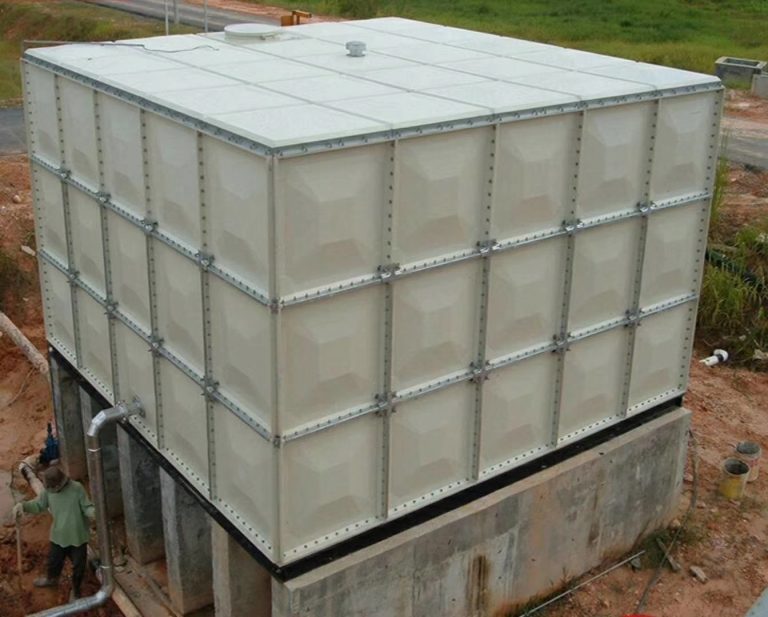
Glass-Fused-to-Steel (GFS) Sectional Water Tank
Glass-fused-to-steel (GFS) sectional water tank: factory-fused glass coating on bolted panels for municipal, wastewater, biogas and industrial storage.
Steel sheet with factory-fired glass (glass-fused-to-steel)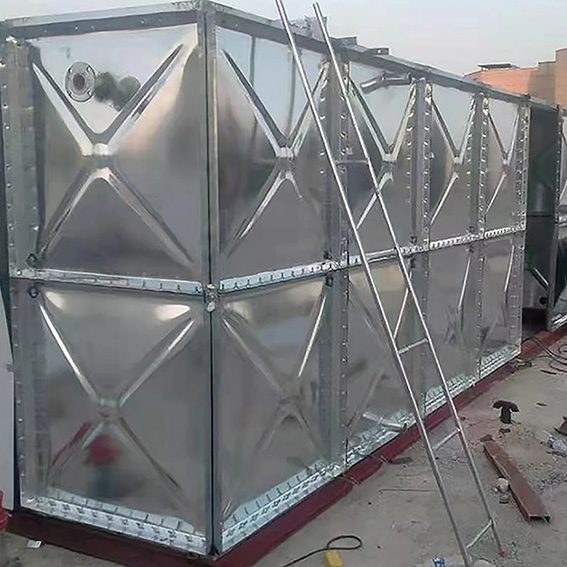
Duplex-Coated Galvanized Steel Panel Water Tank (BDF)
Duplex-coated galvanized steel panel water tank (BDF) for potable, fire and rural water: modular, flat-packed and available with a project-approved coating.
Hot-dip galvanized steel with bonded protective coating (duplex)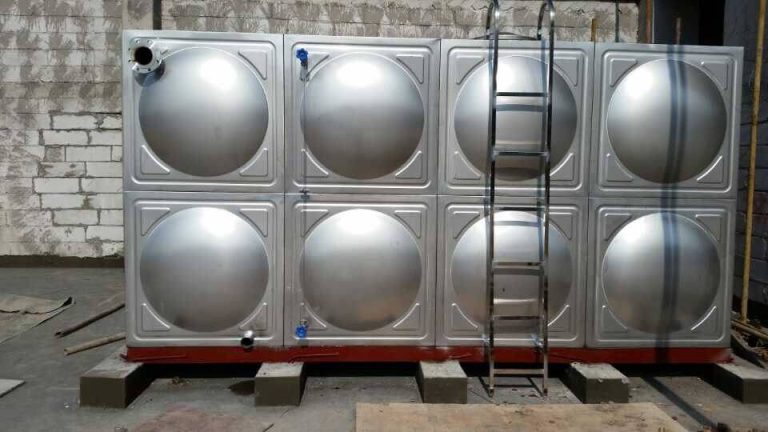
Welded Stainless Steel Water Tank (304 / 316)
Welded stainless steel water tank (SS304/316L) for potable, food, pharmaceutical and process duty, with factory or site welding and export documentation.
SS304 / SS316 / SS316L stainless steel, welded construction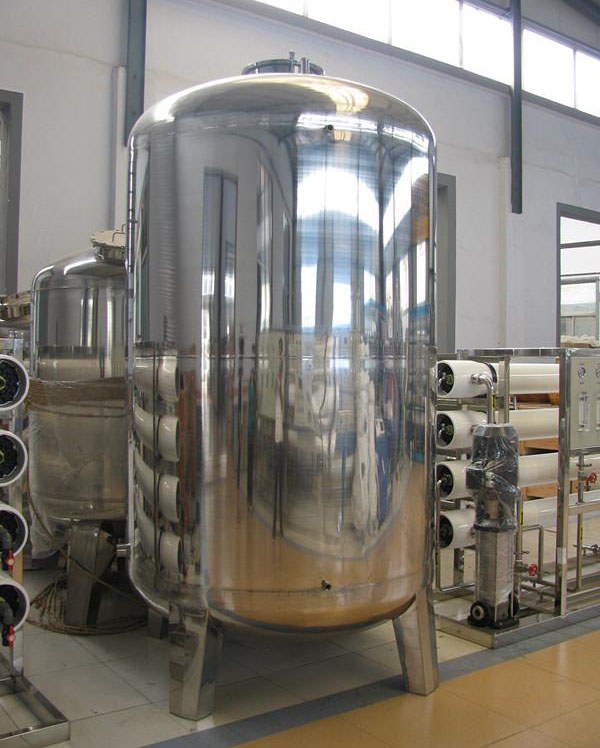
Aseptic Stainless Water Tank (SS304 / SS316L)
Aseptic stainless steel water tank (sterile/pharmaceutical purified water tank) in SS316L with 0.22 micron vent, CIP/SIP and nitrogen option.
SS304 / SS316L hygienic stainless steel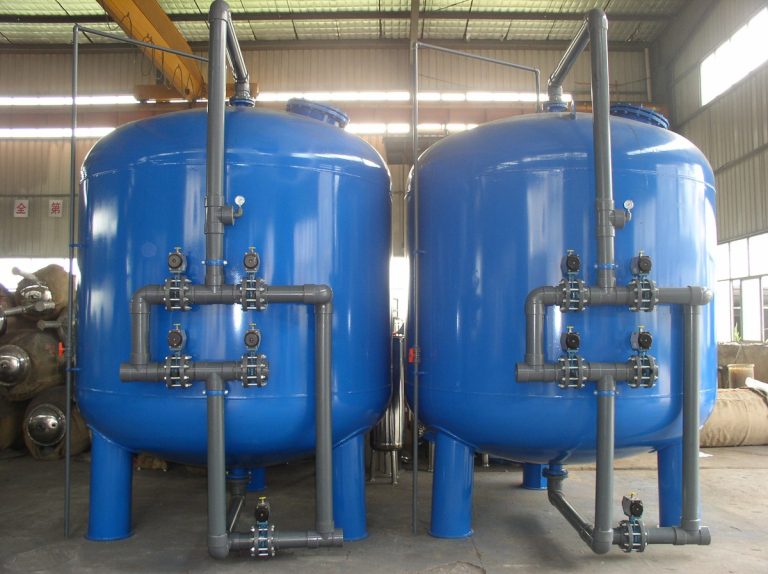
Mechanical Media Water Filter (Sand, Anthracite, Manganese, Carbon)
Mechanical media water filter, also called pressure sand filter or multimedia filter: steel, stainless or FRP vessels for turbidity and RO/UF pretreatment.
Epoxy-coated carbon steel; SS304/316; FRPBag Filter for Water Treatment (1-100 micron)
Liquid bag filter housing for water treatment: single and multi-bag units in carbon steel, SS304/316L or PP for RO guard and process…
Carbon steel, SS304/316L, PP; NBR/EPDM/FKM/silicone sealsFrequently asked questions
What bag rating should I use?
Start from the particle size you need to remove and the downstream equipment you are protecting. RO guards commonly use 5–10 μm; circulating water 25–50 μm; coarse protection 50–100 μm. Finer is not automatically better — it loads faster and costs more in bags and downtime.
How much flow can one size 2 bag handle?
In clean water at 25 μm, a practical reference is about 20–40 m³/h per bag. Use the lower end for finer ratings, higher solids or high viscosity. Always apply a safety factor of 1.2–1.5.
When should I change the bag?
When the differential pressure reaches the project set point, or at the scheduled interval. A common starting point is 0.05–0.1 MPa differential, but the correct value depends on the bag, housing and downstream requirement.
Can I install it on the suction side of a pump?
Usually no. A bag filter is a pressure vessel and should be on the discharge side unless the pump is specifically designed for a flooded suction strainer duty. Suction-side installation risks cavitation and collapse.
Is stainless steel necessary?
For potable water, food, pharmaceutical or corrosive duty, yes — SS304 or SS316L. For neutral industrial water, epoxy-coated carbon steel is often adequate. The wetted materials and seals must match the fluid.
Can the filter run continuously during bag changes?
Only with a duplex or duty/standby arrangement. A single housing must be isolated and depressurized before the cover is opened.
Do bag filters remove bacteria?
Not as a validated sterilising filter. A 1 μm bag may capture some microorganisms, but it is not a substitute for disinfection or a validated sterile filtration process.
What documentation is supplied?
Material certificates, pressure-test record, dimensional inspection, bag rating and seal data as agreed. Third-party certification is provided only where a valid certificate covers the product and scope.