
SS304/SS316L; multiport valve; PVC/HDPE manifold
Pool Stainless Steel Sand Filter (Pressure Vessel)
Stainless steel pressure sand filter for pool circulation: SS304/316L vessel with quartz sand bed, multiport valve and manifold, 15-25 m/h and backwashable, sized to pool volume and cycle under CJ/T 405-2012 and CJJ 122-2017.
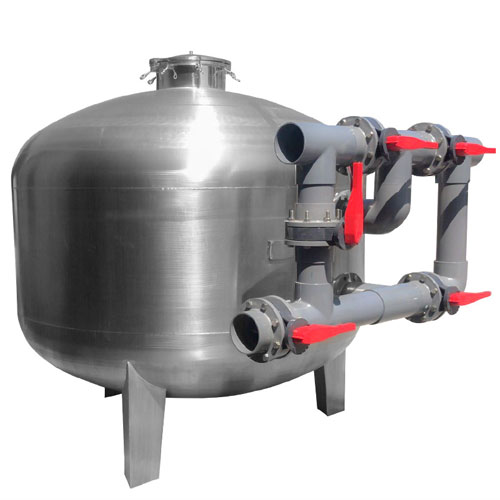
A pool stainless steel sand filter is a closed pressure vessel filled with a single-layer uniform quartz sand bed that clarifies circulating pool water: pump pressure drives water downward through the sand, trapping suspended particles, hair, skin flakes and some colloidal matter so the outlet water runs clear. It is the standard granular-media stage in public, hotel, resort and school pool circulation loops, sitting after the hair collector and pump and before disinfection and heating.
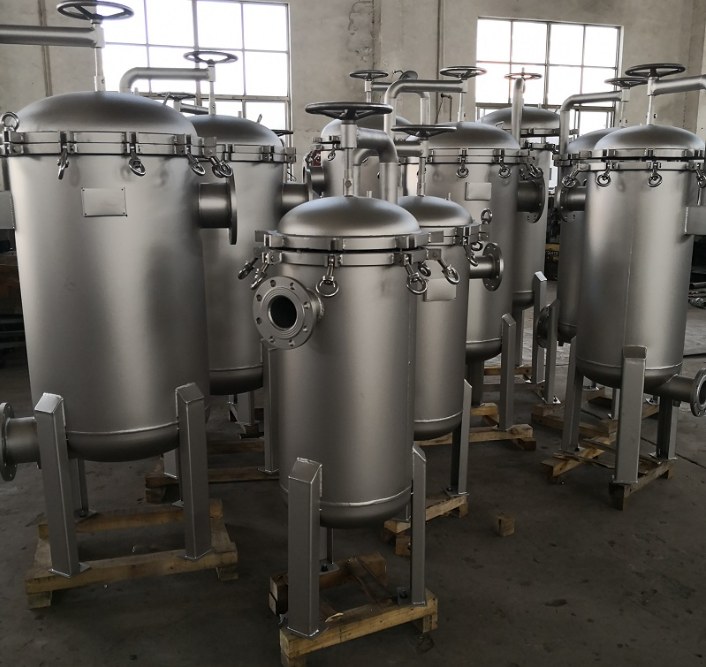
LONGCOM supplies vertical SS304/316L pressure vessels as a skid assembly with PVC/HDPE manifold, multiport valve, pressure gauges and drain connections, sized to the pool volume and circulation cycle. The vessel replaces carbon-steel-lined or FRP shells where chlorine, salt spray or a compact plant room calls for a more corrosion-resistant, lower-maintenance construction. Design and operating parameters follow CJ/T 405-2012 Pressure Filters for Swimming Pools and CJJ 122-2017 Technical Specification for Swimming Pool Water Supply and Drainage Engineering; pool water health limits are checked against GB 37488-2019.
Where the filter sits in the circulation loop
Water leaves the pool through the floor drain or overflow channel, passes a hair collector that retains hair, fiber and larger floating debris, then the circulation pump raises the pressure before the sand filter. Filtered water goes to the disinfection unit, then the heating or heat-exchange stage, and returns through the wall or floor inlets. The filter is therefore downstream of the pump and upstream of disinfection: removing particles and part of the colloidal load first reduces the chlorine consumed by organics, lowers disinfection by-product precursors and keeps suspended matter from depositing on heat-exchange surfaces.
The filter does three concrete jobs: restore clarity by lowering turbidity, give the disinfectant a more stable working condition (clearer water improves UV penetration and makes chlorine demand more predictable), and buffer short pollution peaks from swimmer load. None of this means the water is safe. GB 37488-2019 sets limits for turbidity, pH, free residual chlorine, urea, total bacterial count and coliforms; the sand filter directly affects turbidity only, and indirectly stabilizes residual chlorine. The remaining limits are met by disinfection, make-up water and hygiene management.
Construction of the stainless steel vessel
A vertical stainless steel sand filter is built from the shell, upper and lower heads, manway, inlet distributor, quartz sand bed, support layer, underdrain/laterals, multiport valve, inlet and outlet pipes, pressure gauge, air vent, backwash sight glass and support legs. Shells are rolled and welded from 304 or 316L plate; longitudinal and circumferential seams are automatically welded, and the interior carries no coating that could peel off.
| Internal part | Function | Point to check |
|---|---|---|
| Shell and heads | Hold system pressure and contain the media. | Steel vessel nominal pressure ≥0.60 MPa. |
| Inlet distributor | Spread feed water evenly over the bed surface. | Uneven distribution causes channeling and short-circuiting. |
| Quartz sand bed | Trap suspended solids and colloids. | Effective depth ≥700 mm; filtration rate 15–25 m/h. |
| Support layer | Support the sand and stop fine grains entering the underdrain. | No dead zone at the bottom of the bed. |
| Underdrain / laterals | Collect filtered water and retain the media. | Internal components nominal pressure ≥1.0 MPa. |
| Multiport valve | Switch six duties: filter, backwash, rinse, recirculate, waste, closed. | Stop the pump before switching to avoid water hammer. |
| Air vent | Release trapped air before backwash. | Unexpelled air makes the wash uneven. |
| Sight glass | Observe backwash drain clarity. | The drain must not be directly connected to other waste lines. |
During filtration, water enters at the top, slows through the distributor and passes downward through the sand. Particles are retained mainly in the upper few centimeters to a dozen centimeters of the bed, with fewer deeper down; this is why the differential pressure rises gradually over the run. During backwash the flow reverses through the underdrain, lifting and scouring the sand from below so trapped dirt leaves with the drain water.
Media, bed depth and filtration rate
The standard pool vessel uses a single-layer uniform quartz sand. Per CJJ 122-2017 Table 5.4.2-1, the effective bed depth is not less than 700 mm and the design filtration rate sits in the 15–25 m/h band; public and commercial pools take the lower end of the range, private, relaxation, diving and cold pools may take the upper end. The sand grading is specified by minimum and maximum grain size and uniformity coefficient K80, not by mesh count alone.
| Grading option | Size range (mm) | K80 | Effective depth (mm) | Rate (m/h) |
|---|---|---|---|---|
| Fine sand, option 1 | 0.45–0.55 | <1.6 | ≥700 | 15–25 |
| Fine sand, option 2 | 0.40–0.60 | <1.4 | ≥700 | 15–25 |
| Medium sand | 0.60–0.80 | <1.4 | ≥700 | 15–25 |
| Dual media (anthracite + sand) | Per design | <2.0 | >350 | 14–18 |
Mesh count and millimeter size are not two interchangeable precision systems: mesh describes holes per inch without fixing wire diameter, so the same mesh number can give different hole sizes across suppliers. K80 is the ratio of the smallest grain size that passes 80% of the media to the smallest that passes 10%; the closer it is to 1, the more uniform the sand. Poorly graded sand segregates after backwash, fine grains rising and coarse grains sinking, until the bed surface is no longer level and flow concentrates along the easiest path. Specify dmin, dmax, K80 and effective depth together. Media quality follows CJ/T 43 for water-treatment filter media: high mechanical strength, wear resistance, chemical stability and no toxic matter or sludge.
Material selection and pressure rating
Stainless grade follows the water chemistry rather than the highest grade by default. 304 suits ordinary indoor freshwater pools; indoor heated pools, ozonated pools or projects with elevated chloride should be reviewed against the make-up water analysis, disinfectant type and supplier data before choosing 316L. For vacuum granular filters the shell should be no lower than S30408 stainless; for pressure sand vessels the material lower limit is set by CJ/T 405-2012, with 316L written into the contract where the duty requires it.
| Material | Vessel nominal pressure | Internal components | Main advantage | Main limit |
|---|---|---|---|---|
| Stainless 304 / 316L | ≥0.60 MPa | ≥1.0 MPa | Corrosion-resistant, long life, no delamination | Higher cost; weld quality must be controlled |
| Rubber-lined carbon steel | ≥0.60 MPa | Per design | Lower cost | Once the liner is damaged, corrosion can contaminate the water |
| FRP | 0.25 / 0.45 MPa types | ≥1.0 MPa | Light, rust-free | Lower pressure ratings; aging under UV and heat needs review |
| Polyethylene | 0.25 / 0.35 MPa | ≥0.6 MPa | Suits small pools | Limited heat and pressure tolerance |
Two pressure requirements must be checked separately. The vessel nominal pressure is the baseline for the whole unit; internal components (distributor, laterals, collection pipe) are rated higher because they take the higher transient differential pressure during backwash. Per CJJ 122-2017, the filter working pressure must be at least 1.5 times the working pressure of the pool circulation system. This 1.5× selection ratio is an engineering requirement and is not the same as the 1.5× test-pressure-to-design-pressure condition in the informative appendix of CJ/T 405. Where the system working pressure is 0.40 MPa, the filter working pressure should be at least 0.60 MPa; where it is 0.50 MPa, the filter should be no lower than 0.75 MPa. Take the stricter value into the technical agreement.
Seals must be compatible with the disinfectant used; CJ/T 405 distinguishes materials such as nitrile rubber by disinfectant type, and rubber quality follows GB/T 5577. A specification that asks only “how thick is the shell” and omits seal material and internal component pressure often ends with the shell acceptable but the internals failing first. LONGCOM supplies the shell material certificate, internal component pressure statement, seal compatibility note and media test report together for acceptance checking.
Sizing worked example — a 500 m³ public pool
The sizing order is fixed: choose the circulation cycle, calculate the circulation flow, derive the required bed area from the design filtration rate, then set the number of vessels from the standard diameter series and check the N-1 backwash condition. Skipping a step and ordering from the brochure “rated flow” is the most common pool sizing mistake.
For a public adult pool with an effective volume of 500 m³, the CJJ 122 cycle for public adult, leisure and school pools is 3–4 h; take 4 h. The circulation flow is volume divided by cycle, then multiplied by the pipe-and-vessel water-volume addition factor αp (generally 1.05–1.10; 1.05 in this example): 500 ÷ 4 = 125; 125 × 1.05 = 131.25 m³/h design circulation flow. Take a design rate of 20 m/h within the 15–25 band for demonstration; public pools should sit toward the 15 m/h side, and any lower velocity requires the area and vessel count to be re-proportioned and the whole check repeated.
Required bed area = 131.25 ÷ 20 = 6.5625 m². Select a Φ1200 vertical vessel; its cross-section is π × 1.2² ÷ 4 = 1.131 m². Initial vessel count = 6.5625 ÷ 1.131 = 5.80, rounded up to 6. Check the normal rate: 131.25 ÷ (6 × 1.131) = 19.34 m/h, within 15–25. Check single-vessel backwash: the other 5 vessels carry the full flow, giving 131.25 ÷ (5 × 1.131) = 23.21 m/h, still under the 25 m/h upper limit. If only 5 vessels were fitted, the normal rate would be 23.21 m/h, but during one-vessel backwash the remaining 4 would rise to 29.01 m/h, already over the limit.
| Step | Calculation | Result | Judgment |
|---|---|---|---|
| Circulation flow | 500 ÷ 4 × 1.05 | 131.25 m³/h | Design input |
| Required area | 131.25 ÷ 20 | 6.5625 m² | Design input |
| Single vessel area | π × 1.2² ÷ 4 | 1.131 m² | Φ1200 |
| Vessel count | 6.5625 ÷ 1.131, rounded up | 6 | Satisfies |
| Normal rate | 131.25 ÷ (6 × 1.131) | 19.34 m/h | 15–25, compliant |
| Backwash rate, N-1 | 131.25 ÷ (5 × 1.131) | 23.21 m/h | ≤25, compliant |
| Sand per vessel | 1.131 × 0.700 × 1.75 | 1.386 t | Lower-limit basis |
For large and medium pools (total volume ≥200 m³), CJJ 122 requires no fewer than two filter vessels and total filter capacity of at least 1.10 times the circulation flow. This 1.10 is on the equipment-capacity side and is separate from the αp addition on the design-flow side; the two must not be merged into one factor. For parallel vessels, the manifold should balance inlet resistance so the vessel nearest the pump does not take a disproportionate flow; regulating valves and flow meters on each branch let the commissioning balance be set, and backwash should be scheduled on differential pressure rather than manifold position.
Backwash: triggers, sequence and drain
Backwash is triggered by differential pressure, run time or standby state — an “or” condition, whichever comes first. Per CJJ 122-2017, backwash is required when any of the following applies: inlet-to-outlet differential pressure reaches 0.03–0.06 MPa; continuous operation exceeds 5 days; or the pool is kept filled but closed for more than 5 days. The pressure band is not a fixed value because bather load, inlet turbidity and bed condition vary between pools.
Backwash one vessel at a time. Before the wash, stop the pump and switch the multiport valve to backwash; confirm the valve position before starting the wash pump. Open the top air vent first. For water-only backwash of a single quartz sand bed, the intensity is 12–15 L/(s·m²) for 6–7 min. For combined air/water wash, the air comes first, then water; air supply pressure is 0.1 MPa and the air source must be clean, free of oil and moisture. After the wash, rinse the bed at no less than 1.2 times the filtration flow for 1–3 min before returning to filtration.
Two drain details are easy to miss. First, a transparent sight glass or section at the backwash drain lets staff judge whether the waste has turned clear; it is not an optional fitting. Second, the backwash drain must not be directly connected to other drain lines, to prevent waste from back-siphoning into the filter and contaminating the pool. In underground plant rooms, discharge outside through a water-sealed break tank or into a sump lifted by a submersible pump. Backwash should use pool water and be done during the daily closed period, vessel by vessel.
For a single Φ1200 vessel, estimate one water backwash at 12 L/(s·m²) over 6 min: 12 × 1.131 = 13.57 L/s; 13.57 × 360 s = 4,885 L ≈ 4.89 m³ per wash. The rinse at 1.2× the single-vessel filtration flow (131.25 ÷ 6 = 21.875 m³/h; ×1.2 = 26.25 m³/h) for 2 min is about 0.875 m³. These figures size the backwash tank and drain capacity; an undersized drain cannot lift the bed properly.
Keep a traceable backwash record: date, filter type and number, inlet/outlet pressure, wash differential pressure, wash intensity, wash duration, rinse time and operator/reviewer. Without these records, a water-quality fluctuation cannot be traced to the bed or to disinfection. When automatic pressure triggering is used, take pressure taps from straight sections before and after the bed, clear air from the impulse lines, and check both gauge zero offsets; the set point should stay within 0.03–0.06 MPa and be corrected against the sight-glass clarity in real operation. Apart from backwash, when the media depth falls 10% below design, top up the sand at least once a year; calculate the make-up from the measured depth loss and vessel area, then re-backwash and set a new clean-bed baseline.
Installation, pressure test and acceptance
Check the foundation level and leg positions first, leaving room for manway opening, media loading and valve maintenance. After piping is connected, verify valve direction, especially the six multiport duties. Clean the vessel before loading media: place the support layer first, then the quartz sand, layer by layer and leveled; do not rely on inlet flow to smooth the bed. The bottom of the support layer must have no dead zone, which depends on the underdrain layout and support-layer flatness.
The mandatory basis for the hydrostatic test is CJ/T 405-2012 Clause 6.4.1: the test pressure follows the design; where the design gives no value, a leak test is performed to GB 150.4 and JB/T 2932. Internal pressure resistance is a factory inspection item on every unit. Appendix B of CJ/T 405 is an informative appendix: its conditions (24±6 °C water, ≤2 NTU, holding 1.5× design pressure for 300±30 s, repeated cycle pressure at 207±7 kPa) are reference methods for the contract to adopt, not automatically enforced criteria. If the agreement wants that method, it must state that Appendix B applies and give the acceptance values; otherwise the design document and factory inspection report govern. On-site system pressure testing after installation is a separate step and does not replace the vessel test.
Commission in three stages: dry run to check motor rotation and valve duties; fill with water, vent air and raise pressure slowly to inspect flanges, manway and sight glass for leaks; load media, backwash first to flush fine powder until the sight-glass drain runs clear, then move to normal filtration. Shorten the inspection interval over the first few cycles, sampling before and after the bed to confirm the turbidity difference matches the vessel data and design. Take sample points away from the direct downstream of dosing points, or the reading mixes uneven chemical dosing rather than showing real filter outlet quality.
The acceptance package should close the loop: certificate and nameplate data, shell material certificate, internal component pressure statement, seal compatibility note, hydrostatic test record, media test and loading record, multiport valve operating instructions, and the backwash log. At handover, confirm three things: outlet turbidity stays within the project limit, inlet/outlet differential pressure stays in a controllable band, and backwash drain water can turn from cloudy to clear through the sight glass. Only when all three hold is the unit truly in service.
Boundaries with other filtration methods
| Comparison | Stainless quartz sand vessel | Diatomaceous earth filter | Vacuum granular filter | Glass media replacement |
|---|---|---|---|---|
| Design rate | 15–25 m/h | 5–10 m/h | ≤20 m/h | Per vessel and media data |
| Media renewal | Top up or replace sand after years | Pre-coat each cycle | Longer sand life | Longer media life |
| Backwash | Water or air/water | Water or air/water; re-coat needed | Air/water required | Per sand vessel, data by supplier |
| Typical duty | Public, hotel, school pools | Competition pools, high-clarity duty | Restricted low-level plant room | Retrofit to lower backwash water |
DE filters give clearer water but need pre-coat, coagulant aid and a dedicated unit; CJJ 122 requires no fewer than two DE units at 1.05–1.10 times circulation flow, with higher system complexity and operation. Vacuum granular filters draw a negative head by pump suction and suit low-level plant rooms; the shell is no lower than S30408 stainless. Glass media or AFM-type media are a media swap: the vessel body remains a pressure filter, and the rate and bed depth still have to be checked within the CJJ 122 framework rather than run at the brochure maximum flow.
Common misuse and applicable limits
- Ordering from the brochure rated flow: brochure figures are often the short-term maximum; back-calculated rates can reach about 50 m/h, twice the 15–25 band. Lower rates trap particles better but raise cost and footprint; stay within the code band and check the N-1 backwash rate.
- Treating the sand filter as disinfection: the filter lowers turbidity but does not reliably remove urea, dissolved organics or microorganisms. Limits such as urea ≤3.5 mg/L, total bacterial count ≤200 CFU/mL and no coliforms are met by disinfection and make-up management. GB 55020-2021 requires the circulation system to carry both filtration and disinfection.
- Copying municipal water treatment parameters: water-plant filters treat raw water with different feed quality, rate bands and backwash regimes; pool pressure filters have their own clauses in CJJ 122 and CJ/T 405, which should be cited first.
- Ignoring backwash drain routing: wash water carries trapped dirt and must go to a dedicated drain; it must not connect directly to sanitary sewer or pool return lines, nor discharge to a nearby storm drain.
- Retrofit replacing only the vessel: after a higher-pressure new vessel, the old piping, flanges, valves and leg foundation may not match; aged UPVC fittings and cast-iron valves in old plant rooms need review.
- Overlooking chloride and temperature together: summer heating and evaporation concentrate chloride; the same stainless grade loses corrosion margin in hot, high-chloride water. Check the full make-up analysis and maximum running temperature, and raise the grade or increase flush and drain frequency where needed.
Applications
- Public and commercial pools: particulate removal ahead of disinfection for high bather load.
- Hotel and resort pools: clear circulating water with corrosion-resistant stainless construction for coastal or indoor duty.
- School and leisure pools: balanced filtration sized to the cycle and peak load.
- Water park and plunge pools: multi-vessel circulation with vessel-by-vessel backwash.
- Indoor heated and ozonated pools: 316L option where chloride or ozone exposure warrants it.
Send pool volume, cycle, water analysis and disinfectant for a sand filter selection
Buyer terminology: what this product is called in different markets
The same product is searched under different English names in different regions. The table below records the names buyers actually use, so a specification or RFQ is not lost to a literal translation.
Primary English name: Pool stainless steel sand filter
Also searched as: swimming pool sand filter · pressure sand filter vessel · stainless steel pool filter · pool media filter · commercial pool sand filter · backwash sand filter tank · sand filter for pool circulation.
| Market | Common English search name |
|---|---|
| United States & Canada | pool sand filter; stainless steel swimming pool filter; pressure sand filter vessel |
| United Kingdom & Ireland | pool sand filter; stainless steel pool filter vessel; media filter for swimming pool |
| Middle East & GCC | swimming pool sand filter; stainless steel pool filter |
| Southeast Asia | pool sand filter vessel; swimming pool media filter |
| India & South Asia | pool sand filter; stainless steel pool filter |
| Africa | swimming pool sand filter; pool media filter |
| Australia & New Zealand | pool sand filter; stainless steel sand filter vessel |
Attribute and application terms: SS304 / SS316L, pressure vessel, single-layer quartz sand, 15–25 m/h, multiport valve, backwash, pool circulation. Typical duties include public and commercial pools, hotel and resort pools, school and leisure pools, water park circulation, heated and ozonated pools.
Long-tail search phrases
- stainless steel swimming pool sand filter for circulation.
- pressure sand filter vessel for a public pool.
- pool media filter with multiport valve.
- commercial pool sand filter for hotel resort.
- backwashable quartz sand filter for pool plant room.
In US search usage, “sand filter” most often means a pool filter; for industrial water pretreatment the term is “media filter” or “pressure sand filter”. Do not translate 砂缸 literally as “sand cylinder”.
Related products and systems
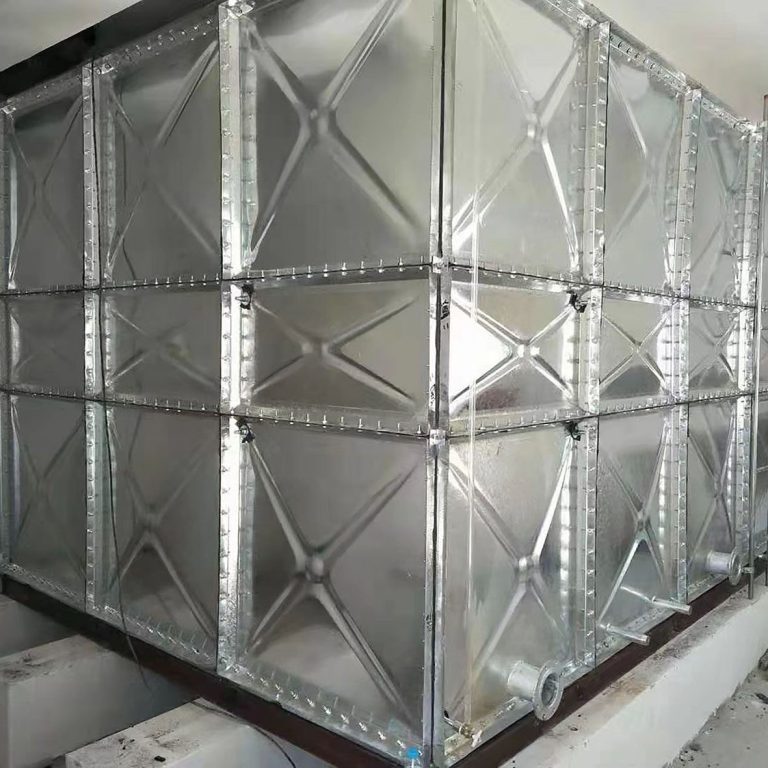
Bolted Stainless Steel Sectional Water Tank (SS304 / SS316)
Bolted stainless steel sectional water tank (SS304/316), also called modular or panel tank: flat-packed panels for potable, fire and process storage.
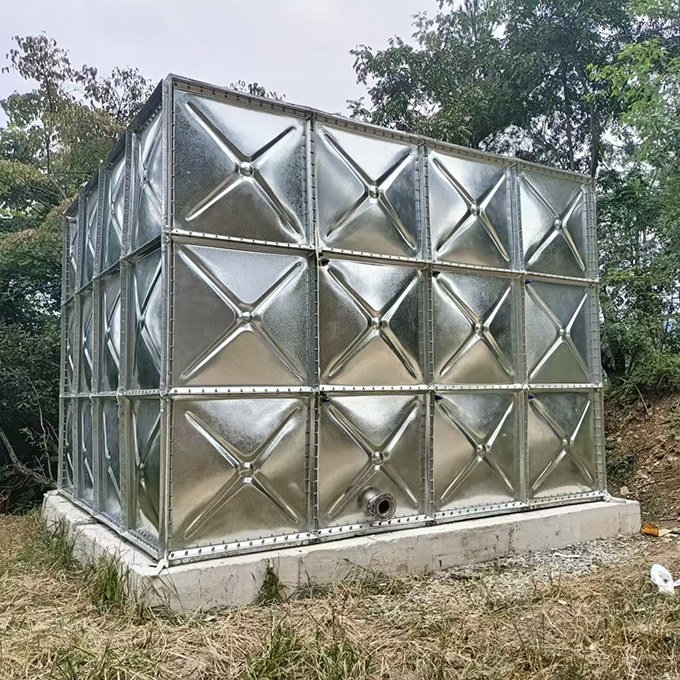
Hot-Dip Galvanized (HDG) Steel Bolted Sectional Water Tank
Hot-dip galvanized steel bolted sectional water tank (HDG / galvanised panel tank) for fire, irrigation and industrial water: flat-packed for export.
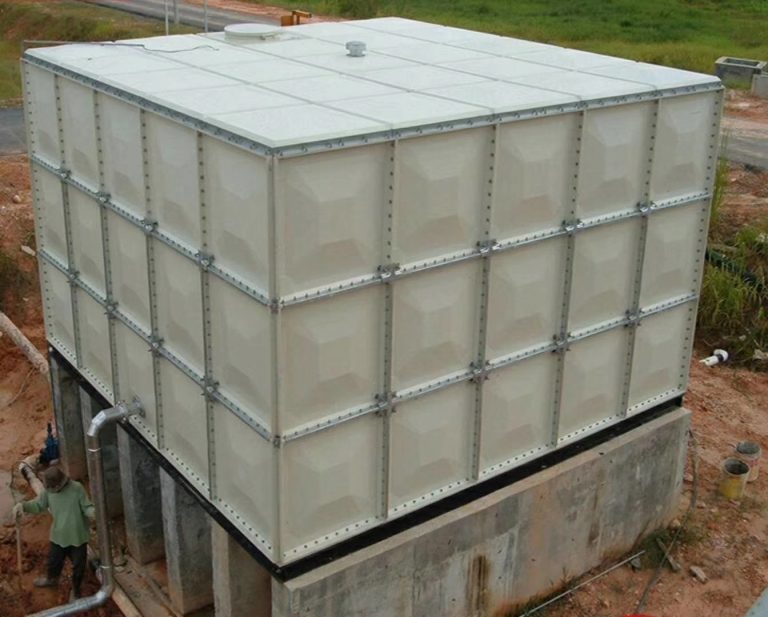
Bolted GRP/FRP Sectional Water Tank (SMC Panel)
Bolted GRP/FRP sectional water tank made from factory-molded SMC panels for potable, fire, wastewater and industrial water storage.
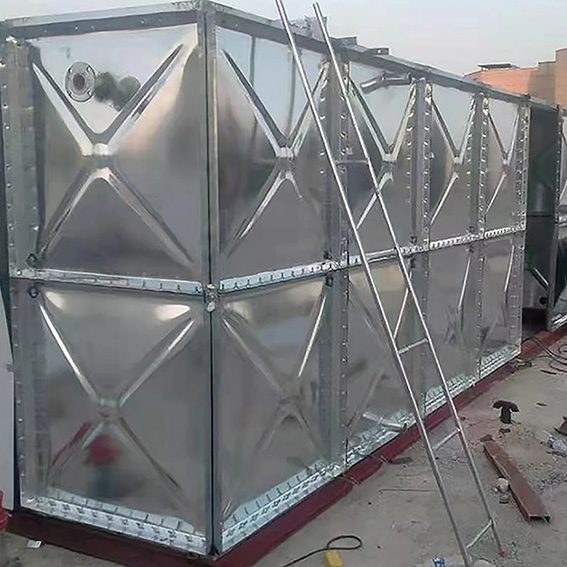
Duplex-Coated Galvanized Steel Panel Water Tank (BDF)
Duplex-coated galvanized steel panel water tank (BDF) for potable, fire and rural water: modular, flat-packed and available with a project-approved coating.
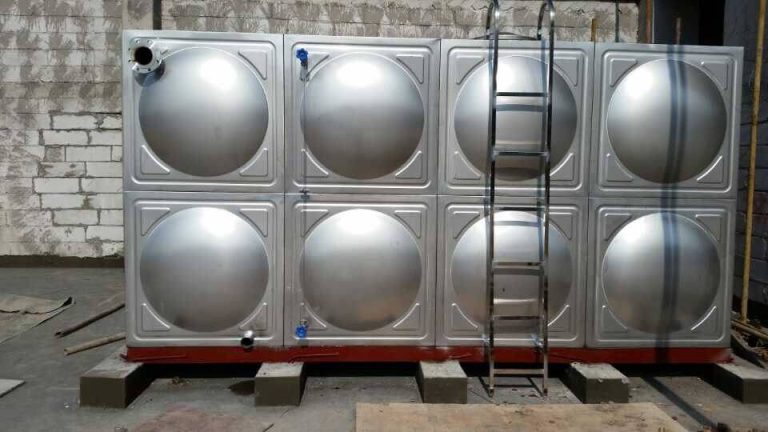
Welded Stainless Steel Water Tank (304 / 316)
Welded stainless steel water tank (SS304/316L) for potable, food, pharmaceutical and process duty, with factory or site welding and export documentation.
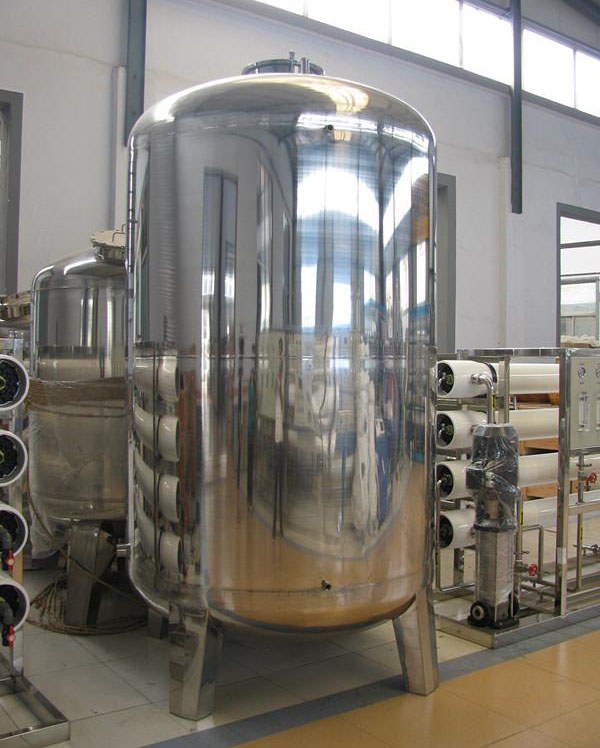
Aseptic Stainless Water Tank (SS304 / SS316L)
Aseptic stainless steel water tank (sterile/pharmaceutical purified water tank) in SS316L with 0.22 micron vent, CIP/SIP and nitrogen option.
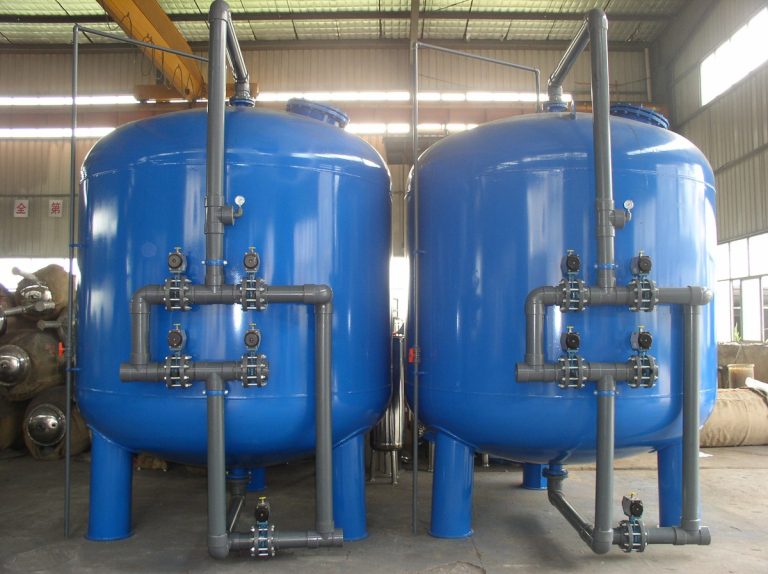
Mechanical Media Water Filter – Sand, Anthracite & Carbon
Mechanical media water filter, also called pressure sand filter or multimedia filter: steel, stainless or FRP vessels for turbidity and RO/UF pretreatment.
Bag Filter for Water Treatment (1-100 micron)
Liquid bag filter housing for water treatment: single and multi-bag units in carbon steel, SS304/316L or PP for RO guard and process…
Cartridge Security Filter – RO Guard & Micron Filtration
Stainless steel cartridge (security) filter housing for RO guard, ultrapure terminal and process water polishing: PP melt-blown, wound or pleated membrane cartridges,…
Frequently asked questions
What is a pool stainless steel sand filter?
It is a closed pressure vessel filled with a uniform quartz sand bed that clarifies circulating pool water. LONGCOM supplies SS304/316L vertical vessels as a skid with manifold, multiport valve and gauges, sized to pool volume and cycle per CJ/T 405 and CJJ 122.
Does the sand filter disinfect the pool water?
No. It removes turbidity, suspended particles, hair and skin flakes and some colloids. It does not reliably remove urea, dissolved organics or microorganisms; disinfection, make-up water and hygiene management must still meet GB 37488 limits separately.
What filtration rate and bed depth apply?
For a single-layer quartz sand pool vessel, CJJ 122 gives an effective bed depth of at least 700 mm and a design rate of 15-25 m/h. Public and commercial pools take the lower end; private, relaxation, diving and cold pools may take the upper end.
304 or 316L stainless for a pool filter?
304 suits ordinary indoor freshwater pools. Heated indoor pools, ozonated pools or elevated chloride duty should be reviewed against the make-up analysis; specify 316L in the contract where the corrosion condition requires it.
What pressure rating should the vessel have?
Per CJ/T 405, the steel vessel nominal pressure is at least 0.60 MPa and internal components at least 1.0 MPa. Per CJJ 122, the filter working pressure must be at least 1.5 times the system working pressure; take the stricter value into the agreement.
When should the filter be backwashed?
When differential pressure reaches 0.03-0.06 MPa, after more than 5 days continuous operation, or after the pool has been closed filled for more than 5 days. Backwash one vessel at a time; water wash 12-15 L/(s.m2) for 6-7 min, then rinse at no less than 1.2x flow for 1-3 min.
How many filter vessels does a public pool need?
Large and medium pools (at least 200 m3) need no fewer than two vessels and total capacity of at least 1.10 times circulation flow. Size from circulation flow and design rate, then check the N-1 backwash rate so the remaining vessels stay within 15-25 m/h.
Can one media filter serve both pool circulation and industrial pretreatment?
The principles are similar, but duties differ. Pool vessels follow CJJ 122 pool rates and backwash regimes; industrial RO/UF pretreatment follows its own water analysis and velocity. Specify the duty and water chemistry so the vessel, media and valve are selected for that service.