
SS304 / SS316L hygienic stainless steel
Aseptic Stainless Water Tank (SS304 / SS316L)
Aseptic stainless steel water tank (sterile/pharmaceutical purified water tank) in SS316L with 0.22 micron vent, CIP/SIP and nitrogen option.
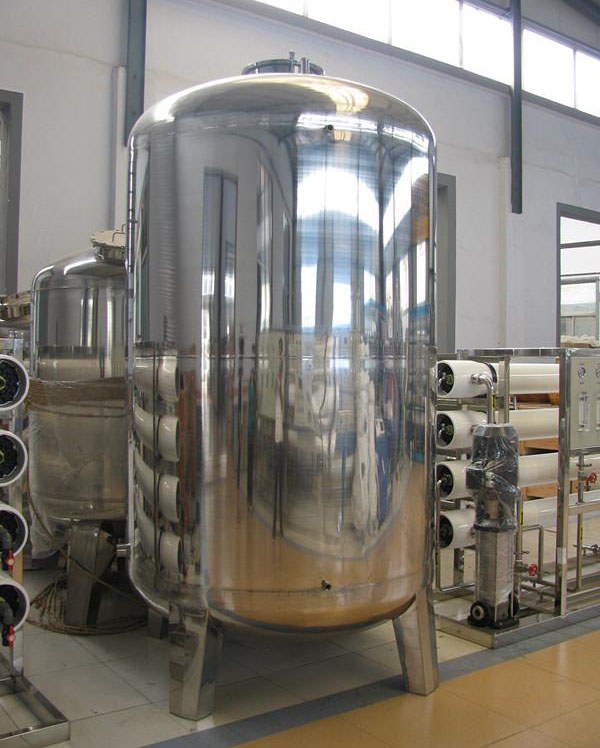
An aseptic water tank is a closed, cleanable stainless vessel that protects treated water from airborne contamination after the treatment plant has done its job. It is not a steriliser. It is the buffer between a purification system — RO, UF, distillation or softening — and the point of use, designed around three controls: a closed tank, filtered air at the vent, and a surface that can be cleaned and verified.
LONGCOM supplies aseptic stainless tanks in SS304 and SS316L for pharmaceutical purified-water buffers, food and beverage process water, direct-drinking systems, cosmetics, electronics ultrapure-water pre-storage and laboratory water. Effective volume ranges from 0.5 m³ to 50 m³ as standard, with larger custom vessels reviewed against the project layout and transport plan.
What makes a tank “aseptic” in practice
The word is often used loosely. For a project specification, it should be defined by measurable features rather than a label. The table below separates the usual requirements from the claims that need project-specific evidence.
| Feature | Typical requirement | Why it matters |
|---|---|---|
| Closed vessel | Sealed manway, sealed connections, no open vent to atmosphere. | Stops dust, insects and airborne microbes from entering the headspace. |
| Vent filtration | 0.22 μm hydrophobic PTFE breather; 0.45 μm optional. | Filters air moving in and out as the tank fills, draws or breathes. |
| Contact surface | SS304 or SS316L; mechanical polish Ra ≤0.8 μm; EP option Ra ≤0.4 μm. | Reduces biofilm attachment and makes cleaning verification possible. |
| Cleanability | Spray ball or CIP connection; sloped or drainable bottom; accessible welds. | Allows routine cleaning without opening the tank to contamination. |
| Drainage | Full drain to a sanitary outlet; no dead pockets. | Prevents standing water and bacterial growth. |
| Pressure control | Atmospheric or 0.1–0.6 MPa design, with a protected vent and relief arrangement. | Prevents vacuum or overpressure from damaging the tank or drawing unfiltered air. |
| Instrumentation | Sanitary level, temperature and pressure connections; optional transmitter. | Supports monitoring and documentation without adding dead legs. |
| Optional inert gas | Nitrogen blanketing for oxygen-sensitive product. | Reduces dissolved oxygen and headspace oxidation; requires gas control and safety review. |
Standard specification envelope
| Parameter | Standard range | Project-specific options |
|---|---|---|
| Effective volume | 0.5–50 m³ | Larger custom vessels subject to layout and transport review. |
| Material | SS304 (06Cr19Ni10); SS316L (022Cr17Ni12Mo2) | Other grades only where the water chemistry requires and the material is available. |
| Inner surface | Mechanical polish Ra ≤0.8 μm | Electrolytic polish Ra ≤0.4 μm; weld dressing and passivation. |
| Design pressure | Atmospheric or 0.1–0.6 MPa | Higher pressure requires a separate design and inspection scope. |
| Design temperature | 4–60 °C | Higher temperature depends on seals, insulation and pressure rating. |
| Vent filter | 0.22 μm hydrophobic PTFE | 0.45 μm, duplicate breather or heated jacket where specified. |
| Connections | Sanitary clamp, flange or welded | Standard and orientation fixed on the approved drawing. |
| Cleaning | Spray ball / CIP connection; drain | Rotary spray ball, multiple spray points, clean-in-place return. |
| Options | Nitrogen blanketing, UV or ozone, level transmitter, insulation, cladding | Only where the process and safety review support the option. |
Material selection: SS304 or SS316L
SS304 is the common choice for neutral, low-chloride drinking water, food process water and direct-drinking storage. SS316L is selected where chloride is higher, where the water is purified or slightly acidic, where cleaning chemicals are aggressive, or where the project specification calls for a molybdenum-bearing grade. The decision should come from the water analysis, the cleaning regime and the product contact requirement — not from a generic upgrade.
Surface finish is part of the material selection. A smooth sheet with a rough weld is not a hygienic surface. For welded vessels, the weld should be dressed, pickled and passivated, and the internal geometry should avoid sharp corners and dead pockets. For bolted vessels, the joint and seal are part of the wetted surface and should be reviewed for cleanability.
Where an aseptic tank is used
- Pharmaceutical purified water: buffer storage downstream of RO or distillation, with a validated cleaning and sampling regime.
- Food and beverage: ingredient water, beverage make-up water, rinse water and CIP make-up.
- Direct drinking and building supply: filtered drinking water storage in schools, hospitals, hotels and residential communities.
- Cosmetics and personal care: purified process water where microbial control is required.
- Electronics: ultrapure-water pre-storage before polishing loops.
- Laboratory and small water stations: purified water storage where a closed, cleanable vessel is preferred.
An aseptic tank should not be used as the first treatment step for raw surface water, sewage or high-turbidity water. Those sources need clarification, filtration and disinfection upstream. The tank protects treated water; it does not make contaminated water safe.
Volume sizing
Size the tank around the buffer the process actually needs, not around a round number. A common starting point is the peak-hour demand multiplied by one to two hours of buffer, plus the volume needed to keep the treatment plant running through a shutdown or backwash cycle. For pharmaceutical and food systems, add the volume required during cleaning and sanitisation, and check the turnover time against the water-quality limit.
Oversizing is not free. A tank that is too large for the demand can create long residence times, low turnover and stagnation. If the process has a low daily draw, consider a smaller tank with a circulation loop or a duty/standby pair rather than one large vessel.
Cleanability, venting and pressure protection
The vent is the most overlooked part of an aseptic tank. As the tank fills, water displaces air; as it draws, air enters. Without a filtered breather, that air carries dust and microbes into the headspace. The breather should be sized for the maximum fill and draw rate, mounted so that condensate cannot block it, and maintained on a defined replacement interval.
The tank also needs pressure protection. A closed vessel with a blocked vent can be damaged by vacuum during draw-off or by overpressure during filling. The design should include a protected vent, a vacuum relief or a pressure relief arrangement as appropriate, and the operating procedure should include a vent-check. Do not rely on the breather filter as the only pressure-protection device.
CIP coverage should be reviewed on the drawing. A single spray ball may not cover a tall or rectangular vessel. The number and position of spray points, the drain slope and the welds should be arranged so that the cleaning solution reaches every wetted surface and drains completely.
Public project reference
The company project record includes a beverage-plant purified-water tank in East China: 20 m³ effective volume, SS316L, internal electrolytic polish Ra ≤0.4 μm, 0.22 μm breather, nitrogen protection and a CIP loop. The project is a reference for the configuration logic, not a claim that every beverage plant needs the same package. Final volume, finish and instrumentation are set by the process owner’s validation and operating requirements.
Standards and documentation
Chinese projects commonly reference GB 5749 for drinking water, GB/T 17219 for water-contact safety, GB 4806.9 for food-contact metal materials, GB/T 3280 for stainless steel plate and GB 50242/GB 50236 for installation and welding. Pharmaceutical projects may reference GMP and the Chinese Pharmacopoeia requirements for purified water and water for injection. Export projects may reference NSF/ANSI 61, WRAS, FDA or a local health authority requirement.
LONGCOM can provide material certificates, weld records, pressure-test records, surface-roughness records, passivation records and O&M instructions as agreed in the contract. A GMP compliance statement, a pharmacopoeia validation, an NSF/ANSI 61 certificate or a WRAS approval is not claimed unless a valid document is issued for the proposed product and scope.
Send your volume, water analysis and finish requirement
Buyer terminology: what this product is called in different markets
The same product is searched under different English names in different regions. The table below records the names buyers actually use, so a specification or RFQ is not lost to a literal translation.
Primary English name: Aseptic stainless steel water tank
Also searched as: aseptic storage tank · sterile water storage tank · pharmaceutical water storage tank · purified water storage tank · CIP tank · hygienic stainless steel tank · sanitary tank.
| Market | Common English search name |
|---|---|
| United States & Canada | aseptic storage tank; sanitary stainless steel tank; CIP tank |
| United Kingdom & Europe | sterile water storage tank; hygienic stainless steel tank; CIP/SIP vessel |
| Middle East & GCC | aseptic water tank; purified water storage tank |
| Southeast Asia | aseptic stainless tank; pure water tank |
| India & South Asia | aseptic water storage tank; pharmaceutical water tank |
| Africa | sterile water storage tank; hygienic water tank |
| Australia & New Zealand | aseptic tank; sanitary stainless tank |
Attribute and application terms: SS316L, 0.22 micron hydrophobic vent, CIP/SIP, Ra ≤0.8 μm, Ra ≤0.4 μm optional, jacketed, insulated, nitrogen blanketing, zero dead leg. Typical duties include pharmaceutical purified water, WFI when specified, food and beverage, dairy, cosmetics, electronics, laboratory, direct drinking.
Long-tail search phrases
- aseptic stainless steel water tank for pharmaceutical purified water.
- sterile water storage tank with 0.22 micron hydrophobic vent filter.
- CIP and SIP hygienic tank for food and beverage plants.
- SS316L purified water storage tank with nitrogen blanketing.
- sanitary aseptic tank for cosmetics and laboratory water.
In India, Africa and parts of the Middle East, “aseptic tank” can be confused with a septic tank for sewage. Always add “water storage” or “pharmaceutical” to separate the intent.
Related products and systems
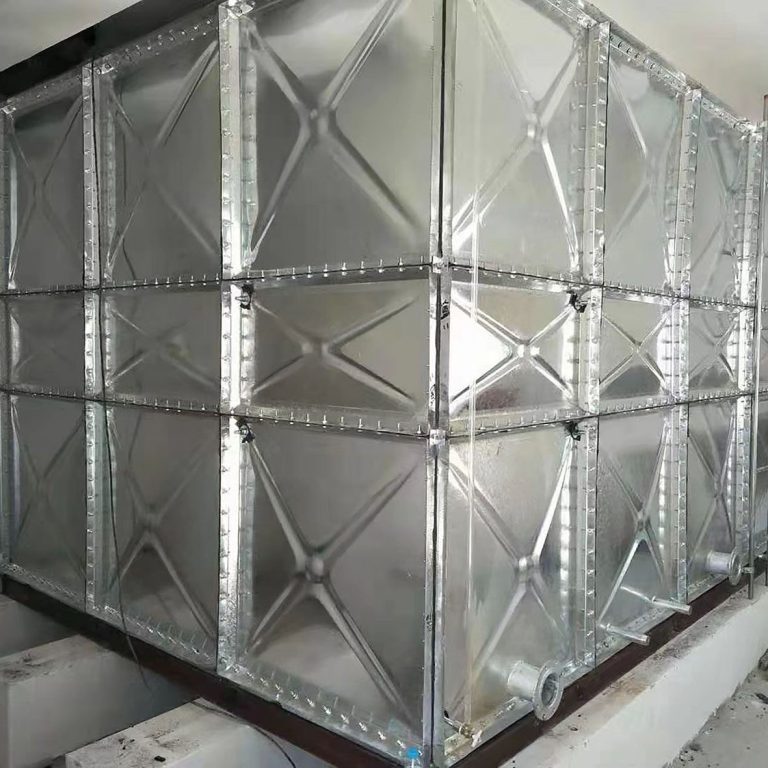
Bolted Stainless Steel Sectional Water Tank (SS304 / SS316)
Bolted stainless steel sectional water tank (SS304/316), also called modular or panel tank: flat-packed panels for potable, fire and process storage.
SS304 / SS316 stainless steel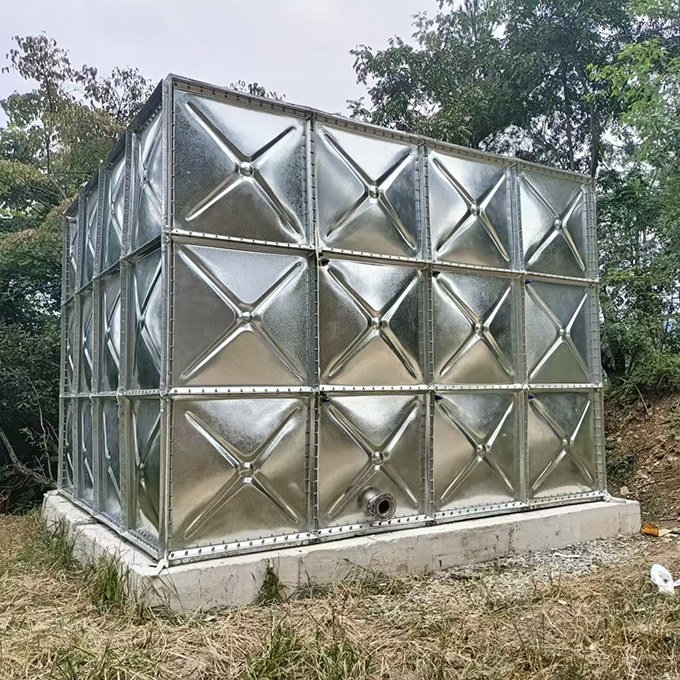
Hot-Dip Galvanized (HDG) Steel Bolted Sectional Water Tank
Hot-dip galvanized steel bolted sectional water tank (HDG / galvanised panel tank) for fire, irrigation and industrial water: flat-packed for export.
Hot-dip galvanized mild steel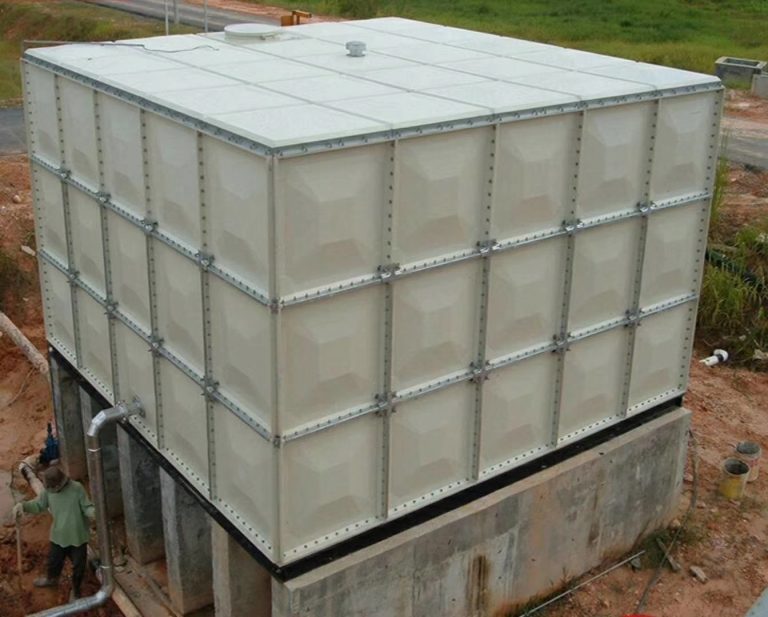
Glass-Fused-to-Steel (GFS) Sectional Water Tank
Glass-fused-to-steel (GFS) sectional water tank: factory-fused glass coating on bolted panels for municipal, wastewater, biogas and industrial storage.
Steel sheet with factory-fired glass (glass-fused-to-steel)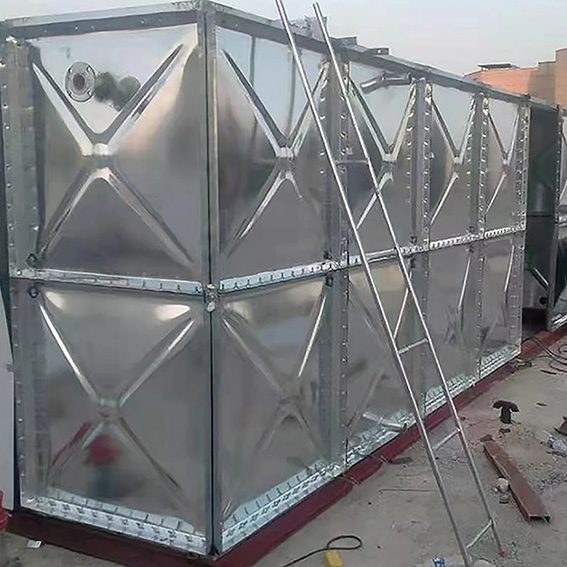
Duplex-Coated Galvanized Steel Panel Water Tank (BDF)
Duplex-coated galvanized steel panel water tank (BDF) for potable, fire and rural water: modular, flat-packed and available with a project-approved coating.
Hot-dip galvanized steel with bonded protective coating (duplex)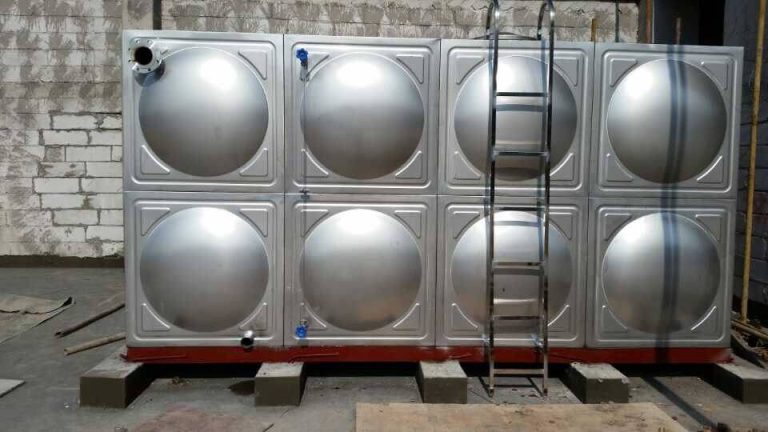
Welded Stainless Steel Water Tank (304 / 316)
Welded stainless steel water tank (SS304/316L) for potable, food, pharmaceutical and process duty, with factory or site welding and export documentation.
SS304 / SS316 / SS316L stainless steel, welded constructionAseptic Stainless Water Tank (SS304 / SS316L)
Aseptic stainless steel water tank (sterile/pharmaceutical purified water tank) in SS316L with 0.22 micron vent, CIP/SIP and nitrogen option.
SS304 / SS316L hygienic stainless steel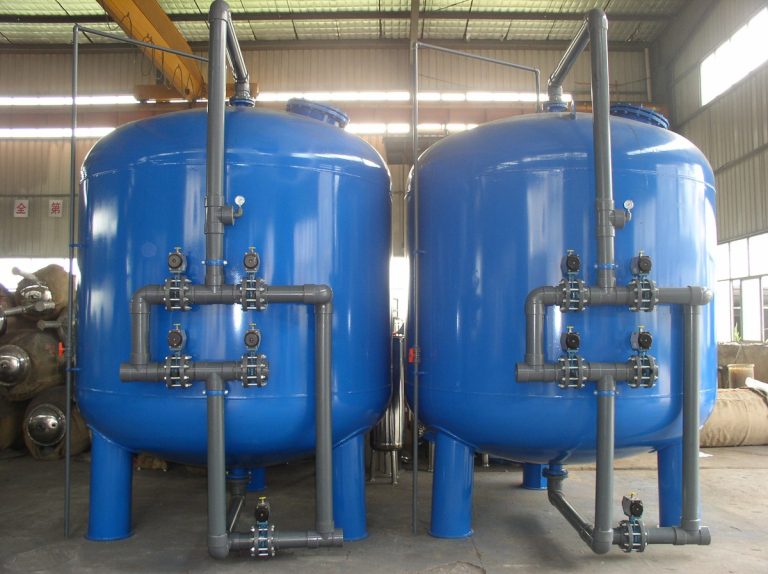
Mechanical Media Water Filter (Sand, Anthracite, Manganese, Carbon)
Mechanical media water filter, also called pressure sand filter or multimedia filter: steel, stainless or FRP vessels for turbidity and RO/UF pretreatment.
Epoxy-coated carbon steel; SS304/316; FRP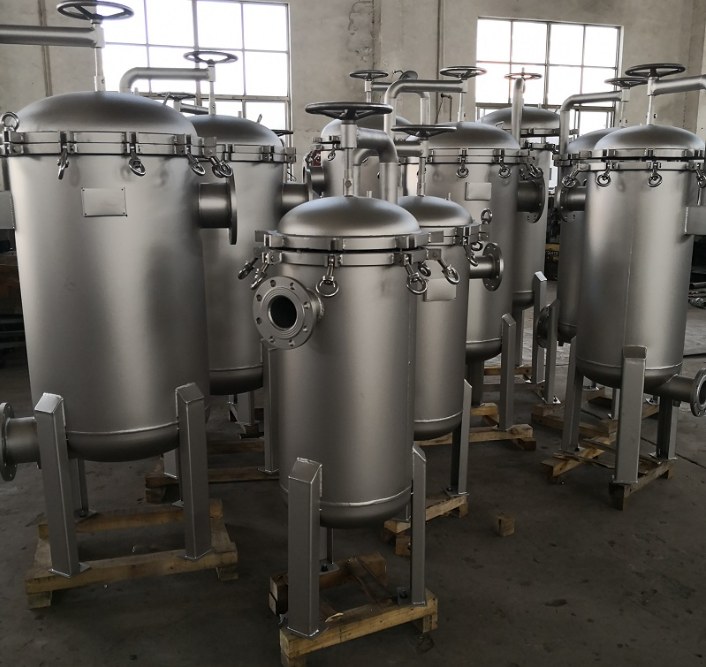
Bag Filter for Water Treatment (1-100 micron)
Liquid bag filter housing for water treatment: single and multi-bag units in carbon steel, SS304/316L or PP for RO guard and process…
Carbon steel, SS304/316L, PP; NBR/EPDM/FKM/silicone sealsFrequently asked questions
Is an aseptic tank the same as a steriliser?
No. The tank stores treated water and reduces recontamination through a closed vessel, filtered vent and cleanable surface. Sterilisation or disinfection is a separate process, such as UV, ozone, heat or chemical treatment.
Should I choose SS304 or SS316L?
SS304 is common for neutral, low-chloride drinking and food water. SS316L is selected for higher chloride, purified or slightly acidic water, aggressive cleaning chemicals or a project specification. The water analysis and cleaning regime should decide.
What surface finish can you provide?
Mechanical polish Ra ≤0.8 μm is standard. Electrolytic polish Ra ≤0.4 μm is available where specified. Weld dressing and passivation are part of the finish scope, not an optional cosmetic.
Why does the tank need a breather?
The tank breathes as it fills and draws. A 0.22 μm hydrophobic PTFE breather filters the air and reduces microbial and particulate ingress. It must be sized for the flow and maintained on a replacement schedule.
Can the tank be supplied with CIP and nitrogen blanketing?
Yes, where the process and safety review support it. CIP spray coverage, drain slope, gas controls, relief and instrumentation should be designed together. Nitrogen introduces an asphyxiation hazard and requires a safe venting procedure.
How often should the tank be cleaned?
It depends on water quality, temperature and turnover. A common starting interval is quarterly to half-yearly CIP with breather inspection, adjusted by microbial and conductivity trends. The project’s validation and monitoring plan should set the actual frequency.
Do you provide GMP or NSF certification?
We provide the material, weld, pressure, roughness and passivation records agreed in the contract. A GMP compliance statement, NSF/ANSI 61 certificate or WRAS approval is claimed only if a valid document covers the proposed product and scope.
Can the tank be shipped as a complete vessel?
Small tanks can ship as a complete vessel. Larger tanks may be segmented or site-assembled to fit the container and the access route. The drawing and packing plan are confirmed before fabrication.