
Glass-fiber reinforced plastic (GRP/FRP), SMC molded panel
Bolted GRP/FRP Sectional Water Tank (SMC Panel)
Bolted GRP/FRP sectional water tank made from factory-molded SMC panels for potable, fire, wastewater and industrial water storage.
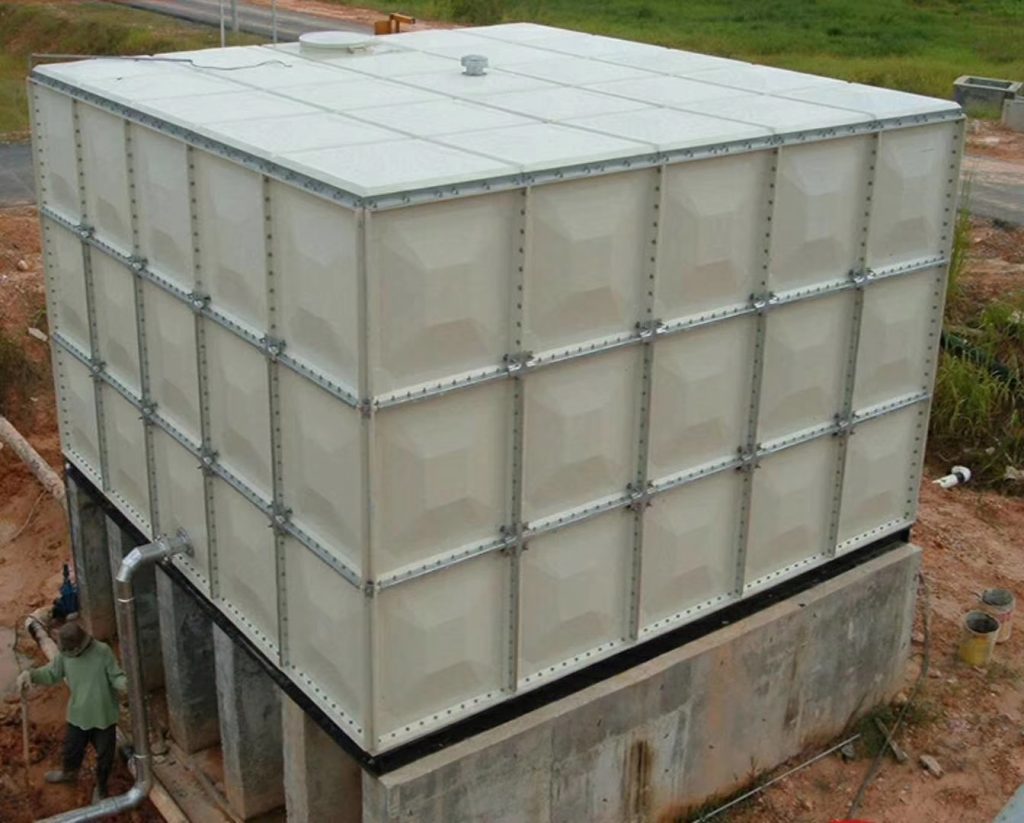
A bolted GRP/FRP sectional water tank is a site-assembled storage tank made from factory-molded SMC panels, sealing strips and bolts. It is specified where a lightweight, corrosion-resistant tank must be shipped flat, moved through restricted access, and assembled without hot work.
Quick specification
| Product name | Bolted GRP/FRP Sectional Water Tank (SMC Panel) |
|---|---|
| Panel material | Glass-fiber reinforced plastic (GRP/FRP), molded from SMC (Sheet Molding Compound) |
| Panel construction | Molded panel with integrated ribbing; food-grade resin option for potable water |
| Typical panel sizes | 1,000 × 1,000 mm, 1,220 × 1,220 mm, 1,000 × 500 mm; project-specific sizes available |
| Typical panel thickness | 4–12 mm depending on tank height, support spacing and project specification |
| Connection | Bolted assembly with sealing strips; no site welding required |
| Capacity range | From small sectional units to multi-thousand cubic meter site-assembled tanks |
| Applications | Potable water, fire reserve, wastewater, industrial process water, irrigation, HVAC make-up |
| Options | Insulation, roof access, inlet/outlet/overflow/drain connections, level indicators, ladders, anti-vortex outlets |
| Documentation | Approved drawing, panel schedule, material declaration, packing list, water-tightness test record and O&M manual |
What “bolted GRP/FRP sectional” actually means
“GRP” and “FRP” describe the same family of material: glass fibers embedded in a resin matrix. GRP is the common term in many export markets; FRP is the common term in North America. The panels are not steel with a paint or glass coating. They are molded plastic composite panels, which is why the tank is lightweight and does not depend on a steel substrate for corrosion resistance.
“Sectional” means the tank is made from repeatable panels rather than a single factory-welded vessel. The panels, seals, bolts and structural components are packed by erection sequence, shipped in containers, and assembled on a prepared base. “Bolted” means the joints are mechanically tightened on site; there is no hot work, no site welding permit and no fire watch.
SMC — Sheet Molding Compound — is a specific molding process used for many GRP/FRP panel tanks. The compound is molded under heat and pressure into a panel with integrated ribbing. A well-made SMC panel has consistent thickness, a defined rib pattern and a controlled resin-rich surface. The quality of the resin, fiber content, molding pressure and UV protection matters more than the label “SMC” alone.
Why specify a bolted GRP/FRP tank
1. Lightweight panels and lower structural load
GRP/FRP panels are significantly lighter than steel panels of comparable thickness. On roof-mounted, elevated or seismic-sensitive structures, that weight difference can reduce the support steel and foundation load. The design still needs a proper base and anchorage; lightweight does not mean “no foundation.”
2. Corrosion resistance without a steel substrate
The water-contact surface is a molded plastic composite, not a painted or coated steel face. For potable, wastewater, mildly acidic or saline service, the correct resin system can offer good chemical resistance. The resin must be selected for the actual water chemistry and temperature; a generic “GRP tank” is not automatically suitable for every chemical.
3. Flat shipping and restricted-site access
Panels nest and pack flat. A large tank can be shipped in standard containers and moved through doors, service corridors or plant areas where a finished steel vessel cannot pass. On occupied industrial sites, this is often the deciding factor.
4. No hot work
Bolted assembly avoids welding permits, fire watches and hot-work insurance. That makes the tank easier to install in operating factories, warehouses, hospitals, food plants and sites where a shutdown is expensive.
5. Extension and relocation
A bolted sectional tank can be extended panel-by-panel if the base and structure were designed for the final footprint. It can also be dismantled and moved, although seals and bolts should be replaced and the panels inspected after transport.
Panel construction and resin selection
A GRP/FRP panel is not just “fiberglass.” The panel performance depends on the resin type, fiber content, molding process, rib design, surface veil and UV protection. For potable water, the resin and all water-contact components must be suitable for drinking water and supported by a certificate for the exact panel system and factory.
| Resin system | Isophthalic polyester, orthophthalic polyester or vinyl ester, selected for water chemistry and temperature |
|---|---|
| Reinforcement | Chopped glass fiber or glass-fiber mat, with a resin-rich surface to protect the fibers |
| RIB design | Integrated molded ribs for stiffness; rib depth and spacing are part of the tank structural design |
| UV protection | UV-stabilized outer surface or an approved coating; color is a project option, not a performance guarantee |
| Potable option | Food-grade resin and water-contact declaration; confirm the exact certificate and scope |
Do not accept a panel data sheet that only states “food grade.” Ask for the resin supplier, the panel construction, the water-contact certificate number, the factory name and the validity date. If the tender requires NSF/ANSI 61, WRAS or another potable-water listing, send the exact requirement and country of installation before award.
Applications
Potable water storage
Municipal and community water storage, rooftop domestic tanks, school and hospital reserves. The panel system must use a potable-grade resin and a documented water-contact certificate. The tank must also be protected from light, kept vented and designed for cleaning and inspection.
Fire water reserve
Fire reserves for factories, warehouses, logistics parks and commercial buildings. The fire design must state the usable volume, not only the nominal geometric volume. Freeboard, dead volume, outlet clearance and vortex allowance reduce the usable volume. Confirm the local fire code and the authority having jurisdiction.
Wastewater and process water
Equalization, storage, dosing and process water. The resin must be checked against the actual chemical composition, temperature and concentration. For aggressive chemicals, a vinyl ester resin or a different tank type may be required.
Irrigation and HVAC
Irrigation storage, HVAC make-up and buffer tanks, and general industrial water. These duties often prioritize cost, footprint and installation speed over potable certification.
Engineering and base design
A sectional tank is a structural system, not a bag of panels. The base must be level, continuous and designed for the filled weight without differential settlement. Anchorage must be set before panel erection. The panel layout, rib direction, bolt spacing and roof support must follow the approved drawing.
| Base | Reinforced concrete slab or steel support frame, level within the project tolerance, with anchor positions set by drawing |
|---|---|
| Loads | Hydrostatic water load, panel self-weight, wind, seismic, roof access and maintenance loads |
| Anchorage | Chemical anchors or cast-in anchors; anchor type and edge distance confirmed by the project engineer |
| Connections | Inlet, outlet, overflow, drain, vent, level indicator and access hatch coordinated with the panel layout |
| Access | Roof hatch, ladder and safe access for inspection and cleaning; fall protection as required by local rules |
For elevated, roof-mounted or seismic sites, provide the support layout and design loads to the tank manufacturer before panel fabrication. Do not leave the base and anchorage to the end of the project; they are hold points, not finishing works.
How it compares with other tank types
| Tank type | Strengths | Limits | Best fit |
|---|---|---|---|
| Bolted GRP/FRP | Lightweight, corrosion-resistant, flat shipping, no hot work, extendable | Resin/UV quality matters; potable certificate required; structural base still needed | Potable, wastewater, industrial, restricted sites |
| Bolted stainless steel | Metallic strength, good for fire and high temperature, familiar to inspectors | Higher material cost; 304 is not ideal in high-chloride environments | Fire reserves, industrial, high-spec projects |
| Hot-dip galvanized steel | Lower cost for large industrial tanks, strong panel system | Coating maintenance; potable duty needs a suitable lining | Industrial, irrigation, fire (subject to specification) |
| Welded stainless steel | Seam-free vessel, high hygiene, suitable for special shapes | Site welding, larger transport envelope, higher cost | Aseptic, pharma, food, high-head duties |
GRP/FRP is not automatically “better” than stainless, HDG, BDF or welded stainless. The right choice depends on water chemistry, temperature, structural load, fire code, potable certification, site access and maintenance plan. A supplier that claims one tank type is best for every project is not giving you an engineering answer.
Site installation sequence
- Base acceptance: check level, dimensions, anchor positions, concrete strength and cleanliness before panels arrive.
- Panel staging: keep panels off the ground, protected from UV and impact, and stacked according to the packing plan.
- Bottom and wall erection: place panels by drawing, fit sealing strips, tighten bolts in the specified sequence, and check plumb and diagonal dimensions.
- Roof and access: install roof panels, hatch, ladder and vent; confirm safe access and fall protection.
- Connections: install inlet, outlet, overflow, drain and level indicator; check that no fitting loads the panel joint.
- Water-tightness test: fill and inspect joints, panel surfaces and connections; record the test result.
- Handover: provide the as-built drawing, panel schedule, test record, O&M manual and spare seals/bolts.
Do not fill the tank before the base, anchors and joint tightening are signed off. A leak at the base is usually a base or anchor problem, not a panel problem.
Packing and export
Panels are nested and packed by erection sequence. Seals, bolts, washers and special fittings are packed in labeled kits by tank zone. The packing list should match the panel schedule; a missing seal kit can stop a site for days.
| Panel packing | Nested, edge-protected, strapped and labeled by panel code and tank zone |
|---|---|
| Accessories | Seals, bolts, washers, hatch, ladder, level indicator and special connections in labeled kits |
| Container plan | Based on panel size, nesting efficiency, unloading sequence and site storage space |
| Spares | Recommended spare seals, bolts and repair kit for the erection sequence |
| Documents | Packing list, panel schedule, installation manual, material declaration and certificate package |
Terminology note: GRP/FRP is not glass-fused-to-steel
GRP/FRP and glass-fused-to-steel are different products, not different names for the same tank. Glass-fused-to-steel is a steel panel with a factory-fired glass enamel coating; the steel carries the load and the glass protects the surface. GRP/FRP is a molded glass-fiber reinforced plastic panel; there is no steel substrate in the panel. A quotation that substitutes one for the other is a different product offer, not a synonym. If a tender uses “glass steel tank” or “fiberglass tank,” ask for the panel build-up, resin system and water-contact certificate before comparing prices.
Common specification mistakes to avoid
Most bad GRP/FRP tank decisions are made before the quotation is issued, not during installation. The following mistakes are common in export tenders and should be closed in the RFQ.
- Specifying “GRP” without a resin system. “GRP” describes the reinforcement, not the resin. Isophthalic polyester, orthophthalic polyester and vinyl ester behave differently in water chemistry, temperature and cleaning chemicals. The quotation should name the resin and the water-contact certificate, not only the panel family.
- Using panel thickness as the only structural criterion. Panel thickness matters, but so do rib depth, rib spacing, bolt spacing, support spacing and tank height. A thick panel on a weak base is not a stronger tank. Require the panel calculation and the base load drawing.
- Leaving the base and anchorage to the end. The tank is only as good as its base. Level, bearing capacity, anchor positions and edge distance must be signed off before panels arrive. A base that settles after filling will open joints that no seal can fix.
- Treating “SMC” as a performance guarantee. SMC is a molding process. Two panels can both be “SMC” and still differ in fiber content, resin, molding pressure, rib design and UV protection. Ask for the panel data sheet, not only the process name.
- Mixing glass-fused-to-steel, GRP/FRP and “glass steel” in one tender. These are different products. If the tender allows alternatives, require a separate technical submission for each product; do not compare a GRP/FRP panel price with a glass-fused-to-steel panel price as if they were equal.
- Forgetting seals, bolts and spares. Seals are a wear item. A tank without a spare seal kit and the correct bolt grade can be stopped by a single joint leak. Include the spare allowance and the tightening procedure in the package.
How to review a GRP/FRP quotation
A complete quotation should let a consultant check the offer without asking for missing data. Use the following checklist when comparing suppliers.
| Panel build-up | Resin type, glass-fiber content, panel thickness, rib design and surface finish |
|---|---|
| Structural design | Tank height, support spacing, base load, anchor layout and design code |
| Water contact | Potable-water certificate or test report, cleaning-chemical compatibility and temperature limit |
| Joints and fittings | Seal material, bolt grade, gasket material and connection schedule |
| Documentation | Approved drawing, panel schedule, packing list, test record and O&M manual |
| Commercial scope | Spare seals, bolts, repair kit, installation supervision and warranty terms |
If a quotation is only a price and a panel size, it is not a technical offer. Ask for the missing items in writing before award. The cheapest panel price is not the lowest installed cost if the base, seals or documentation have been excluded.
RFQ checklist
Send the following data with the inquiry. A quotation without these inputs is only a budget number, not a design.
| 1 | Nominal capacity and required usable volume |
|---|---|
| 2 | Tank dimensions or available footprint and height limit |
| 3 | Application: potable, fire, wastewater, process, irrigation or HVAC |
| 4 | Water chemistry, temperature and any cleaning chemicals |
| 5 | Required standard and potable-water certificate, if any |
| 6 | Site location, indoor/outdoor, coastal or chemical exposure |
| 7 | Base type: concrete slab, steel frame, roof or elevated structure |
| 8 | Connection schedule and access requirements |
| 9 | Insulation, color, UV protection and any special options |
| 10 | Delivery port, Incoterms, site access and required delivery date |
Quality and documentation
Quality control should cover incoming resin and glass fiber, panel molding, panel dimensions, rib pattern, surface defects, bolt and seal dimensions, and water-tightness testing. The documentation pack should allow a consultant or inspector to check the tank against the approved drawing without relying on verbal assurances.
- Approved general arrangement drawing and panel layout
- Panel material declaration and resin data sheet
- Panel dimensional and visual inspection record
- Seal, bolt and fitting packing list
- Water-tightness test record
- Installation and maintenance manual
- Potable-water certificate where applicable
Need a GRP/FRP tank for your project?
Send capacity, dimensions, water chemistry, application, required standard, site constraints and delivery port. The quotation will confirm the panel system, base load, connection schedule, packing plan and lead time in writing.
Related pages
Buyer terminology: what this product is called in different markets
The same product is searched under different English names in different regions. The table below records the names buyers actually use, so a specification or RFQ is not lost to a literal translation.
Primary English name: Bolted GRP/FRP sectional water tank (SMC panel)
Also searched as: GRP sectional water tank · FRP sectional water tank · SMC panel water tank · glass fiber reinforced plastic water tank · fiberglass sectional tank · bolted composite panel tank.
| Market | Common English search name |
|---|---|
| United States & Canada | FRP bolted sectional water tank; fiberglass reinforced plastic tank |
| United Kingdom & Europe | GRP bolted sectional water tank; SMC panel tank |
| Middle East & GCC | GRP sectional water tank; SMC panel water tank |
| Southeast Asia | GRP/FRP sectional water tank; fiberglass panel tank |
| India & South Asia | GRP sectional water tank; FRP panel tank |
| Africa | GRP sectional water tank; fiberglass water tank |
| Australia & New Zealand | GRP sectional water tank; fiberglass panel tank |
Attribute and application terms: SMC molded panel, glass-fiber reinforced plastic, corrosion-resistant, lightweight, bolted assembly, flat-packed, potable-grade resin option, insulated option. Typical duties include potable water storage, fire reserve, wastewater, industrial process water, irrigation, HVAC make-up, community water supply.
Long-tail search phrases
- bolted GRP/FRP sectional water tank for potable water storage.
- SMC panel water tank for industrial process water.
- flat packed fiberglass sectional tank for export projects.
- insulated GRP sectional water tank for hot climate.
- large capacity GRP panel tank for municipal supply.
GRP and FRP describe the same glass-fiber reinforced plastic material. “SMC panel” describes the molding process, not a separate product. Do not use “glass-fused-to-steel”, “glass steel” or “glass-lined steel” as synonyms for GRP/FRP.
Related products and systems
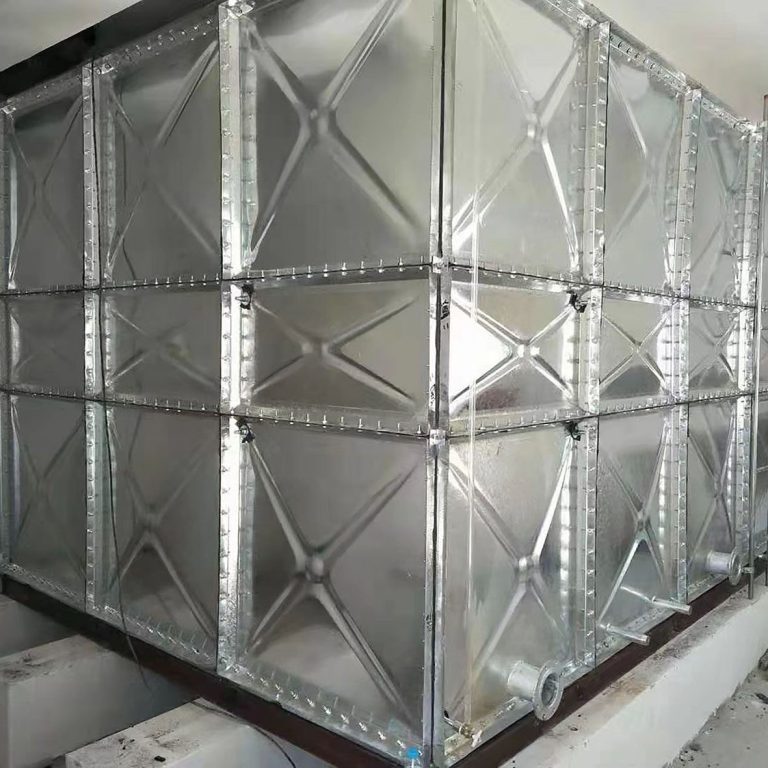
Bolted Stainless Steel Sectional Water Tank (SS304 / SS316)
Bolted stainless steel sectional water tank (SS304/316), also called modular or panel tank: flat-packed panels for potable, fire and process storage.
SS304 / SS316 stainless steel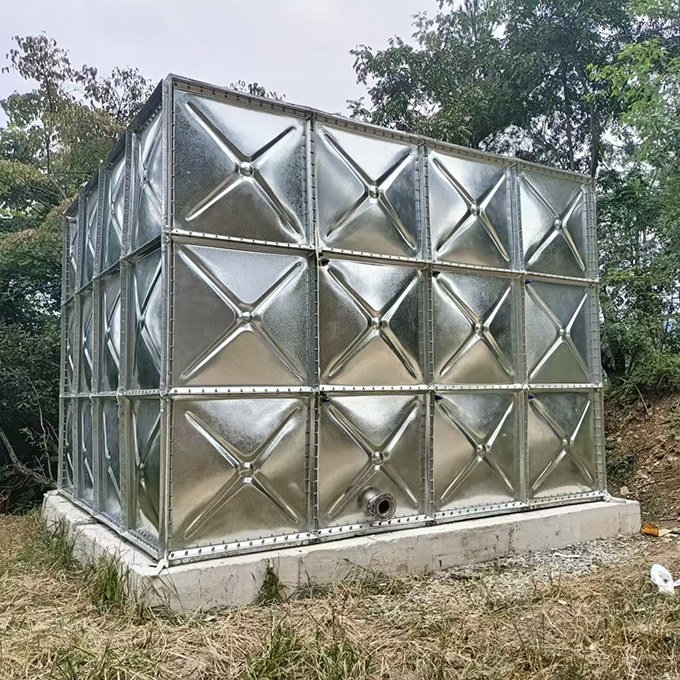
Hot-Dip Galvanized (HDG) Steel Bolted Sectional Water Tank
Hot-dip galvanized steel bolted sectional water tank (HDG / galvanised panel tank) for fire, irrigation and industrial water: flat-packed for export.
Hot-dip galvanized mild steel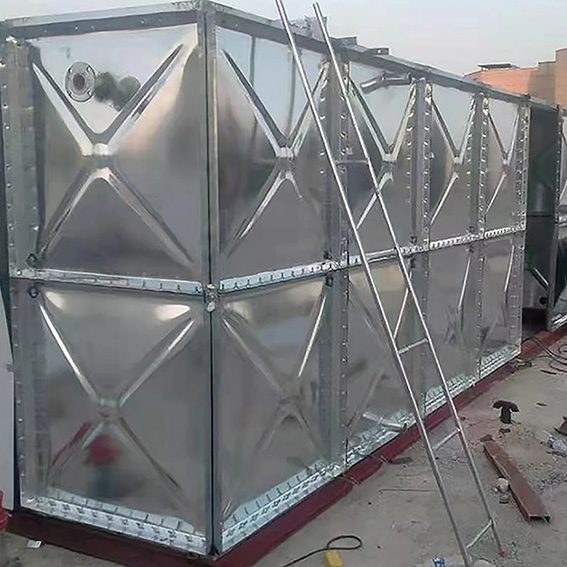
Duplex-Coated Galvanized Steel Panel Water Tank (BDF)
Duplex-coated galvanized steel panel water tank (BDF) for potable, fire and rural water: modular, flat-packed and available with a project-approved coating.
Hot-dip galvanized steel with bonded protective coating (duplex)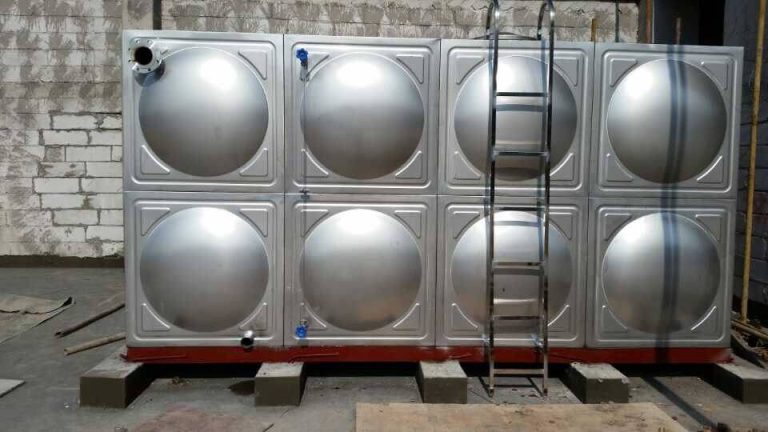
Welded Stainless Steel Water Tank (304 / 316)
Welded stainless steel water tank (SS304/316L) for potable, food, pharmaceutical and process duty, with factory or site welding and export documentation.
SS304 / SS316 / SS316L stainless steel, welded construction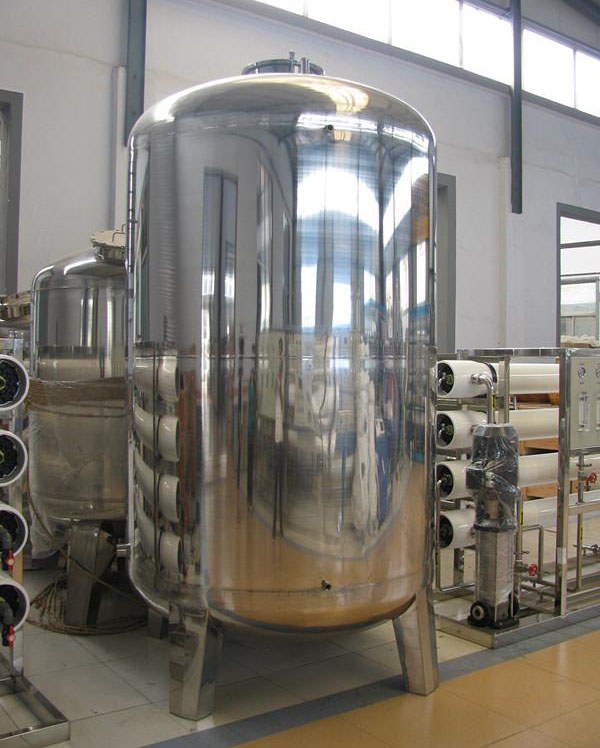
Aseptic Stainless Water Tank (SS304 / SS316L)
Aseptic stainless steel water tank (sterile/pharmaceutical purified water tank) in SS316L with 0.22 micron vent, CIP/SIP and nitrogen option.
SS304 / SS316L hygienic stainless steel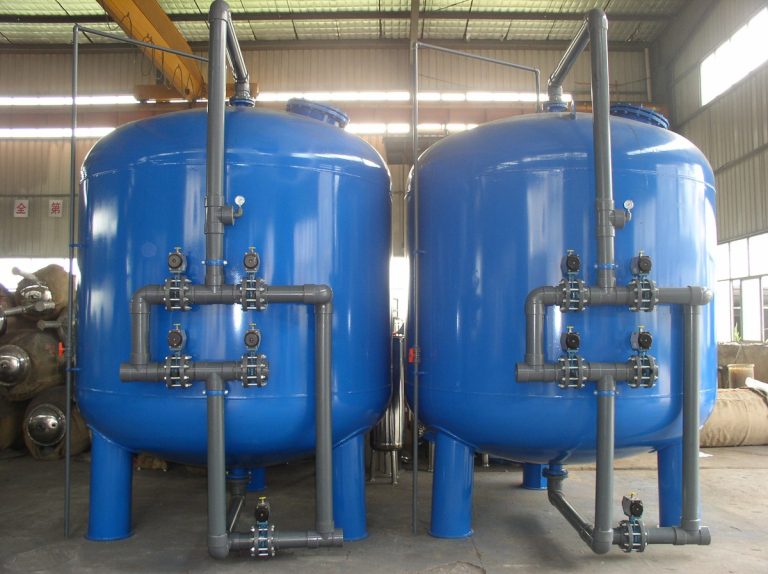
Mechanical Media Water Filter – Sand, Anthracite & Carbon
Mechanical media water filter, also called pressure sand filter or multimedia filter: steel, stainless or FRP vessels for turbidity and RO/UF pretreatment.
Epoxy-coated carbon steel; SS304/316; FRP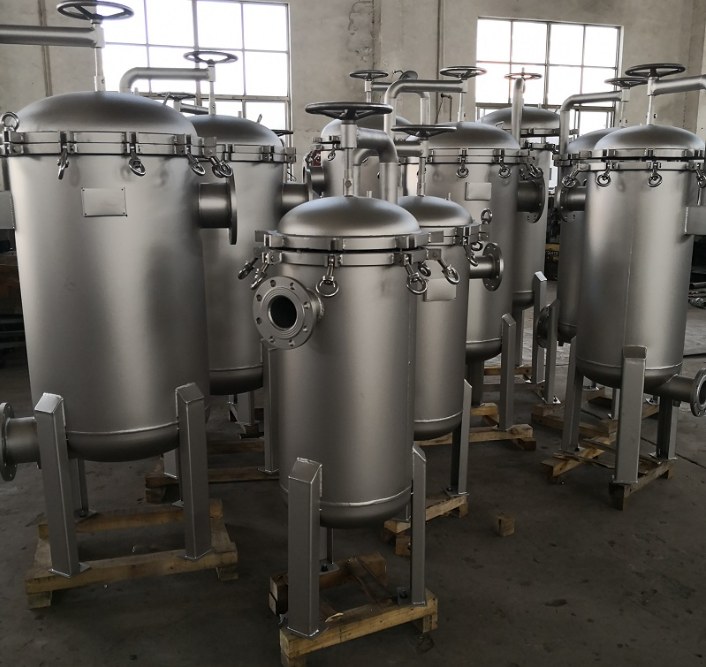
Bag Filter for Water Treatment (1-100 micron)
Liquid bag filter housing for water treatment: single and multi-bag units in carbon steel, SS304/316L or PP for RO guard and process…
Carbon steel, SS304/316L, PP; NBR/EPDM/FKM/silicone sealsFrequently asked questions
What is a bolted GRP/FRP sectional water tank?
It is a water tank made from factory-molded glass-fiber reinforced plastic panels, assembled on site with bolts and sealing strips. It is shipped flat and assembled on a prepared base without site welding.
What does SMC mean?
SMC stands for Sheet Molding Compound. It is a molding process for glass-fiber reinforced plastic panels. Resin, fiber content, molding quality and UV protection determine the panel quality.
Is GRP/FRP suitable for potable water?
Only when the resin and all water-contact components are suitable for drinking water and supported by a valid certificate for the exact panel system and factory. Ask for the certificate number and scope before award.
How is the tank assembled?
Panels are placed by drawing, sealing strips are fitted, bolts are tightened in the specified sequence, and the roof, hatch and connections are installed. The tank is then filled and inspected for water tightness.
Can the tank be extended or relocated?
Yes, if the base and structure were designed for the final footprint. Extension is panel-by-panel. Relocation is possible, but seals and bolts should be replaced and panels inspected after transport.
What is the typical panel size and thickness?
Common panel sizes include 1,000 × 1,000 mm, 1,220 × 1,220 mm and 1,000 × 500 mm. Thickness is typically 4–12 mm depending on tank height, support spacing and project specification. The approved drawing governs.
How does GRP/FRP compare with stainless steel?
GRP/FRP is lighter and does not rely on a steel substrate for corrosion resistance. Stainless steel is stronger and more familiar to many fire and structural inspectors. The choice depends on water chemistry, temperature, structural load and budget.
What documents are supplied?
Approved drawing, panel schedule, material declaration, packing list, water-tightness test record, installation and maintenance manual, and potable-water certificate where applicable.
How is the tank packed for export?
Panels are nested and packed by erection sequence. Seals, bolts and fittings are packed in labeled kits by tank zone. The packing list matches the panel schedule.
What is the lead time?
Lead time depends on panel size, tank height, options, documentation and factory loading. Send the RFQ data and required delivery date; the quotation will state the lead time in writing.