
Epoxy-coated carbon steel; SS304/316; FRP
Mechanical Media Water Filter (Sand, Anthracite, Manganese, Carbon)
Mechanical media water filter, also called pressure sand filter or multimedia filter: steel, stainless or FRP vessels for turbidity and RO/UF pretreatment.
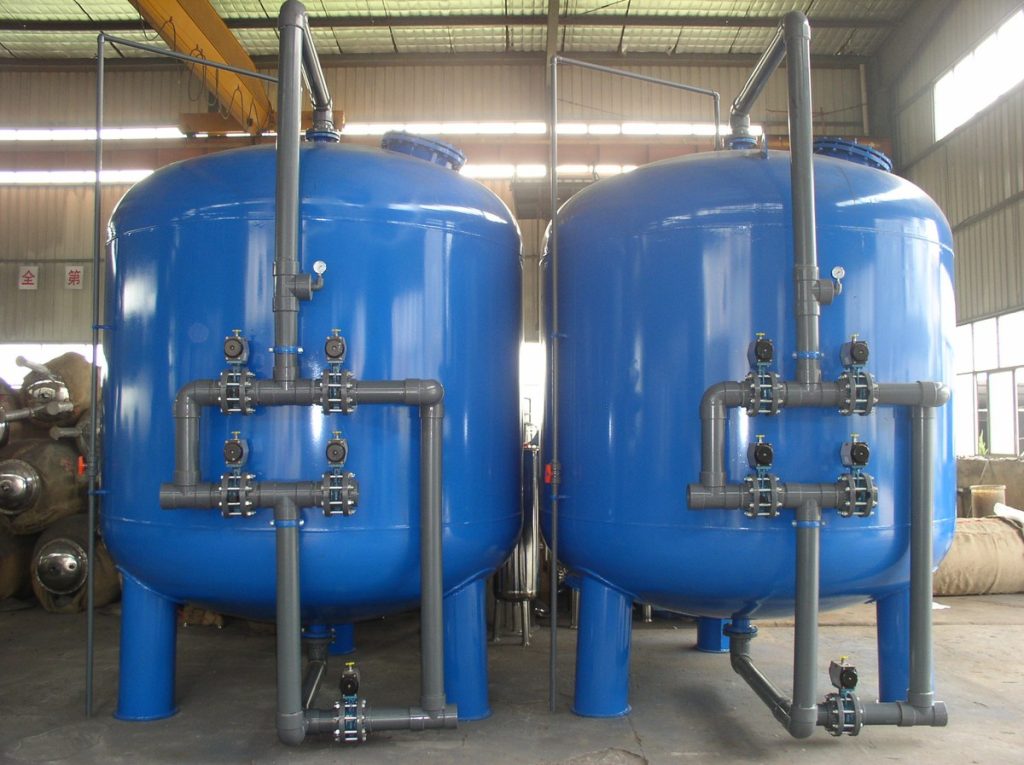
A mechanical media filter is a pressure vessel packed with granular media — quartz sand, anthracite, manganese sand or activated carbon — that removes suspended solids, turbidity, iron, manganese or chlorine from water before a membrane, ion-exchange or distribution system. It is the workhorse pretreatment unit in industrial water, reuse, food and beverage, swimming pool and surface-water treatment.
LONGCOM builds the LK-SYSL series in vessel diameters from 600 mm to 2,500 mm, with design flows from about 2 m³/h to 100 m³/h across the series and multiple vessels for larger systems. A single Φ2500 vessel at the standard 8–12 m/h band handles about 39–59 m³/h; higher flows need multiple vessels or a project-specific velocity review. Vessels are available in epoxy-coated carbon steel, SS304/316 stainless steel or FRP, with manual or automatic valves and a range of media configurations.
What the filter does — and what it does not do
The filter removes particulate matter by a combination of surface straining, depth interception and adsorption. Water passes downward through a graded bed; suspended solids are trapped in the upper layers, while the deeper, finer layers polish the water. When the bed is loaded, the differential pressure rises and the unit is backwashed to expand and clean the media.
It does not remove dissolved salts, kill bacteria or replace a membrane. A sand filter is a pretreatment and clarification step. If the project needs desalination, softening, disinfection or ultrapure water, those processes sit upstream or downstream and must be designed as a chain, not as a single vessel.
Media options and what each is for
| Media | Primary duty | Practical notes |
|---|---|---|
| Quartz sand | Turbidity, suspended solids, sediment, colloidal matter. | Lowest-cost default; effective size 0.4–0.65 mm, bed depth about 600 mm in the standard arrangement. |
| Anthracite | Coarse solids, longer run length, lower head loss. | Often used as a dual-media layer above sand; lower density requires careful backwash control. |
| Manganese sand | Iron and manganese removal. | Needs an oxidation step and the right pH; not a general turbidity medium. |
| Activated carbon | Chlorine, taste, odour and some organics. | Adsorption capacity is finite; replacement and backwash policy matter more than vessel size. |
| Graded gravel | Support layer under the active media. | Prevents media loss and supports uniform backwash; layer grading is part of the design. |
Standard specification envelope
| Parameter | Standard range | Selection note |
|---|---|---|
| Vessel diameter | Φ600, 800, 1,000, 1,200, 1,500, 1,600, 1,800, 2,000, 2,200, 2,400, 2,500 mm | Larger or rectangular vessels by project review. |
| Series flow | 2–100 m³/h across the range; about 39–59 m³/h for a Φ2500 vessel at the standard 8–12 m/h band | Higher flows use multiple vessels or a project-specific velocity review; do not size one vessel from the top of the range alone. |
| Vessel material | Epoxy-coated Q235 carbon steel; SS304/316; FRP | Stainless or FRP for corrosive or hygienic duty; carbon steel for neutral industrial water. |
| Design pressure | Project-specific | State working pressure, pump head, water hammer and valve closure; do not assume a standard rating. |
| Operating temperature | 5–50 °C | Higher temperature requires material and seal review. |
| Inlet turbidity | ≤10–20 NTU typical | Higher turbidity needs clarification or a larger filter; the filter is not a clarifier. |
| Outlet turbidity | ≤3 NTU achievable | Verify against the project’s required limit, not a generic claim. |
| Filtration velocity | 8–12 m/h for single-media sand | Lower velocity for finer media or high solids; higher velocity increases carry-over risk. |
| Backwash trigger | Differential pressure 0.01–0.015 MPa, or time-based | Confirm the set point against the media and operating cycle. |
| Backwash duration | 15–30 minutes, water or air/water | Media expansion and drain capacity must be checked. |
| Connections | Flanged; DN50 for the 500–800 mm examples | Final size follows the flow and velocity, not the vessel diameter alone. |
| Control | Manual; automatic with pressure/timer initiation | Automatic valves need compressed air or electric actuation and a drain route. |
Model and flow guide
The table below gives the geometric flow range at 8–12 m/h for each standard diameter. It is a selection starting point, not a guaranteed rating. A project with high turbidity, fine media, low available pressure or a peak flow factor should be checked at a lower velocity or with a larger vessel.
| Model | Vessel diameter | Approx. flow at 8–12 m/h | Typical use |
|---|---|---|---|
| LK-SYSL-600 | Φ600 mm | 2.3–3.4 m³/h | Small process, laboratory, make-up water. |
| LK-SYSL-800 | Φ800 mm | 4.0–6.0 m³/h | Small industrial or commercial pretreatment. |
| LK-SYSL-1000 | Φ1,000 mm | 6.3–9.4 m³/h | RO/UF pretreatment, small reuse systems. |
| LK-SYSL-1200 | Φ1,200 mm | 9.0–13.6 m³/h | Process water, cooling make-up, food plant. |
| LK-SYSL-1500 | Φ1,500 mm | 14.1–21.2 m³/h | Municipal secondary supply, industrial line. |
| LK-SYSL-1600 | Φ1,600 mm | 16.1–24.1 m³/h | RO pretreatment, swimming pool, reuse. |
| LK-SYSL-1800 | Φ1,800 mm | 20.4–30.5 m³/h | Larger industrial and reuse systems. |
| LK-SYSL-2000 | Φ2,000 mm | 25.1–37.7 m³/h | Plant-scale pretreatment, surface water. |
| LK-SYSL-2200 | Φ2,200 mm | 30.4–45.6 m³/h | High-flow industrial and municipal duty. |
| LK-SYSL-2400 | Φ2,400 mm | 36.2–54.3 m³/h | Large reuse or process water train. |
| LK-SYSL-2500 | Φ2,500 mm | 39.3–58.9 m³/h | Large single vessel; above this use multiple vessels. |
The 2/3/5 m³/h examples supplied with Φ500×2,150, Φ600×2,170 and Φ800×2,170 mm vessels show the same logic at the small end: flow is set by the bed area and the velocity, not by the vessel’s nominal size alone. The final height depends on media depth, support gravel, freeboard and backwash expansion.
How to size a media filter
Start with five inputs: design flow (average and peak), inlet turbidity and solids, required outlet quality, operating pressure and temperature, and the available backwash water and drain. Then calculate the required area:
A = Q / v, where A is the bed area in m², Q is the flow in m³/h and v is the filtration velocity in m/h. Use 8–12 m/h for single-media sand as a starting band, then check the vessel diameter that gives the required area. If the resulting vessel is too tall for the room or too large for transport, split the flow across multiple vessels.
Check the backwash before you fix the design. The pump must provide enough flow to expand the bed, the drain must take that flow, and the treated-water storage must accept the backwash volume or have a recovery route. A filter that cannot be backwashed properly will channel, compact and fail long before the media is exhausted.
Applications
- RO and UF pretreatment: reduce turbidity and colloidal load to protect membranes and extend cleaning intervals.
- Industrial circulating water: side-stream or make-up filtration to control suspended solids and fouling.
- Water reuse: tertiary polishing after biological treatment, before disinfection or membrane filtration.
- Food and beverage: process-water clarification with stainless or food-grade media and documentation.
- Swimming pools: particulate removal ahead of disinfection; the filter does not replace residual disinfectant.
- Surface and groundwater: turbidity, sediment and iron/manganese removal with the appropriate media.
- Cooling and HVAC: make-up and side-stream filtration to protect heat exchangers and nozzles.
Installation and operating notes
Provide a level, load-bearing base and enough clearance above the vessel for media loading and inspection. Keep the inlet and outlet piping accessible, install pressure gauges upstream and downstream, and provide sampling points. The backwash drain must be sized for the design backwash flow and routed so that it cannot back-siphon into the treated-water line.
On automatic units, confirm the valve schedule, the differential-pressure transmitter range and the fail-safe position. On manual units, label the valve sequence and train the operator. After commissioning, record the clean-bed differential pressure, the backwash flow and the bed expansion; those values become the baseline for maintenance.
Standards, testing and documentation
The vessel is designed against the project’s pressure and structural requirements. Material certificates, dimensional inspection, pressure testing, coating inspection (for carbon steel), media certificates and a valve/control schedule can be supplied as agreed. A CE marking, NSF/ANSI 61 certificate, WRAS approval or other product certification is not claimed unless a valid document covers the specific product and scope.
Send flow, turbidity and water analysis for a filter selection
Buyer terminology: what this product is called in different markets
The same product is searched under different English names in different regions. The table below records the names buyers actually use, so a specification or RFQ is not lost to a literal translation.
Primary English name: Mechanical media water filter
Also searched as: media filter · pressure sand filter · multimedia filter · multi-media filter · granular media filter · depth filter · backwash filter · sand filter vessel.
| Market | Common English search name |
|---|---|
| United States & Canada | media filter; multimedia filter; pressure sand filter |
| United Kingdom & Ireland | pressure sand filter; media filter; filtration vessel |
| Middle East & GCC | pressure sand filter; multimedia filter |
| Southeast Asia | sand filter vessel; multimedia filter |
| India & South Asia | pressure sand filter; multi media filter |
| Africa | pressure sand filter; media filter |
| Australia & New Zealand | media filter; sand filter |
Attribute and application terms: FRP, epoxy-coated carbon steel, SS304 / SS316, automatic backwash, single or multi-vessel, 2–100 m³/h. Typical duties include RO and UF pretreatment, groundwater iron and manganese removal, surface water turbidity, cooling water, swimming pool, wastewater tertiary treatment, food and beverage.
Long-tail search phrases
- pressure sand filter for RO pretreatment.
- automatic backwash multimedia filter for surface water.
- iron and manganese removal filter for groundwater.
- activated carbon filter for chlorine removal.
- multi vessel media filter for industrial water treatment.
“Mechanical filter” is broad. Pair it with “media”, “sand” or “multimedia”, because in the US “sand filter” alone often means a pool filter.
Related products and systems
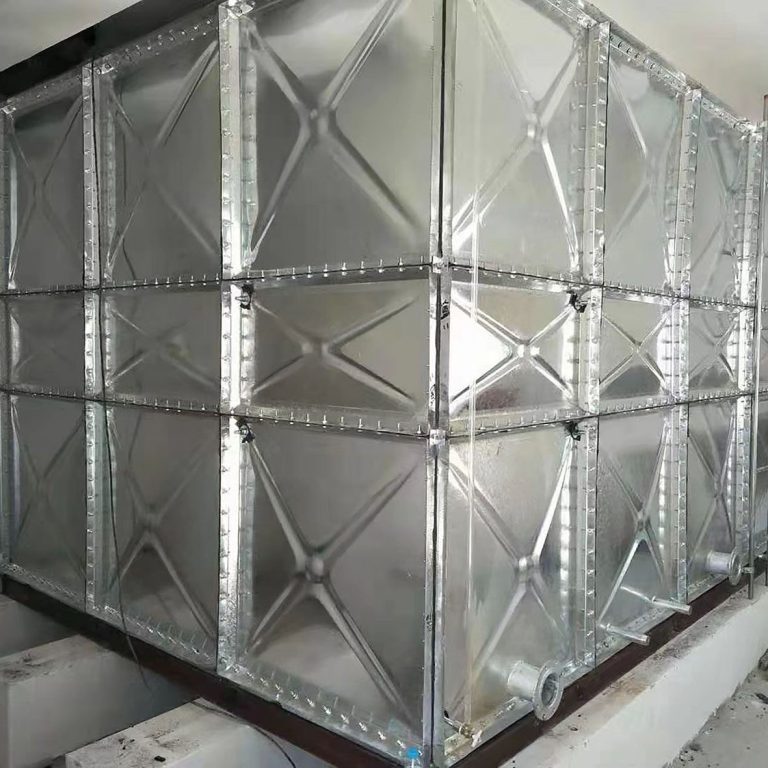
Bolted Stainless Steel Sectional Water Tank (SS304 / SS316)
Bolted stainless steel sectional water tank (SS304/316), also called modular or panel tank: flat-packed panels for potable, fire and process storage.
SS304 / SS316 stainless steel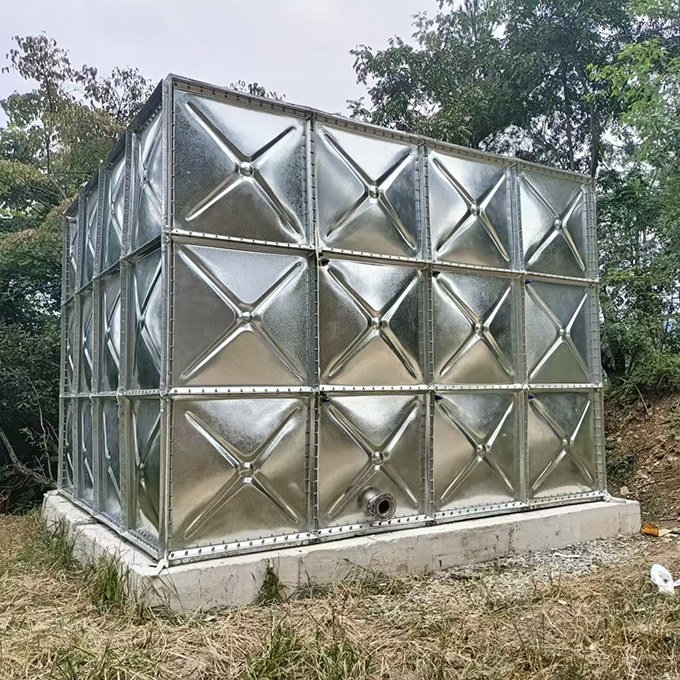
Hot-Dip Galvanized (HDG) Steel Bolted Sectional Water Tank
Hot-dip galvanized steel bolted sectional water tank (HDG / galvanised panel tank) for fire, irrigation and industrial water: flat-packed for export.
Hot-dip galvanized mild steel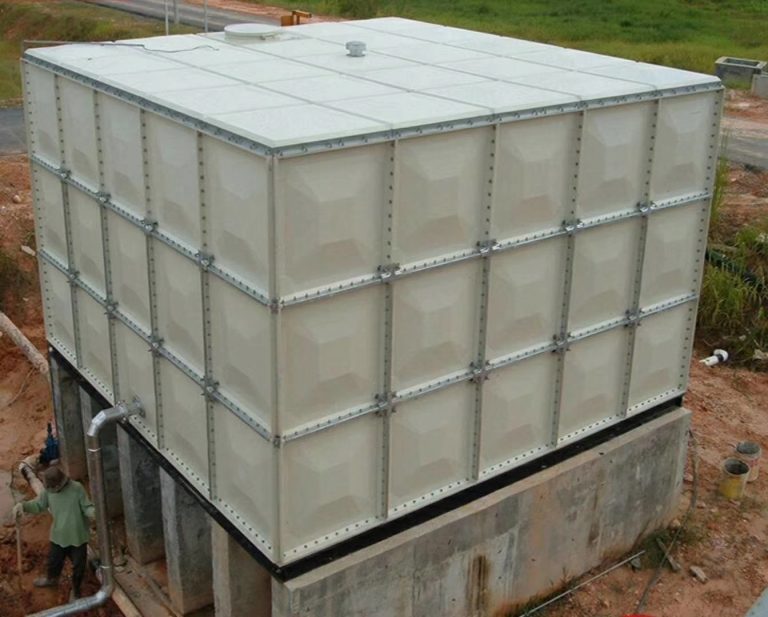
Glass-Fused-to-Steel (GFS) Sectional Water Tank
Glass-fused-to-steel (GFS) sectional water tank: factory-fused glass coating on bolted panels for municipal, wastewater, biogas and industrial storage.
Steel sheet with factory-fired glass (glass-fused-to-steel)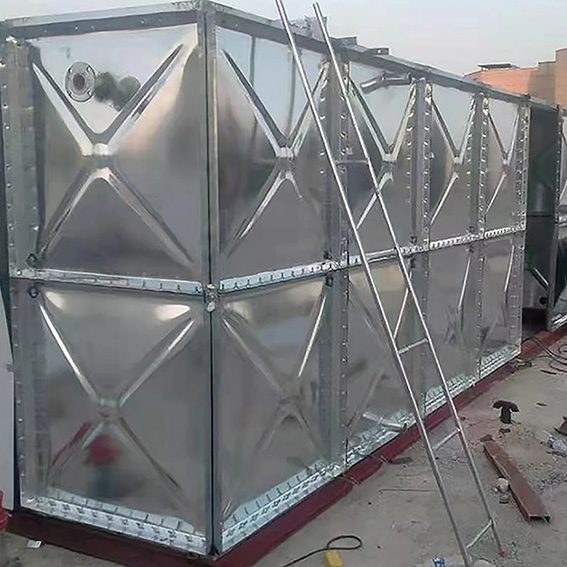
Duplex-Coated Galvanized Steel Panel Water Tank (BDF)
Duplex-coated galvanized steel panel water tank (BDF) for potable, fire and rural water: modular, flat-packed and available with a project-approved coating.
Hot-dip galvanized steel with bonded protective coating (duplex)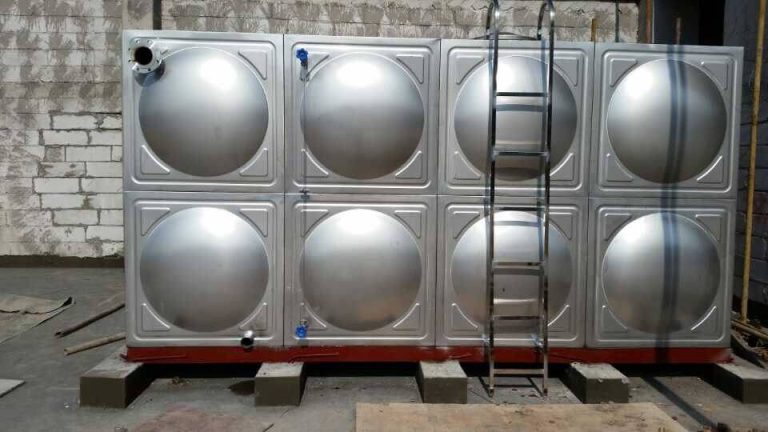
Welded Stainless Steel Water Tank (304 / 316)
Welded stainless steel water tank (SS304/316L) for potable, food, pharmaceutical and process duty, with factory or site welding and export documentation.
SS304 / SS316 / SS316L stainless steel, welded construction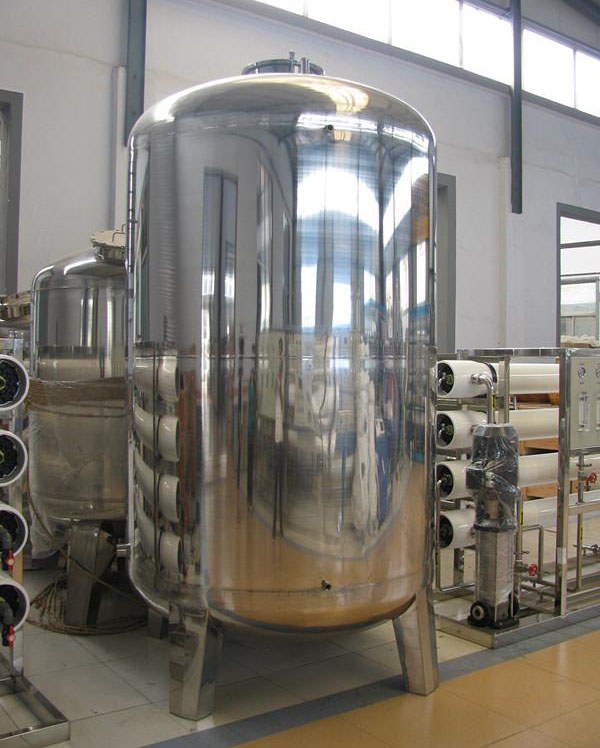
Aseptic Stainless Water Tank (SS304 / SS316L)
Aseptic stainless steel water tank (sterile/pharmaceutical purified water tank) in SS316L with 0.22 micron vent, CIP/SIP and nitrogen option.
SS304 / SS316L hygienic stainless steel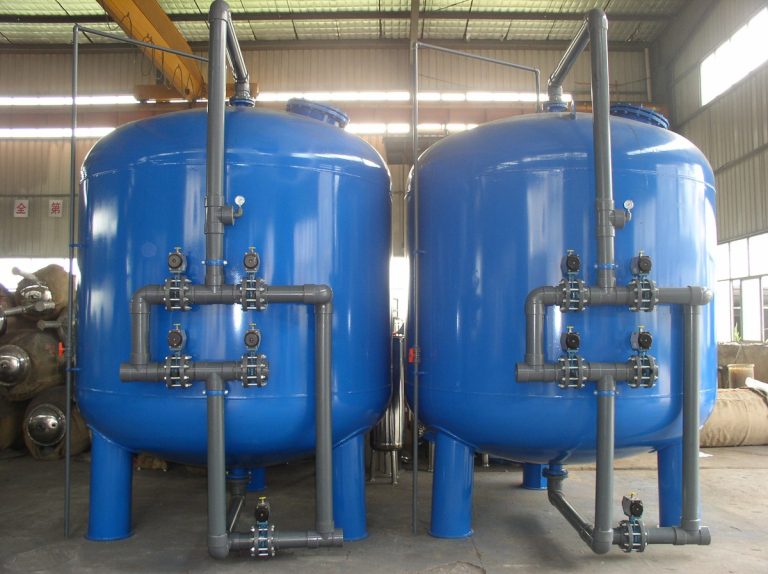
Mechanical Media Water Filter (Sand, Anthracite, Manganese, Carbon)
Mechanical media water filter, also called pressure sand filter or multimedia filter: steel, stainless or FRP vessels for turbidity and RO/UF pretreatment.
Epoxy-coated carbon steel; SS304/316; FRP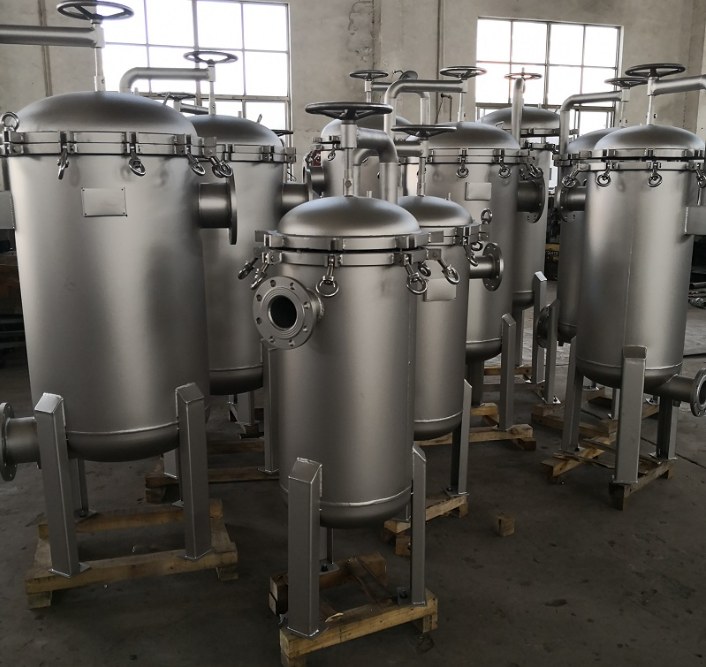
Bag Filter for Water Treatment (1-100 micron)
Liquid bag filter housing for water treatment: single and multi-bag units in carbon steel, SS304/316L or PP for RO guard and process…
Carbon steel, SS304/316L, PP; NBR/EPDM/FKM/silicone sealsFrequently asked questions
What is the difference between a sand filter and a multi-media filter?
A sand filter uses one main media, usually quartz sand. A multi-media filter layers two or more media — for example anthracite over sand — to combine coarse solids capture with finer polishing and a longer run length.
Can this filter remove iron and manganese?
Yes, with manganese sand and the right oxidation and pH conditions. Iron and manganese removal is a chemical-plus-filtration duty, not just a mechanical one. A water analysis is required before selecting the media.
What flow can one vessel handle?
The series covers about 2–100 m³/h, but a single vessel is limited by its cross-sectional area: a Φ2500 vessel at 8–12 m/h handles about 39–59 m³/h. Higher flows use multiple vessels or a project-specific velocity review. Check the backwash, pressure drop and inlet solids before fixing the flow.
How often does the media need replacement?
Sand and anthracite can last for years if backwashing is correct and the media is not lost to drain. Activated carbon has a finite adsorption life and is replaced on breakthrough or process requirements. Inspect the bed annually for channelling, compaction and loss.
Can the vessel be stainless steel?
Yes. SS304 or SS316 vessels are available for hygienic, corrosive or high-value process duty. Carbon steel with epoxy coating is the economic choice for neutral industrial water. FRP is an option for corrosive water where its pressure and temperature limits suit the project.
Does the filter need a pump?
The filter needs enough upstream pressure to overcome the clean-bed and dirty-bed pressure drop and to deliver the required flow. The backwash needs a separate flow and pressure condition. Both should be checked in the system design.
How do I know when to backwash?
Use differential pressure as the primary trigger, with a time-based backup. The common set point is 0.01–0.015 MPa above the clean-bed value, but the correct value depends on the media and the process. Confirm it at commissioning.
Do you provide a warranty?
The warranty covers the vessel and supplied components against manufacturing defects for the agreed period. Media performance, membrane life and downstream results depend on the feed water and operation and are not warranted as a water-quality guarantee.