
SS304 / SS316 stainless steel
Bolted Stainless Steel Sectional Water Tank (SS304 / SS316)
Bolted stainless steel sectional water tank (SS304/316), also called modular or panel tank: flat-packed panels for potable, fire and process storage.
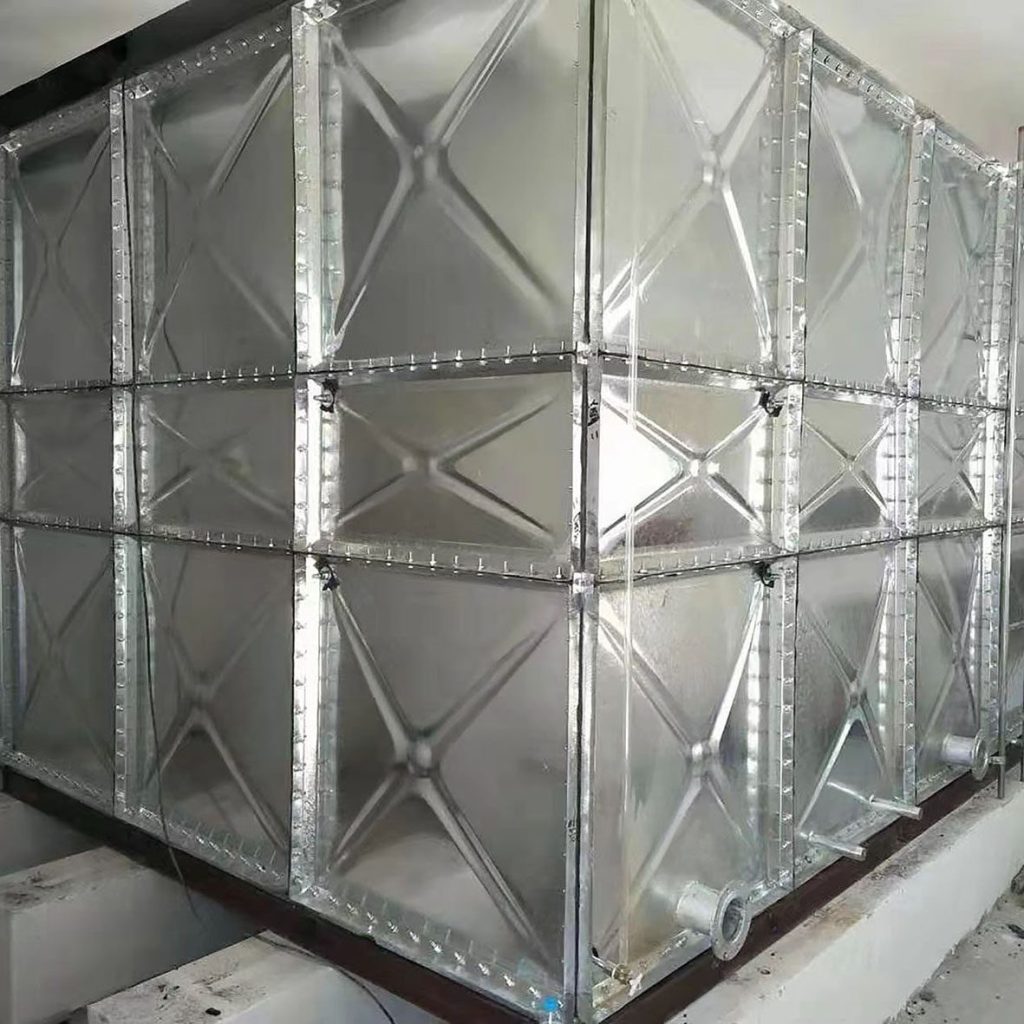
A bolted stainless steel sectional water tank is a site-assembled storage tank made from factory-punched
stainless steel panels, joined with bolts, sealing strips and tie rods — without welding or hot work.
LONGCOM manufactures the panels in SS304 or SS316, packs them flat for container export, and supplies the
general arrangement drawing, panel schedule, erection sequence and test records for projects in the Middle East,
Southeast Asia, Central Asia, Africa and South America. The tank is normally designed for atmospheric storage
with a static water head; it is not a pressure vessel. Capacity, panel thickness, tie-rod layout, connections and
base details are confirmed against the project drawing before quoting.
food-grade water contact, container-efficient shipping, fast site assembly without welding permits, and the
ability to extend or relocate the tank later. They are not the right choice for every project — a welded tank
may be better for a seamless hygienic vessel, an irregular footprint or a high structural load.
What exactly is a bolted stainless steel sectional tank?
The tank is a modular structure. Flat stainless panels are pressed into a dished or ribbed profile, punched
with a repeated bolt pattern and shipped as a kit. On site, the installer lays a floor, builds the wall panels
ring by ring, fits internal tie rods and roof panels, then connects the inlet, outlet, overflow, drain, vent and
level instruments. The panels are compressed onto non-toxic sealing strips by bolts; the tie rods resist the
outward hydrostatic force. No welding is required for the tank shell, so the site does not need a hot-work permit,
a welding crew or post-weld pickling and passivation.
The result is a rigid, open-top or covered tank with a stainless water-contact surface. The panel joints are
mechanical, not metallurgical. That has three consequences a buyer should understand before selecting the system:
the tank can be shipped flat and assembled in a confined site; the joint seals are a maintenance item and must be
installed to the correct torque and sequence; and the tank should not be treated as a seamless pressure vessel.
For atmospheric potable, fire, industrial and irrigation storage, these are acceptable and often desirable
trade-offs. For a pressure application, a welded or purpose-built pressure vessel is the correct route.
Where does a bolted stainless tank fit best?
| Project situation | Why bolted stainless fits | What to confirm |
|---|---|---|
| Potable water storage in a new development | Stainless contact surface, no internal paint or coating, cleanable joints and fittings. | Water quality, chlorine residual, potable-contact standard, inspection access and cleaning regime. |
| Fire reserve for a warehouse or industrial park | Large capacity in a rectangular footprint; panels pack efficiently; site assembly can follow the building programme. | Fire code, required capacity and refill rate, outlet arrangement, base load and access for installation. |
| Remote site with limited welding skills | Bolts and seals replace site welding; the installer needs competent mechanical trades, not a coded welding crew. | Supervision level, torque control, seal installation, water-fill test and handover records. |
| Rooftop or plant-room tank with restricted access | Panels can be carried in a lift or through a doorway in manageable bundles; no large welded shell to crane into place. | Roof structural capacity, base framing, panel bundle size, lift access and wind loading. |
| Project that may expand later | Additional wall rings or a linked bay can be added if the original design allowed for it. | Original tie-rod and base design, future connection points, and whether the expansion is structurally feasible. |
| Coastal or aggressive environment | SS316 or 316L panels can be selected for chloride exposure; no coating to chip or repair. | Actual chloride exposure, water chemistry, grade selection, passivation of fittings and maintenance plan. |
How is the panel system built?
A bolted stainless tank is more than a pile of sheets. The supply scope normally includes:
- Wall, floor and roof panels. Pressed stainless panels with a repeatable punch pattern; corner, edge and opening panels are cut and punched to the drawing.
- Sealing strips. Non-toxic gasket material between panel flanges, selected for potable or industrial duty as required.
- Bolts, nuts and washers. Stainless fasteners in the grade and size specified; the bolt schedule is part of the packing list.
- Tie rods and reinforcing members. Internal or external tie rods, columns and braces that resist hydrostatic and wind loads.
- Roof structure and covers. Roof panels, support beams and access openings; open-top tanks use a suitable rim and safety arrangement.
- Connections and accessories. Inlet, outlet, overflow, drain, vent, level indicator, ladder, manway or inspection cover as specified.
- Base interface. Anchor details, grout/levelling provisions and the interface between the tank and the concrete or steel base.
The exact scope is stated in the quotation. A common procurement mistake is to compare panel prices while
ignoring whether tie rods, seals, fasteners, roof structure, connections, packing and drawings are included. We
quote the scope line by line so the comparison is like-for-like.
SS304 or SS316: which grade should the tank use?
Both grades are austenitic stainless steels with a clean, corrosion-resistant surface. The choice is driven by
the water chemistry and the environment, not by a generic upgrade argument.
| Grade | Typical use | Strengths | Limits / watch-outs |
|---|---|---|---|
| SS304 (UNS S30400 / 1.4301) | Treated potable water, fire reserve, HVAC make-up, general industrial water | Good general corrosion resistance; widely available; lower material cost than 316. | Can suffer pitting in high-chloride or aggressive waters; not the default for coastal salt exposure or certain chemical duties. |
| SS316 (UNS S31600 / 1.4401) | Coastal sites, higher chloride water, some process and effluent duties | Molybdenum addition improves resistance to chlorides and many aggressive waters. | Not a universal answer for every chemical; verify against the actual water analysis and temperature. |
| SS316L (UNS S31603 / 1.4404) | Welded tanks and fittings where low-carbon grade is specified | Lower carbon reduces sensitisation risk in welded zones; common for hygienic fabrication. | Confirm the project specification; do not substitute 316L for 316 without checking the clause. |
For a potable tank, the material certificate is not the whole story. The sealing strip, lubricant, connection
gaskets and any internal fittings also need to be suitable for potable contact. We confirm the wetted materials
in the quotation and provide the certificates that are actually available for the order. If a project requires a
finished-tank certification to a local potable standard, that requirement must be identified before quoting so
the inspection and documentation route can be agreed.
Panel size and thickness: how the tank is dimensioned
Bolted stainless tanks are built from a repeated panel module. A typical module is 1,000 × 1,000 mm, with
1,000 × 500 mm and 500 × 500 mm panels used to close edges, corners and openings. The module is a manufacturing
and logistics unit, not a limit on the final tank size: the tank dimensions are set by the required volume,
footprint, height and connection layout, then rounded to a buildable panel grid.
| Parameter | Typical starting point | What changes it |
|---|---|---|
| Panel module | 1,000 × 1,000 mm; 1,000 × 500 mm and 500 × 500 mm for edges | Transport constraints, opening layout, tank height, roof structure. |
| Wall panel thickness | 1.5–3.0 mm stainless, selected by height and load | Water depth, tie-rod spacing, wind/seismic load, allowable deflection, project specification. |
| Floor panel thickness | Usually selected with the base and foundation design | Base flatness, soil bearing, point loads, access for cleaning. |
| Roof panel thickness | Selected for wind, snow and access loads | Snow load, wind uplift, maintenance access, roof-mounted equipment. |
| Tie-rod grid | Typically 1.0–1.5 m spacing, confirmed by calculation | Tank height, panel thickness, seismic/wind requirements, internal access. |
| Height | Optimised against footprint, base cost and available head | Site constraints, pumping head, fire reserve requirement, planning height limits. |
Panel thickness is not a “more is better” choice. A thicker panel adds weight, cost and container volume; a
thinner panel may need a tighter tie-rod grid. The correct combination is the one that satisfies the design
loads with an agreed deflection limit and can be fabricated, packed and installed safely. We state the design
basis in the quotation so a third-party reviewer can check it.
Structural design: loads, base and tie rods
The tank structure carries the water load, its own weight, wind, snow and any seismic or equipment load
required by the project. The base is part of the load path. A bolted tank should sit on a level, continuous
foundation with a flat bearing surface; a ring beam or slab is typical, with anchor points and a grout/levelling
layer detailed on the general arrangement drawing.
Three interfaces deserve early attention:
- Base flatness and level. An out-of-level base distorts the first wall ring and makes subsequent rings difficult to align. The installer should survey the base before unloading panels.
- Tie-rod layout versus access. Tie rods resist hydrostatic force, but they also occupy internal space. The layout must leave enough access for cleaning, inspection and connection installation.
- Wind and seismic load. A large empty tank is a lightweight shell with significant wind area; the roof and wall structure must be designed for the site’s wind and seismic criteria, not just the water load.
If the tank is roof-mounted, the building structure — not the tank panel — usually governs. We need the roof
framing layout, allowable point loads and waterproofing details before confirming a rooftop solution. If the
tank is in a seismic zone, the anchorage and tie-rod design must be checked against the project’s seismic
parameters. These are not “extras”; they are part of the tank design scope.
Specification envelope for a bolted stainless tank
| Item | Typical range / statement | Confirmed at quotation |
|---|---|---|
| Tank type | Atmospheric bolted sectional storage tank; open-top or covered | Yes — roof, access and vent arrangement |
| Material | SS304, SS316 or SS316L panels; stainless fasteners and fittings | Grade, finish and wetted-material list |
| Panel module | 1,000 × 1,000 mm; edge panels 1,000 × 500 / 500 × 500 mm | Final panel schedule |
| Capacity | From small sectional units to multi-thousand-cubic-metre site-assembled tanks | Nominal and effective volume |
| Connections | Inlet, outlet, overflow, drain, vent, level; flanged or threaded as specified | Size, orientation and gasket material |
| Design basis | Project structural loads and water head; potable/fire/industrial clauses as specified | Design load schedule and applicable standard clauses |
| Testing | Dimensional, panel/joint, water-fill and documentation checks | Inspection plan and witness points |
| Packing | Flat-packed panels in steel-framed crates; marked to erection sequence | Packing list and container plan |
| Incoterms | FOB Nansha / CIF destination port | Final commercial terms |
The table is a specification envelope, not a guarantee that every combination is available. Very
large capacities, high heads, unusual shapes, aggressive water or strict local codes may require a different
panel system or a welded solution. We will say so before you place an order.
Bolted versus welded: which construction should the project use?
| Decision factor | Bolted stainless sectional | Welded stainless |
|---|---|---|
| Shipping profile | Flat panels and crates; efficient use of container volume. | Factory-welded sections or site-welded panels; more volume and more site work. |
| Site work | Bolt assembly; no hot-work permit for the shell. | Welding, inspection and pickling/passivation; needs a qualified crew. |
| Joint integrity | Mechanical joints with sealing strips; maintenance and torque control required. | Seamless welded shell; no gasket joints in the shell. |
| Shape flexibility | Rectangular modular grid; best for standard footprints. | Can suit irregular footprints, high heads and special geometries. |
| Future extension | Possible if the original design allows additional rings or a linked bay. | More difficult; usually a new vessel or a major modification. |
| Best fit | Potable, fire, industrial and irrigation storage; remote sites; container export. | Hygienic process, high-spec potable, irregular shape, permanent infrastructure. |
Neither construction is universally superior. The right answer depends on the project’s shape, head, hygiene
requirement, site skills, schedule and transport budget. We manufacture both and will state the trade-offs in
writing rather than steering every enquiry to the product we prefer to sell.
Export packing and container loading
Bolted panels are deliberately designed for flat packing. The export pack normally includes panels stacked
in steel-framed crates, sealing strips in rolls, fasteners in marked bags, tie rods and fittings bundled by
assembly group, and a packing list that maps each package to the erection sequence. The objective is simple:
the site should be able to open the containers in the order it builds the tank, without sorting a mixed pile of
identical-looking panels.
| Pack element | Typical treatment | Why it matters |
|---|---|---|
| Wall / floor / roof panels | Stacked in steel-framed crates; edges protected; marked by panel type and ring | Reduces damage and makes ring-by-ring erection possible. |
| Sealing strips | Rolled, labelled by width and length; kept clean and out of sunlight | A missing or wrong strip stops installation; contamination affects potable duty. |
| Fasteners | Bags labelled by panel group; count checked against the schedule | Site teams should not have to guess bolt length or grade. |
| Tie rods / braces | Bundled and marked by elevation or grid line | Correct placement is structural, not optional. |
| Connections / accessories | Boxed separately with gaskets and fixings | Prevents loss and allows early pipe coordination. |
| Documents | Waterproof envelope in container No. 1 plus electronic copy | Customs, site reception and installation all need the same data. |
Planning example — 500 m³ bolted stainless tank. Assume a 10 m × 10 m × 5 m tank with a
1,000 × 1,000 mm panel module. The four walls need about 200 panels (4 × 10 × 5), the floor about 100 panels
and the roof about 100 panels — roughly 400 panels before edge cuts, openings and spares. At 1.5 mm thickness,
a 1 m² SS304 panel weighs about 11.9 kg; at 2.0 mm about 15.8 kg; at 3.0 mm about 23.7 kg. A 40HQ container has
roughly 76 m³ of internal volume and a payload normally in the 26–28 t range, but the real limit is the crate
configuration and stack height, not the nominal volume. A planning allowance of 350–450 panels per 40HQ is
reasonable for thin panels in efficient crates, but the final container plan must be prepared from the approved
panel schedule. Do not treat this example as a shipping guarantee.
See the full container loading guide for crate layout, securing and unloading checks.
Site installation sequence
The installation method should be agreed before shipment. A typical sequence for a bolted stainless tank is:
| Stage | Activity | Hold point / check |
|---|---|---|
| 1. Base survey | Check level, flatness, dimensions, anchor positions and cleanliness. | Base accepted against the GA drawing before panels are unpacked. |
| 2. Floor assembly | Lay floor panels, seals and bolts; align edge panels and sump/outlet details. | Floor joint alignment and bolt torque check. |
| 3. First wall ring | Erect wall panels on the floor edge, fit seals and bolts, check verticality. | Ring is plumb and joint seals are correctly seated. |
| 4. Tie rods and upper rings | Install internal tie rods/columns ring by ring; continue wall panels to the required height. | Tie-rod positions and torque match the drawing. |
| 5. Roof and openings | Install roof beams/panels, manway, vent, ladder and roof access. | Roof load path and opening locations confirmed. |
| 6. Connections | Fit inlet, outlet, overflow, drain, level and any recirculation connections. | Gaskets, orientation and clearances checked. |
| 7. Water-fill test | Fill to the agreed test level; observe joints, connections and base for leakage. | Test record signed; any leak repaired and re-tested. |
| 8. Cleaning and handover | Clean internal surfaces, remove debris, label valves and hand over documents. | O&M pack, test records and warranty document received. |
Installation supervision is optional. Some buyers use their own mechanical contractor with our manual and
remote guidance; others require a supervisor on site. The quotation states which mode is included so there is no
assumption about who is responsible for torque checks, water-fill testing and sign-off.
Quality control and testing
| Control point | What is checked | Record supplied |
|---|---|---|
| Material receiving | Grade, thickness, surface condition, certificate traceability. | Material certificate and receiving inspection. |
| Panel fabrication | Dimensions, punch pattern, hole positions, edge finish, panel identification. | Dimensional inspection sheet and panel schedule. |
| Fit-up trial | Sample panel assembly: bolt fit, seal fit, joint alignment. | Trial-assembly record where specified. |
| Water-fill test | Leakage at panel joints, connections and base; observation period per inspection plan. | Signed test record with date, level and result. |
| Packing check | Panel count, marks, fastener counts, seal quantities, crate condition. | Packing inspection and loading photos. |
| Third-party witness | Agreed witness points by client or nominated inspector. | Signed inspection release. |
The water-fill test is the most visible quality gate, but it is not the only one. A tank that passes a fill
test can still fail on site if panels are mis-marked, bolts are short, seals are contaminated or the base is
out of level. That is why the inspection plan covers fabrication, packing and installation interfaces, not just
the final leak check.
Documentation pack
For tender review and site handover, the usual pack includes:
- General arrangement drawing with plan, elevation, connections and base interface.
- Panel schedule and erection sequence, including panel marks and quantities.
- Material certificates for panels and major wetted components.
- Inspection and test records, including the water-fill test and any third-party release.
- Packing list, loading plan and shipping marks.
- Installation manual, torque guidance, cleaning and maintenance instructions.
- Warranty document and commercial documents required by the Incoterms.
We do not publish a generic “certificate pack” that is unrelated to the order. If a tender requires a specific
certificate, standard compliance statement or third-party inspection, include the clause in the RFQ so we can
confirm availability before pricing.
What to send for a quotation
- Capacity or tank dimensions (L × W × H), and whether the volume is nominal or effective.
- Application: potable, fire, industrial, irrigation, HVAC or other.
- Material preference: SS304, SS316, SS316L, or “advise me” with the water analysis.
- Site country, port, altitude, wind/seismic/snow criteria and any roof or base constraints.
- Connection sizes and orientations, if already designed.
- Potable/fire/local standard clauses and any third-party inspection requirement.
- Installation scope: supervision only, full crew, or buyer-installed.
- Destination port and required Incoterms.
If you do not have all of this, send what you have. We will return a short clarification list rather than a
generic price. That is faster for both sides.
Project reference: Prologis Dongguan Shipai Logistics Park
A fire water tank for the Prologis Dongguan Shipai Logistics Park was completed in June 2015. The tank
envelope was 12 m × 12 m × 6 m, a nominal geometric volume of 864 m³, and the project is a reference for
large-footprint fire reserve storage where panel logistics, base preparation and a fixed completion date all
matter.
We use this reference to show the scale of tank that can be delivered as a panel system, not to imply that
every project with the same dimensions will use the same panel thickness, tie-rod layout or connection
arrangement. Those details are always re-checked against the new project’s loads and code clauses.
Why source from LONGCOM?
- Manufacturer, not a trading company. Panel fabrication, packing and documentation are controlled by the same team that answers the technical questions.
- Export-oriented design. Panel modules, crate sizes and marks are planned for container shipment and ring-by-ring erection.
- Written specification discipline. We confirm material, thickness, connections, testing and exclusions before the order, not after the deposit.
- Both bolted and welded capability. If a project is better served by a welded tank, we can say so instead of forcing a bolted solution.
- Spare and replacement support. Panels, seals, fasteners and fittings can be supplied against the original schedule.
Related application and project guidance
- Fire protection water tanks — fire-flow, usable volume and outlet design.
- Potable water storage — material grade, hygiene and documentation.
- Industrial process water — chemistry, temperature and CIP duty.
- Prologis Dongguan fire tank project — 12 m × 12 m × 6 m reference.
- Aseptic stainless water tank — closed, cleanable storage where hygiene is the deciding requirement.
- Mechanical media filter and bag filter — pretreatment and polishing ahead of storage.
- Engineering support and technical downloads — drawings, selection and specification sheets.
Next step
Send your tank capacity or dimensions, application, material preference, site country and destination port.
We will reply within 12 working hours with a written specification confirmation, a budgetary quotation and the
drawing information we need to proceed.
Request a quotation for a bolted stainless tank
Buyer terminology: what this product is called in different markets
The same product is searched under different English names in different regions. The table below records the names buyers actually use, so a specification or RFQ is not lost to a literal translation.
Primary English name: Bolted stainless steel sectional water tank
Also searched as: bolted steel water tank · stainless steel sectional tank · panel water tank · modular water tank · site-assembled water tank · flat-packed water tank.
| Market | Common English search name |
|---|---|
| United States & Canada | bolted stainless steel water tank; bolted steel storage tank |
| United Kingdom & Ireland | stainless steel sectional water storage tank; panel tank |
| Middle East & GCC | stainless steel sectional water tank; SS panel tank |
| Southeast Asia | modular stainless steel water tank; sectional panel tank |
| India & South Asia | bolted sectional water tank; SS sectional tank |
| Africa | sectional steel water tank; modular water tank |
| Australia & New Zealand | modular stainless steel water tank; sectional tank |
Attribute and application terms: SS304 / SS316L, potable-water grade, corrosion-resistant, flat-packed, modular, insulated option, high-capacity. Typical duties include potable water storage, fire water reserve, irrigation, industrial process water, municipal and commercial buildings, resorts, mining camps.
Long-tail search phrases
- bolted stainless steel sectional water tank for potable water storage.
- modular stainless steel water tank for fire protection.
- flat packed sectional water tank for export projects.
- SS316L bolted panel tank for coastal and high-chloride sites.
- large capacity bolted steel water tank for municipal supply.
“Sectional” describes how the tank is built, not a separate product. In export enquiries, “panel tank” and “modular tank” are the same construction; avoid the literal phrase “splice water tank”.
Related products and systems
Bolted Stainless Steel Sectional Water Tank (SS304 / SS316)
Bolted stainless steel sectional water tank (SS304/316), also called modular or panel tank: flat-packed panels for potable, fire and process storage.
SS304 / SS316 stainless steel
Hot-Dip Galvanized (HDG) Steel Bolted Sectional Water Tank
Hot-dip galvanized steel bolted sectional water tank (HDG / galvanised panel tank) for fire, irrigation and industrial water: flat-packed for export.
Hot-dip galvanized mild steel
Glass-Fused-to-Steel (GFS) Sectional Water Tank
Glass-fused-to-steel (GFS) sectional water tank: factory-fused glass coating on bolted panels for municipal, wastewater, biogas and industrial storage.
Steel sheet with factory-fired glass (glass-fused-to-steel)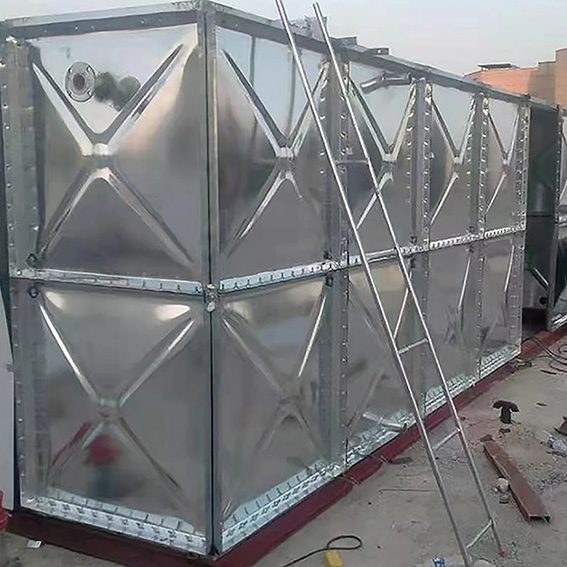
Duplex-Coated Galvanized Steel Panel Water Tank (BDF)
Duplex-coated galvanized steel panel water tank (BDF) for potable, fire and rural water: modular, flat-packed and available with a project-approved coating.
Hot-dip galvanized steel with bonded protective coating (duplex)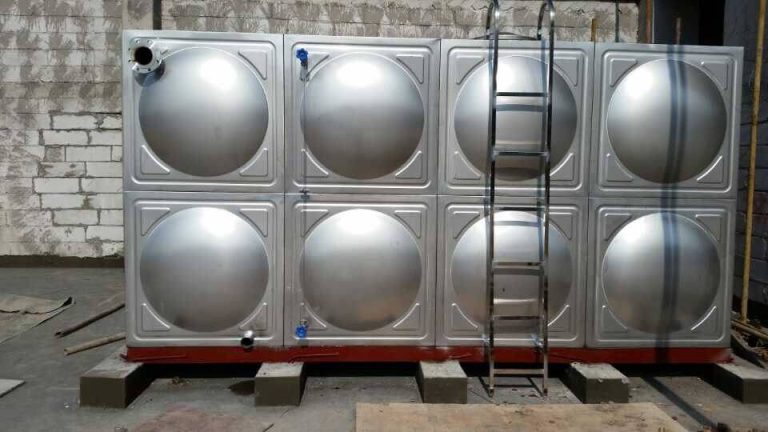
Welded Stainless Steel Water Tank (304 / 316)
Welded stainless steel water tank (SS304/316L) for potable, food, pharmaceutical and process duty, with factory or site welding and export documentation.
SS304 / SS316 / SS316L stainless steel, welded construction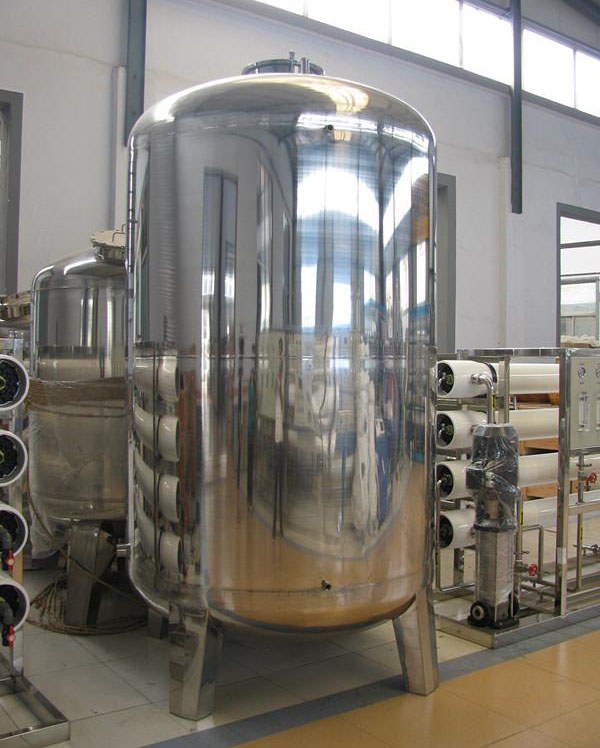
Aseptic Stainless Water Tank (SS304 / SS316L)
Aseptic stainless steel water tank (sterile/pharmaceutical purified water tank) in SS316L with 0.22 micron vent, CIP/SIP and nitrogen option.
SS304 / SS316L hygienic stainless steel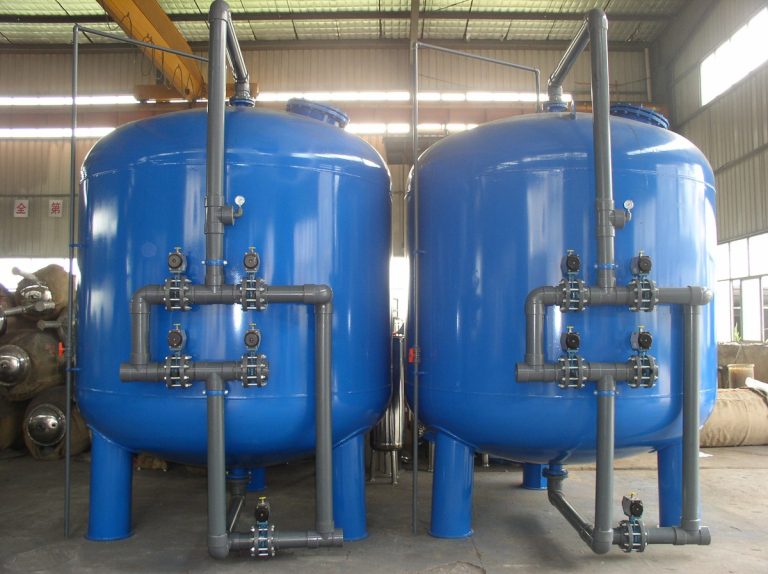
Mechanical Media Water Filter (Sand, Anthracite, Manganese, Carbon)
Mechanical media water filter, also called pressure sand filter or multimedia filter: steel, stainless or FRP vessels for turbidity and RO/UF pretreatment.
Epoxy-coated carbon steel; SS304/316; FRP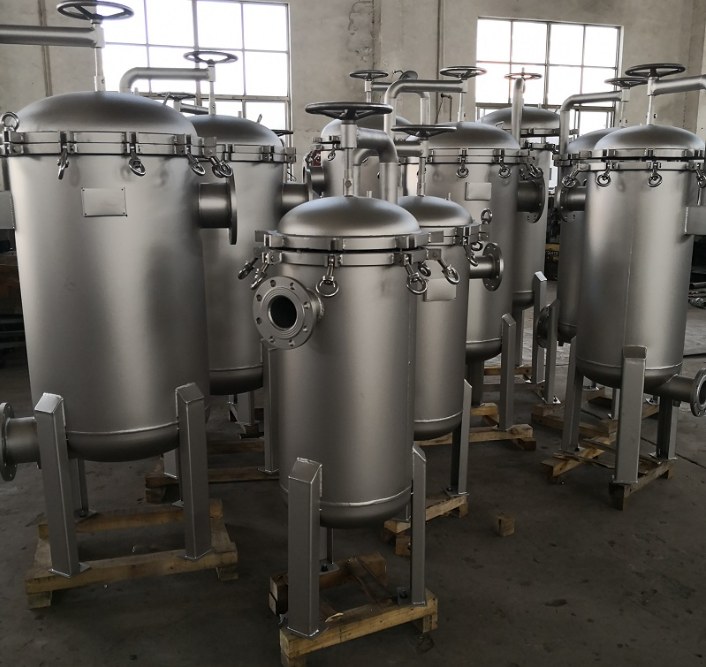
Bag Filter for Water Treatment (1-100 micron)
Liquid bag filter housing for water treatment: single and multi-bag units in carbon steel, SS304/316L or PP for RO guard and process…
Carbon steel, SS304/316L, PP; NBR/EPDM/FKM/silicone sealsFrequently asked questions
What is the difference between a bolted and a welded stainless steel tank?
A bolted tank is assembled from factory-punched panels with bolts, sealing strips and tie rods; no shell welding is required. A welded tank has a continuous welded shell, which suits hygienic, high-head or irregular-shaped projects. The right choice depends on shape, site skills, transport and maintenance.
Can a bolted stainless tank be used for drinking water?
SS304 or SS316 panels with suitable non-toxic sealing strips and wetted fittings can be used for potable water. The project must state the applicable potable-contact standard and the evidence required. We confirm the wetted materials and available certificates in the quotation.
What panel thickness do I need for my tank?
Thickness is selected from water depth, tie-rod spacing, wind/seismic load and allowable deflection. A typical starting range is 1.5–3.0 mm for wall panels, but the final value must come from the structural check. Do not select thickness by comparing another project’s tank.
How long does site assembly take?
For a trained mechanical crew, a medium-size rectangular tank is often assembled in a few days to a week, depending on capacity, height, access and weather. The schedule should include base acceptance, panel erection, connections and the water-fill test, not just the shell build.
Can the tank be installed on a roof?
A rooftop tank is possible if the building structure, base framing, waterproofing and lift access are suitable. The roof framing and allowable point loads usually govern. Send the roof layout and tank footprint early; the tank panel alone cannot confirm a rooftop solution.
How many panels fit in a 40HQ container?
It depends on panel thickness, crate design and stack height. For thin panels in efficient crates, a planning allowance of roughly 350–450 panels per 40HQ is reasonable, but the final loading plan must be prepared from the approved panel schedule. We do not ship against a generic container estimate.
What testing is done before shipment?
The usual checks are material verification, panel dimensions, punch pattern, trial fit-up where specified, water-fill test and packing inspection. Third-party witness points can be added to the purchase order. Test records are issued with the shipment documents.
Can the tank be extended later?
Extension is possible if the original base, tie-rod layout and connections allow additional wall rings or a linked bay. It is not automatically possible for every tank. Tell us the future capacity at the quotation stage so the first design can preserve the option.
What warranty do you provide?
Warranty scope and term are stated in the contract and depend on the panel system, water chemistry, installation quality and maintenance. We do not advertise a generic warranty figure that is not tied to the order. The warranty document is issued with handover.
What information do you need for a quotation?
Send capacity or L × W × H, application, material preference, site country, destination port, design loads and any tender standard. If a drawing exists, send it. We will return a clarification list and a written specification, not a single price per cubic metre.
What are the typical lead time and shipping terms?
Production is scheduled after the general arrangement drawing is approved; the final lead time is stated in the quotation and depends on panel thickness, fittings, inspection scope and factory load. We quote FOB Nansha or CIF destination port, with packing and documentation listed line by line.