
SS304 / SS316 / SS316L stainless steel, welded construction
Welded Stainless Steel Water Tank (304 / 316)
Welded stainless steel water tank (SS304/316L) for potable, food, pharmaceutical and process duty, with factory or site welding and export documentation.
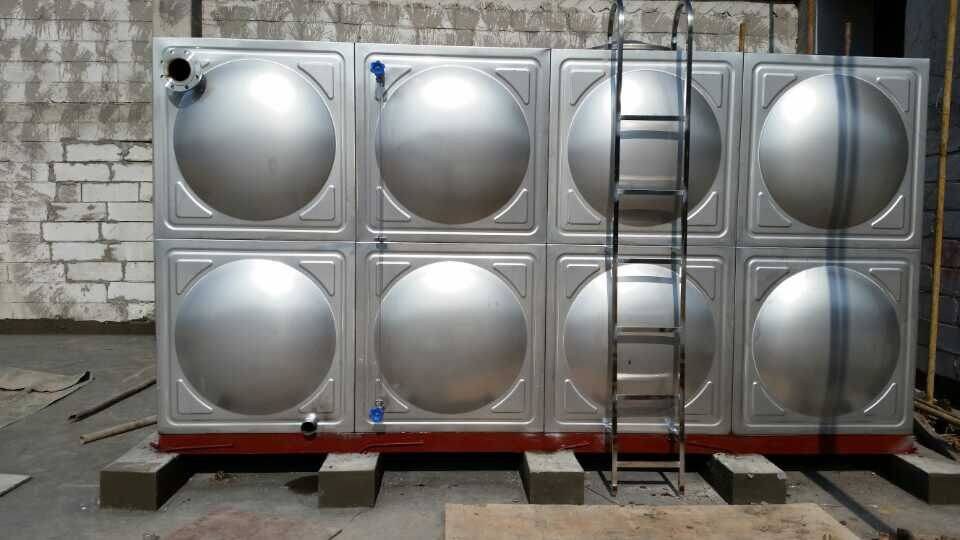
A welded stainless steel water tank is a storage vessel in which the shell, floor and roof are joined
by continuous welds rather than bolted joints. LONGCOM fabricates welded tanks in SS304, SS316 or SS316L
for potable water, food and pharmaceutical process water, high-head storage, irregular footprints and projects
where a seamless hygienic vessel is required. Welding is performed under a defined procedure, weld zones are
cleaned and passivated, and the tank is dimensioned and tested against the approved drawing. Capacity, plate
thickness, weld inspection scope and site-work split are confirmed in writing before quoting.
the footprint is irregular, the tank is a permanent high-spec installation, or the project specification
explicitly calls for welded stainless. Choose bolted construction when container efficiency, fast assembly,
remote sites or future extension matter more than a joint-free shell.
What does “welded stainless steel tank” actually mean?
“Welded” can describe two different supply models, and buyers should know which one they are pricing.
| Supply model | How it works | Best fit | Watch-outs |
|---|---|---|---|
| Factory-welded tank or sections | The tank, or large shell sections, are welded in the workshop, then shipped as oversize pieces for site assembly and final closure welds. | Smaller tanks, high-spec hygienic vessels, projects with a skilled site welding crew. | Shipping volume, lifting, road permits, section joints and site welds. |
| Site-welded panel tank | Stainless panels are shipped flat, then welded on site into a continuous shell; stiffeners and roof structure are installed as the tank rises. | Large tanks, restricted access, sites where container delivery is the only practical route. | Site welding quality, weather protection, inspection access, pickling/passivation and water-fill testing. |
LONGCOM can supply either model, but we do not treat them as interchangeable. A factory-welded vessel gives
better workshop control over weld quality and dimensional accuracy; a site-welded panel tank gives better
transport efficiency and access. The quotation must state which model is being offered, where the welds are
made, and who is responsible for final inspection.
Where welded stainless tanks fit best
| Project situation | Why welded construction fits | What to confirm |
|---|---|---|
| Potable water with strict hygiene requirements | Seamless shell, smooth internal welds, no gasket joints in the water-contact surface. | Potable-contact standard, weld finish, passivation, cleaning access and finished-tank testing. |
| Food / pharmaceutical process water | Cleanable surfaces, reduced crevices, ability to specify 316L and a documented weld procedure. | Surface finish, weld inspection, dead-leg avoidance, CIP/SIP interface. |
| High-head or tall tank | Welded shell and stiffeners can be designed for the higher hydrostatic load without a bolted joint pattern. | Plate thickness, stiffener layout, base load, wind/seismic design and lifting plan. |
| Irregular footprint or shape | Welding is not constrained to a standard panel grid; corners and transitions can be detailed to the site. | Fabrication drawing, access, transport segmentation and site weld sequence. |
| Permanent infrastructure | No gasket replacement regime in the shell; expected life and maintenance plan can be set for the asset. | Water chemistry, external corrosion protection, inspection intervals and repair procedure. |
| Project specification calls for welded tank | The tender clause is explicit; substituting a bolted tank would be non-compliant. | Exact clause, weld standard, NDT scope and documentation deliverables. |
Welded versus bolted: the real trade-offs
| Factor | Welded stainless | Bolted stainless sectional |
|---|---|---|
| Shell continuity | Continuous welded shell; no gasket joints in the shell. | Mechanical joints with sealing strips; bolts and torque control. |
| Site skills | Qualified welders, weld procedure, NDT and pickling/passivation. | Mechanical fitters; no hot work for the shell. |
| Transport | Factory-welded sections can be oversize; site-welded panels ship flat but require site welding. | Flat panels and crates; efficient container loading. |
| Shape | Can suit irregular footprints, transitions and high heads. | Best for rectangular modular grids. |
| Future extension | Difficult; usually a new vessel or major modification. | Possible if the original design allows additional rings or a linked bay. |
| Maintenance | Inspect welds and external protection; repair is a welding task. | Inspect joints and seals; re-torque or replace seals as needed. |
| Best fit | Hygiene, high head, irregular shape, permanent high-spec installation. | Export projects, remote sites, fast assembly, large rectangular storage. |
Material selection: SS304, SS316 and SS316L
Welded tanks are often specified in 304, 316 or 316L. The “L” grade is low-carbon and is commonly used where
welding is involved because it reduces the risk of sensitisation in the heat-affected zone. That does not make
316L automatically correct for every water; the actual chloride level, temperature, oxygen content and
contamination risk still govern.
| Grade | Typical use in welded tanks | Why it is selected | Limits |
|---|---|---|---|
| SS304 / 304L | Potable water, fire reserve, general process water | Good general corrosion resistance and availability. | Pitting risk in high-chloride or aggressive waters; verify water analysis. |
| SS316 / 316L | Coastal sites, higher chloride, some process and food duties | Molybdenum improves chloride resistance; 316L supports welded fabrication. | Not universal for every chemical; confirm against the actual duty. |
For potable or food duty, the wetted surface is not only the plate. Weld filler (if any), pickling/passivation
chemicals, gaskets, lubricants and connections must also be compatible with the service. We list the wetted
materials and the proposed weld consumables in the technical offer so the reviewer can check the complete
contact surface.
How to size a welded tank without guessing
Sizing starts with the duty, not with a target cubic metre figure. For a potable or process tank, the
required storage volume is usually the daily demand multiplied by the required buffer, plus fire reserve or
process batch volume where applicable. For a fire tank, the volume is set by the fire code and the refill
calculation, not by the available footprint. For an irrigation tank, the volume may be set by the irrigation
cycle and the supply interval.
Once the volume is known, the tank dimensions are chosen against the site constraints: available footprint,
maximum height, base bearing capacity, access for panel delivery and the required freeboard. A 500 m³ tank
could be 10 × 10 × 5 m, 12.5 × 8 × 5 m or 8 × 8 × 8 m; each option has a different base load, wall plate
thickness, roof area and transport profile. The “same volume” is not the same project.
| Sizing input | Why it changes the design | What the buyer should state |
|---|---|---|
| Nominal vs effective volume | Freeboard, outlet level and dead storage reduce the usable volume. | Required usable volume and minimum freeboard. |
| Footprint and height | Govern wall plate thickness, base load, wind area and roof structure. | Maximum L × W, maximum height, available base area. |
| Fill/draw cycle | Frequent cycling affects inflow, venting and level control. | Peak inflow, draw rate, refill time and control philosophy. |
| Water temperature | Affects material selection, insulation and thermal movement. | Minimum/maximum temperature and any heating/cooling. |
| Site loads | Wind, snow and seismic loads can govern the shell and anchorage. | Design wind speed, snow load, seismic parameters and exposure. |
A useful check is to compare the steel weight and base load of two shape options before fixing the layout.
A taller tank uses less floor area but thicker plates and a higher base pressure; a wider tank uses more roof
and floor area but may use thinner walls. The cheapest shape is the one that balances plate thickness, base
cost, transport and site access for the actual site.
Water chemistry and corrosion: what the grade must resist
Stainless steel is corrosion-resistant because of a thin passive oxide layer, not because the grade name
contains “stainless”. Chlorides, low-oxygen conditions, stagnant water, chlorination, acids and elevated
temperature can all challenge that layer. The water analysis is therefore a design input, not a paperwork
formality.
| Condition | Risk | Design response to discuss |
|---|---|---|
| Chloride-rich water or coastal air | Pitting and crevice corrosion, especially at welds and stagnant joints. | Consider 316/316L, smooth welds, passivation, flushing regime and external exposure protection. |
| Stagnant or low-flow zones | Localised corrosion and biofilm risk in potable duty. | Design for circulation, avoid dead legs, provide drain points and a cleaning regime. |
| Chlorination / disinfection | Oxidising environment can accelerate attack at defects. | Confirm residual disinfectant, material compatibility and weld quality. |
| Acidic or alkaline process water | General corrosion or localized attack depending on chemistry. | Review actual analysis and temperature; consider a different material or lining. |
| High temperature | Reduced corrosion resistance and thermal stress. | State operating temperature; check gaskets, insulation and support details. |
Do not select 316 “just to be safe” without checking the analysis, and do not select 304 for a coastal site
without checking the chloride exposure. Both are expensive mistakes in opposite directions. We will state the
assumed water chemistry in the quotation so the basis of the grade selection is visible.
Design and fabrication: what governs the shell
A welded tank is designed as a liquid-retaining structure, not as a decorative steel box. The main design
inputs are:
- Water depth and design head. Hydrostatic pressure increases with depth; plate thickness and stiffener spacing follow the head, not the plan area alone.
- Plate thickness and stiffener layout. Wall plates, stiffeners, top edge, base plate and roof structure form one load path.
- Base and anchorage. A continuous, level foundation; anchor design for wind uplift and seismic action where required.
- Openings and penetrations. Inlet, outlet, overflow, drain, vent, manway and instrument connections need local reinforcement and detailing.
- External environment. Coastal salt, industrial atmosphere, snow, wind and seismic loads must be stated in the brief.
- Access and cleaning. Manway size, ladder, roof access and internal clearance affect the hygienic design and maintenance plan.
The fabrication drawing translates these inputs into plate sizes, weld locations, stiffener positions and
connection details. It is the document the workshop builds to and the site team installs from. Changes after
approval are controlled; they are not handled by “site adjustment” without a revised drawing.
Welding procedure and weld quality
Welded stainless fabrication is procedure-driven. The workshop should work to a qualified welding procedure
and use welders qualified for the process and position. TIG welding is common for thin stainless and hygienic
work; MIG or other processes may be used for thicker sections or specific joints. The exact process is stated
in the fabrication drawing and the inspection plan.
| Control | What it covers | Typical record |
|---|---|---|
| Weld procedure | Process, consumable, current range, shielding gas, joint preparation and position. | Welding procedure specification / qualification record where required. |
| Welder qualification | Welder competence for the process and position. | Qualification certificate or accepted equivalent. |
| Visual inspection | Weld profile, undercut, cracks, porosity, alignment and cleanliness. | Visual inspection report. |
| NDT (on request) | Dye penetrant, radiographic or ultrasonic examination of agreed joints. | NDT report with method, extent and acceptance criteria. |
| Pickling / passivation | Removal of heat tint and restoration of the passive chromium-oxide layer. | Treatment record and visual check. |
| Water-fill test | Leakage at welds, connections and base; observation period per inspection plan. | Signed test record. |
Pickling and passivation are not cosmetic. Welding disrupts the passive layer and leaves heat tint that can
initiate corrosion, particularly in chloride service. The treatment method and acceptance visual standard should
be agreed before fabrication, not discovered at handover.
Hygienic design for potable and process water
A welded tank can be the right choice for potable water, but only if the details support cleaning and
inspection. The design should avoid crevices, sharp internal corners, dead legs and poorly draining low points.
Weld beads should be smooth and continuous where they are in contact with the stored water. The manway, vent,
ladder and connections should allow access without introducing contamination.
For potable duty, confirm the applicable contact standard and the evidence required. Material certificates
alone do not prove a finished tank complies with a local potable standard. If the project requires a finished-
tank approval, third-party test or authority inspection, that requirement must be in the RFQ so the scope and
schedule can be priced. We do not claim a certification that is not held for the specific order.
Roof, access and safety details that change the price
A welded tank is often priced from the shell, then the roof and access details are added later. That is the
wrong order. The roof structure, manway, vent, ladder and any roof-mounted equipment affect the plate schedule,
stiffener layout and site work. A tank with a large access opening, a walkable roof or a roof-mounted level
instrument can cost more than the same nominal volume with a simple cover.
| Detail | Design question | Cost / schedule effect |
|---|---|---|
| Roof type | Flat, sloped, conical or removable? Walkable or maintenance-only? | Roof plate thickness, beams, drainage and access. |
| Manway | Size, position, hinge, gasket and lock; internal ladder? | Local reinforcement, access path and safety detailing. |
| Vent | Fill/draw air flow, insect/animal screen, weather protection. | Vent size and location; pressure/vacuum protection if applicable. |
| Ladder / platform | External or internal; cage, handrail, anchor points. | Secondary steel, fall protection and site access. |
| Level / instrumentation | Float, radar, pressure or sight glass; cable routing. | Nozzle position, stilling well and electrical interface. |
| Insulation / cladding | Thermal requirement, external finish, condensation. | Support system, fixings and panel joints. |
For potable duty, the roof and vent are part of the contamination boundary. A vent that admits rain, insects
or dust undermines the hygiene of the shell. For fire duty, the roof and access must let the tank be inspected
and maintained without compromising the fire reserve. These are design decisions, not accessories.
External protection and appearance
Stainless tanks do not need an internal coating, but the external surface still sees the site atmosphere.
Coastal salt, industrial pollution, rain and condensation can leave tea-staining or initiate crevice corrosion
at supports and fixings. The external finish should be selected for the environment, not just for appearance.
- Mill finish: suitable for many indoor or clean outdoor sites; requires a cleaning regime to remove deposits.
- Pickled / passivated finish: restores a clean passive surface after fabrication; useful for coastal or high-visibility sites.
- External insulation / cladding: for thermal duty or where the tank is exposed to freezing conditions; details must allow inspection of the shell.
- Support and fixing isolation: stainless-to-carbon contacts should be detailed to avoid galvanic corrosion; use suitable isolators or compatible materials.
If the tank is in a coastal plant, state the distance from the sea, the prevailing wind and any salt-spray
exposure. “Near the coast” is not a sufficient design input; the exposure class and maintenance access matter.
Welded stainless versus GFS, HDG and BDF
Buyers often compare welded stainless with glass-fused-to-steel (GFS), hot-dip galvanized (HDG) and BDF
composite panel tanks. They are not interchangeable; each puts a different material between the water and the
steel substrate.
| System | Water-contact surface | Best fit | Main limitation |
|---|---|---|---|
| Welded stainless | Stainless steel, welded; no internal coating | Potable, food/pharma, high-spec, irregular shape, high head | Higher fabrication and site-welding cost; requires weld quality control. |
| GFS bolted | Factory-fused glass coating on steel panels | Municipal/industrial water, wastewater, large bolted tanks | Coating is factory-applied; field repair of damaged coating needs a defined procedure. |
| HDG bolted | Hot-dip galvanized steel; may have a supplemental coating | Fire reserve, irrigation, cost-sensitive large storage | Galvanized surface is not suitable for all potable/aggressive duties; confirm water compatibility. |
| BDF bolted | Duplex-coated steel panel with a bonding layer | Fire, irrigation, industrial water where coated steel is accepted | Coating integrity and repair procedure must be confirmed for the duty. |
If the project requires a stainless water-contact surface, a welded stainless tank is the direct route. If
the project is cost-sensitive and the water chemistry permits a coated panel, GFS or HDG may deliver a lower
installed cost. We will not sell a welded tank into a duty where a coated system is clearly better value, and
we will not sell a coated tank into a duty where the coating is not suitable.
Specification envelope for a welded stainless tank
| Item | Typical range / statement | Confirmed at quotation |
|---|---|---|
| Tank type | Atmospheric welded storage tank; factory-welded or site-welded panel construction | Supply model, site-weld scope and final closure |
| Material | SS304 / 304L, SS316 / 316L; wetted fittings matched to the duty | Grade, finish and wetted-material list |
| Plate thickness | Selected by water depth, stiffener spacing and design loads | Plate schedule and stiffener drawing |
| Shape | Rectangular, cylindrical or project-specific; subject to fabrication and transport review | GA drawing and segmentation plan |
| Connections | Flanged or threaded inlet, outlet, overflow, drain, vent, level and manway | Sizes, orientation, reinforcement and gaskets |
| Design basis | Project structural loads, water head and specified standard clauses | Design load schedule and compliance statement |
| Weld inspection | Visual as standard; NDT scope on request | Inspection plan and acceptance criteria |
| Testing | Dimensional, weld, water-fill and documentation checks | Witness points and test records |
| Packing / shipping | Flat panels or welded sections, depending on the supply model | Packing list, lift plan and container/break-bulk plan |
Transport and site work: the hidden cost driver
Welded tanks can be more expensive to move than bolted tanks, and the difference is easy to underestimate.
A factory-welded vessel may be too large for a standard container; it can require flat-rack, break-bulk or
oversize road permits. A site-welded panel tank ships flat but moves the cost to the site: welding crew,
consumables, power, weather protection, NDT and pickling/passivation.
| Supply model | Shipping profile | Site work | Commercial implication |
|---|---|---|---|
| Factory-welded tank | Oversize sections; lifting and road permits may apply. | Site assembly, final closure welds, testing. | Higher freight and lifting cost; lower site welding scope. |
| Site-welded panel tank | Flat panels in containers; efficient volume. | Full site welding, NDT, passivation and testing. | Lower freight; higher site labour and quality-control scope. |
The right model is the one with the lowest total delivered cost that still meets the quality requirement.
That is why we ask for the destination port, site access and available site skills before recommending a
factory-welded or site-welded solution.
Compare Incoterms and lead-time planning before fixing the shipment route.
Site installation sequence for a welded panel tank
| Stage | Activity | Hold point / check |
|---|---|---|
| 1. Base acceptance | Survey level, flatness, dimensions and anchor positions; confirm cleanliness. | Base accepted against GA drawing. |
| 2. Floor welding | Lay and weld floor plates; check drain slopes and sump details. | Floor weld inspection and dimensional check. |
| 3. Wall erection | Erect wall plates ring by ring; fit temporary braces and permanent stiffeners. | Plumb, diameter/plan dimensions and weld fit-up. |
| 4. Roof and openings | Install roof structure, roof plates, manway, vent and ladder. | Roof load path and opening reinforcement. |
| 5. Weld completion | Complete internal and external welds; clean slag/heat tint; inspect. | Visual inspection and agreed NDT. |
| 6. Pickling / passivation | Treat weld zones and contaminated areas; rinse and neutralise. | Treatment record and visual acceptance. |
| 7. Water-fill test | Fill to agreed level; observe welds, connections and base. | Signed test record; repair and re-test if needed. |
| 8. Cleaning and handover | Clean internal surfaces; label valves; hand over documents. | O&M pack, test records and warranty. |
Quality control and testing
The inspection plan for a welded tank should be agreed before fabrication. A typical plan covers material
traceability, plate dimensions, weld preparation, fit-up, welding parameters, visual inspection, agreed NDT,
pickling/passivation, dimensional checks and the water-fill test. The records should identify the tank, the
drawing revision and the date of each inspection.
For projects with a third-party inspector, the witness points should be named in the purchase order: before
welding, after welding, after passivation and during the water-fill test are common. If the inspector is
nominated after fabrication starts, some hold points may already have passed; that is a scheduling risk, not
something to resolve at shipment.
Documentation pack
- General arrangement drawing and fabrication drawing with revision control.
- Plate schedule, stiffener layout and connection details.
- Material certificates for plates, fittings and weld consumables where required.
- Welding procedure and welder qualification records, where specified.
- Visual inspection and NDT reports; pickling/passivation record.
- Water-fill test record and dimensional inspection sheet.
- Packing list, lift plan and shipping documents.
- Installation manual, cleaning and maintenance instructions, warranty document.
What to send for a welded tank quotation
- Tank shape, dimensions and capacity; whether the volume is nominal or effective.
- Application and water chemistry, including chloride, pH, temperature and any process contamination.
- Material grade and finish requirement; potable/food/pharma standard clauses.
- Design head, pressure/vacuum condition (if any), wind, snow and seismic criteria.
- Site country, port, access constraints and available lifting/crane capacity.
- Site welding capability, or a request for a factory-welded supply model.
- Weld inspection/NDT scope and third-party witness requirements.
- Connection schedule, manway, vent, ladder and instrumentation.
- Installation scope and required Incoterms.
Common specification mistakes in welded tank RFQs
| Mistake | Why it causes problems | Better approach |
|---|---|---|
| Specifying “SS316” without a water analysis | 316 may be unnecessary or still inadequate; the grade is being used as a guess. | Provide chloride, pH, temperature and any process contamination; ask for a written grade recommendation. |
| Giving only nominal volume | Freeboard and outlet height reduce usable volume; the tank may be undersized. | State required usable volume and minimum freeboard. |
| Leaving the base design to the tank supplier | The foundation, anchors and load path are site-specific; a tank drawing cannot design the civil works. | Provide the base drawing or ask for interface loads; have the civil designer confirm. |
| Assuming “welded” means factory-welded | Site-welded panels and factory-welded sections have different cost, schedule and inspection scope. | State the expected supply model and site welding capability. |
| Omitting the potable/fire standard | Testing, documentation and material requirements may change after the price is fixed. | Include the exact clause and authority requirement in the RFQ. |
| Requesting NDT after fabrication | Some hold points may already have passed; rework can be expensive. | Name the NDT method, extent and witness points before the order. |
| Comparing only the tank price | Freight, lifting, site welding, passivation, testing and documentation are part of the delivered cost. | Ask for a scope matrix and a delivered-cost comparison, not a shell price. |
These mistakes are common because a tank looks simple on a drawing. The cost and risk sit in the interfaces:
base, transport, site welding, inspection and handover. A good RFQ closes those interfaces early.
Why source a welded tank from LONGCOM?
- Welded and bolted capability under one engineering team. We can recommend the construction that fits the project instead of forcing a single product.
- Procedure-driven fabrication. Drawings, weld procedure, inspection plan and records are aligned before production.
- Export-aware segmentation. If a factory-welded vessel will not ship economically, we will propose a site-welded panel solution and state the trade-offs.
- Hygienic detailing. Manway, vent, welds and draining details are reviewed for cleanability, not just structural strength.
- Documentation discipline. We state what is issued, what is third-party and what is not claimed.
Related application and service guidance
- Potable water storage — SS304/316L, hygiene and potable documentation.
- Industrial process water — welding, pressure, CIP and inspection scope.
- HVAC make-up and buffer water — plant-room access, insulation and stratification.
- Aseptic stainless water tank — filtered vent, internal polish and CIP for purified or direct-drinking water.
- Mechanical media filter and bag filter — upstream or downstream treatment options.
- Engineering support — design basis, drawings, structural interface and inspection plan.
- Technical downloads and inspection and service.
Next step
Send the tank shape, dimensions, application, water chemistry, site location and whether you expect factory
welding or site welding. We will reply within 12 working hours with a written technical route, the missing
information list and a budgetary quotation.
Request a quotation for a welded stainless tank
Buyer terminology: what this product is called in different markets
The same product is searched under different English names in different regions. The table below records the names buyers actually use, so a specification or RFQ is not lost to a literal translation.
Primary English name: Welded stainless steel water tank
Also searched as: welded stainless steel storage tank · custom stainless steel tank · site-welded stainless tank · fabricated stainless steel tank · sanitary stainless tank.
| Market | Common English search name |
|---|---|
| United States & Canada | welded stainless steel water tank; custom stainless steel storage tank |
| United Kingdom & Ireland | welded stainless steel tank; fabricated stainless steel tank |
| Middle East & GCC | welded stainless steel water tank; on-site welded tank |
| Southeast Asia | site welded stainless steel tank; custom stainless tank |
| India & South Asia | welded stainless steel water tank; SS fabricated tank |
| Africa | welded stainless steel storage tank; custom stainless tank |
| Australia & New Zealand | welded stainless steel tank; custom stainless tank |
Attribute and application terms: SS304 / SS316L, sanitary, insulated, jacketed, custom dimensions, large capacity, on-site fabrication. Typical duties include potable water, food and beverage, dairy, brewery, pharmaceutical, chemical, process water, fire reserve.
Long-tail search phrases
- custom welded stainless steel water tank for food plants.
- site welded SS316L potable water tank.
- insulated welded stainless steel tank for brewery.
- large capacity welded stainless steel storage tank.
- hygienic welded stainless tank for dairy processing.
“Welded tank” alone is ambiguous. Always pair it with “stainless steel” and the duty so the search intent is clear.
Related products and systems
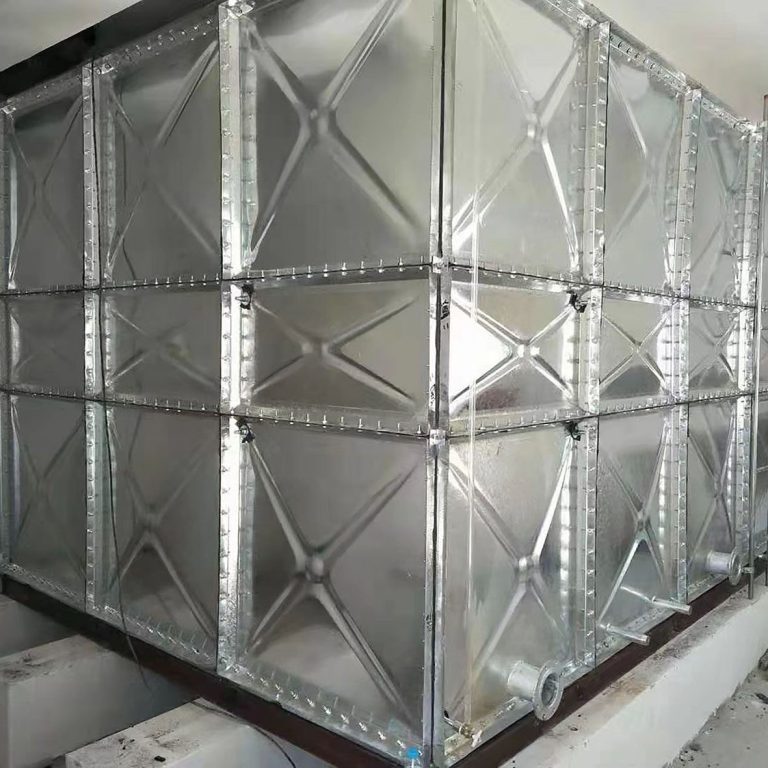
Bolted Stainless Steel Sectional Water Tank (SS304 / SS316)
Bolted stainless steel sectional water tank (SS304/316), also called modular or panel tank: flat-packed panels for potable, fire and process storage.
SS304 / SS316 stainless steel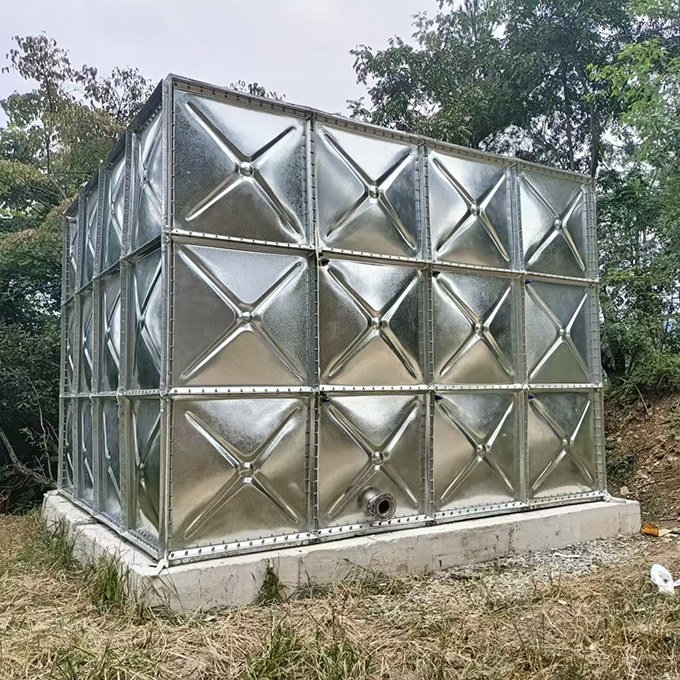
Hot-Dip Galvanized (HDG) Steel Bolted Sectional Water Tank
Hot-dip galvanized steel bolted sectional water tank (HDG / galvanised panel tank) for fire, irrigation and industrial water: flat-packed for export.
Hot-dip galvanized mild steel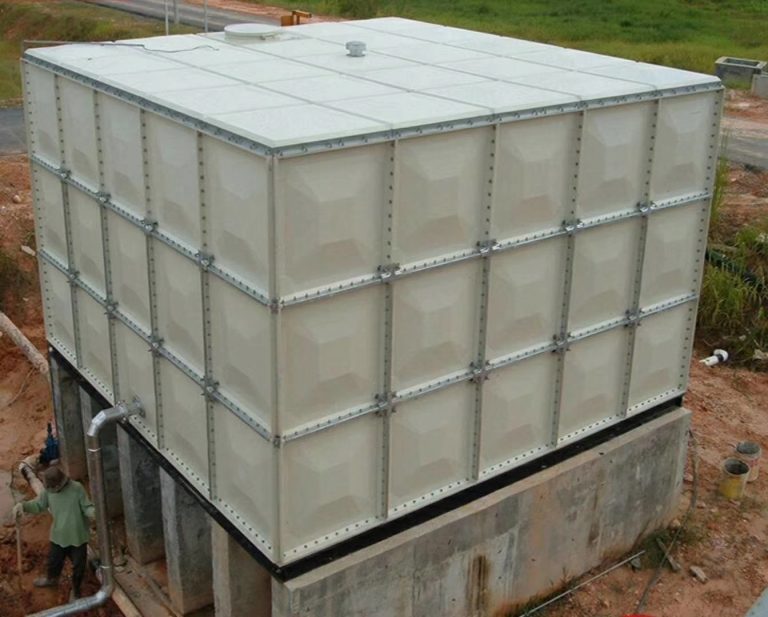
Glass-Fused-to-Steel (GFS) Sectional Water Tank
Glass-fused-to-steel (GFS) sectional water tank: factory-fused glass coating on bolted panels for municipal, wastewater, biogas and industrial storage.
Steel sheet with factory-fired glass (glass-fused-to-steel)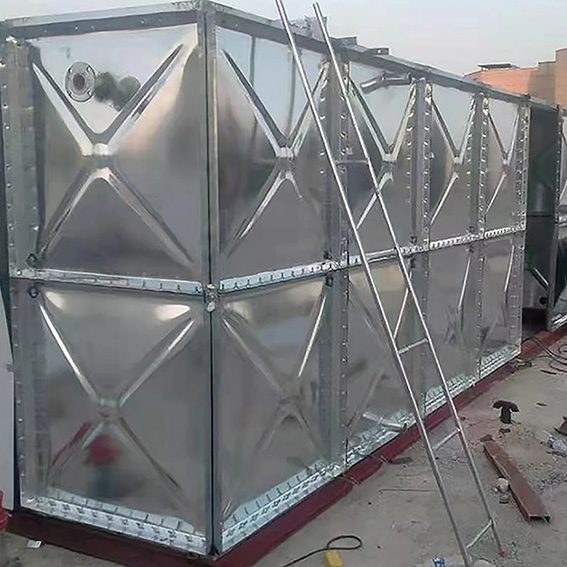
Duplex-Coated Galvanized Steel Panel Water Tank (BDF)
Duplex-coated galvanized steel panel water tank (BDF) for potable, fire and rural water: modular, flat-packed and available with a project-approved coating.
Hot-dip galvanized steel with bonded protective coating (duplex)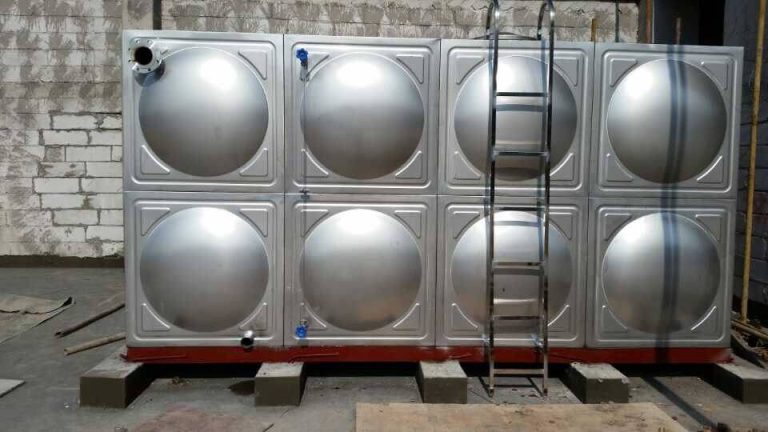
Welded Stainless Steel Water Tank (304 / 316)
Welded stainless steel water tank (SS304/316L) for potable, food, pharmaceutical and process duty, with factory or site welding and export documentation.
SS304 / SS316 / SS316L stainless steel, welded construction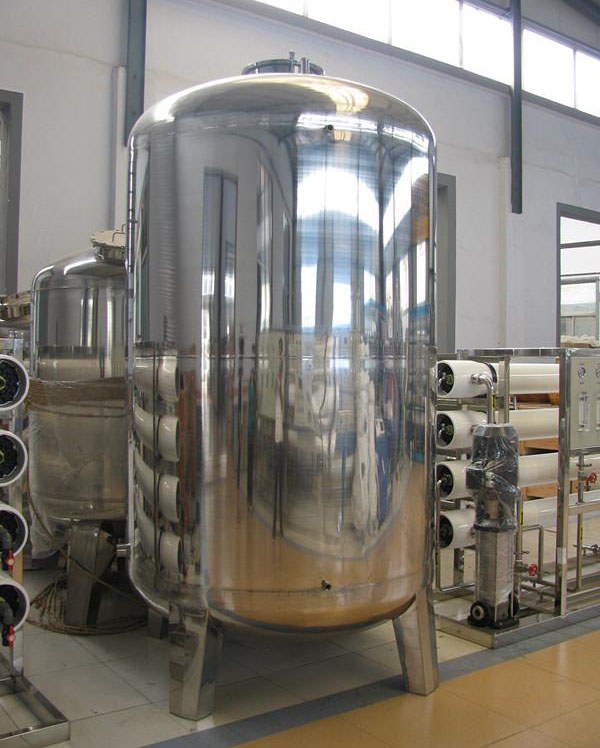
Aseptic Stainless Water Tank (SS304 / SS316L)
Aseptic stainless steel water tank (sterile/pharmaceutical purified water tank) in SS316L with 0.22 micron vent, CIP/SIP and nitrogen option.
SS304 / SS316L hygienic stainless steel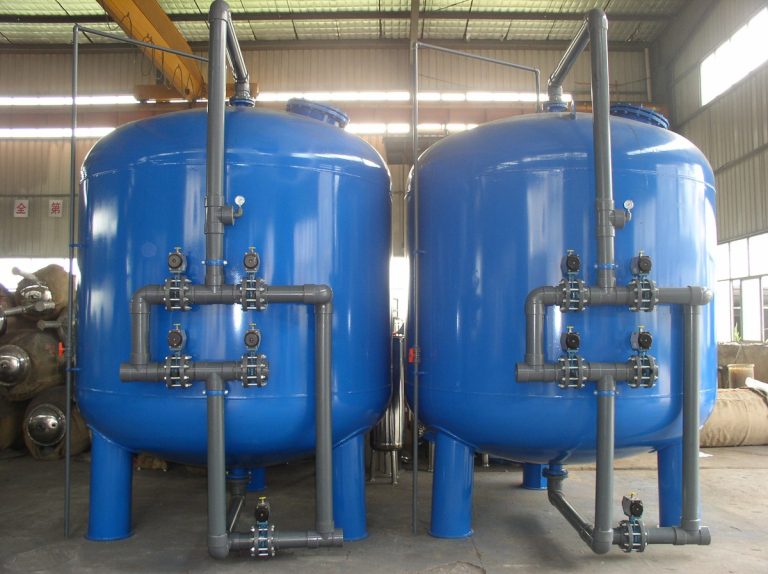
Mechanical Media Water Filter (Sand, Anthracite, Manganese, Carbon)
Mechanical media water filter, also called pressure sand filter or multimedia filter: steel, stainless or FRP vessels for turbidity and RO/UF pretreatment.
Epoxy-coated carbon steel; SS304/316; FRP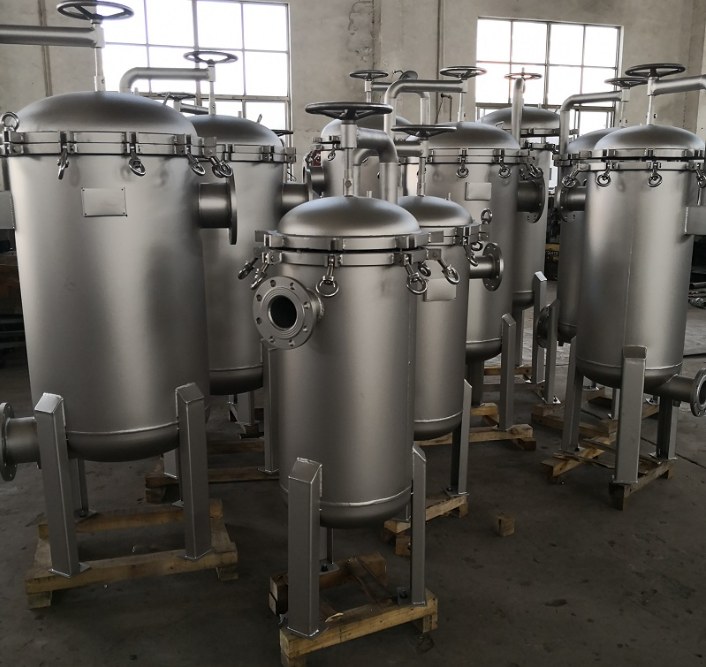
Bag Filter for Water Treatment (1-100 micron)
Liquid bag filter housing for water treatment: single and multi-bag units in carbon steel, SS304/316L or PP for RO guard and process…
Carbon steel, SS304/316L, PP; NBR/EPDM/FKM/silicone sealsFrequently asked questions
Should I choose a welded or a bolted stainless tank?
Choose welded when the shell must be seamless, the footprint is irregular, the tank is high-head or the specification requires welding. Choose bolted when container efficiency, fast site assembly without hot work or future extension matters more. We manufacture both and will state the trade-offs.
Is a welded stainless tank suitable for potable water?
Yes, subject to the correct grade, smooth weld finish, passivation, cleanable details and the applicable potable-contact standard. Material certificates alone do not prove finished-tank compliance. State the standard and any authority inspection in the RFQ.
Do you supply factory-welded or site-welded tanks?
Both models are possible. A factory-welded vessel gives better workshop control but may be oversize for shipping. A site-welded panel tank ships flat but requires a qualified site crew, NDT and passivation. The quotation must state which model is offered and where the final welds are made.
How is the plate thickness selected?
Plate thickness follows water depth, stiffener spacing, wind/seismic load and the agreed deflection limit. A taller tank or a tank with larger unsupported panels needs thicker plate or closer stiffeners. The fabrication drawing states the final plate schedule; it is not chosen from a rule of thumb.
What weld inspection can you provide?
Visual inspection is standard. Dye penetrant, radiographic or ultrasonic examination can be included for agreed joints, subject to the inspection plan and acceptance criteria. Third-party witness points should be named before fabrication so hold points are not missed.
Why is pickling and passivation necessary?
Welding removes the passive oxide layer and leaves heat tint that can initiate corrosion, especially in chloride service. Pickling and passivation restore the passive surface. The treatment method and visual acceptance standard should be agreed before fabrication.
How is a large welded tank shipped?
A factory-welded tank may need flat-rack, break-bulk or oversize road permits. A site-welded panel tank ships as flat panels in containers but moves more work to the site. We compare both delivered-cost routes against your port, access and site welding capability.
What do you need for a welded tank quotation?
Send shape, dimensions, usable volume, application, water chemistry, design head, wind/snow/seismic criteria, site country and port, available site welding capability and any NDT or third-party requirement. We will confirm the technical route before pricing.