
Hot-dip galvanized steel with bonded protective coating (duplex)
Duplex-Coated Galvanized Steel Panel Water Tank (BDF)
Duplex-coated galvanized steel panel water tank (BDF) for potable, fire and rural water: modular, flat-packed and available with a project-approved coating.
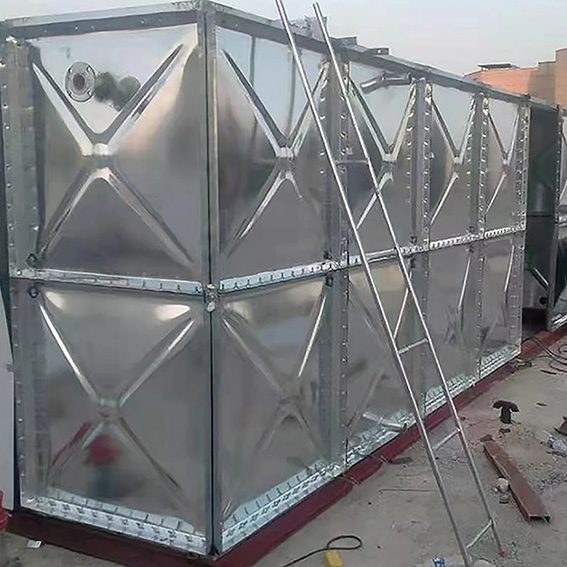
A BDF water tank is a bolted sectional tank made from a galvanized steel panel with a bonded protective coating on the water-contact face. The abbreviation BDF comes from the Chinese water-tank industry; in an international tender it should be described first as a duplex-coated galvanized steel panel tank or a double-coated galvanized steel bolted tank. The panel combines the mechanical robustness of hot-dip galvanized steel with a barrier coating that separates the zinc surface from the stored water. That makes BDF a middle option between plain HDG and glass-fused-to-steel (GFS): more protection than HDG, lower cost than GFS, and a modular panel system that can be shipped flat-packed and assembled without welding.
LONGCOM supplies BDF tanks for potable water, fire reserves, rural water supply, irrigation and selected industrial duties. The product is not a substitute for stainless steel in every application, and it is not a substitute for GFS in aggressive chemistry. Its performance depends on the specific coating system, the panel build-up, the water chemistry and the quality of site repair. This page explains what the panel is, where it fits, what the quotation should state, and what to check before you compare it with HDG, GFS or stainless.
What is a BDF panel?
A BDF panel starts with a steel sheet that is cut, punched and formed into a modular panel. The panel is hot-dip galvanized, then coated on the water side with a bonded protective layer. The coating is factory-applied under controlled conditions, and the finished panel has two protection systems: the zinc layer and the barrier coating. The galvanized surface protects the steel where the coating is intact and at the edges; the barrier coating limits direct water contact with the zinc and provides a smooth, cleanable surface.
The exact coating chemistry varies by manufacturer. It may be an epoxy, a polyurethane, a modified epoxy or another project-approved system. The important point is not the generic family name; it is the datasheet: the coating material, dry-film thickness, adhesion test, curing method, potable-contact approval, repair procedure and the water-chemistry limits. A quotation that says only “BDF panel” does not tell the buyer what is actually in contact with the water.
The panel is not a laminated plastic panel and it is not a GFS panel. It is a coated steel panel. The steel carries the structural load, the zinc provides sacrificial protection, and the coating provides the barrier. If the coating is damaged, the zinc can still protect the steel for a limited period, but the damaged area must be repaired before corrosion progresses. That is why the repair kit and the site handling procedure are part of the product specification.
Where BDF tanks fit best
| Application | Why BDF fits | What to confirm before quoting |
|---|---|---|
| Potable water — conditional | A barrier coating over galvanized steel can provide a cleanable wetted surface at a lower cost than stainless or GFS. | Potable-contact approval for the specific coating, coating thickness, adhesion test, repair procedure and local authority requirement. |
| Fire water reserve | Robust panel system at a moderate cost; flat-packed export; no site welding. | Fire code, usable volume, refill rate, outlet arrangement and whether the authority requires a specific wetted surface. |
| Rural and community water | Cost-sensitive projects with moderate water chemistry and a need for a cleanable interior. | Water analysis, coating approval, cleaning procedure, spare panels and local maintenance capability. |
| Irrigation storage | Large volumes and remote sites; the barrier coating helps where plain HDG would be marginal. | Silt/abrasion, seasonal fill/draw, inlet/outlet arrangement and whether a liner is needed. |
| Industrial water | Selected duties where the coating is compatible and the project wants a lower cost than GFS. | pH, chloride, sulphate, temperature, solvents, cleaning chemicals and the coating supplier’s compatibility statement. |
| Aggressive chemistry | Not a default choice; review against GFS or stainless. | Full analysis and a written coating compatibility confirmation. If the supplier cannot provide it, do not use BDF for that duty. |
BDF is often specified when the buyer wants more than a bare galvanized surface but cannot justify the cost of GFS or stainless. It is a good fit for potable water only when the coating has the required approval for the destination market. It is a poor fit for strongly acidic or chloride-rich water, for high-temperature duty, or for projects that cannot maintain the coating. In those cases, the lower panel price is misleading, because the repair and replacement cost will be higher over the service life.
Panel and coating specification
The quotation should describe the panel as a build-up. The table below lists the items that should be fixed in writing; the values are typical ranges for discussion, and the approved drawing and coating datasheet set the final figures.
| Item | Typical range or option | Why it matters |
|---|---|---|
| Panel module | 1,000 × 1,000 mm, 1,000 × 500 mm or project-specific modules | Sets the bolt pattern, packing volume and the number of joints. Non-standard modules can increase tooling and lead time. |
| Steel thickness | 2.0–4.0 mm, selected by tank height and load case | The steel carries the water load. The coating does not add structural strength, so the panel calculation cannot be based on the coating. |
| Steel grade | Structural mild steel to a stated standard, with mill certificate | Grade, heat number and thickness must be traceable. Substitution without approval can fail a tender review. |
| Galvanizing | Hot-dip galvanized after fabrication, with a stated coating mass | The zinc layer protects the steel at edges and at any coating damage. Coating mass must be stated as a mass per area and inspected. |
| Barrier coating | Factory-applied coating on the water side, with a named chemistry and datasheet | The coating is the primary water-contact barrier. The buyer must know what it is, how thick it is and what it is approved for. |
| Coating thickness | Project-specific, measured on the finished panel | Thickness affects barrier performance and repair. A minimum thickness without a measurement method is not a specification. |
| Colour | Standard factory colour, with other colours by quantity | Colour is part of the coating system. A site-painted colour is not equivalent and can hide defects. |
| Joint sealing | EPDM or project-approved seal strip, with gaskets at fittings | The seal must match the water, temperature and cleaning chemicals. It is a wear item. |
| Fasteners | Galvanized or stainless bolts, washers and nuts, project-approved | Fastener corrosion can stain the coating and loosen joints. Specify the grade and tightening procedure. |
| Tie rods / stays | Internal or external system, sized to the load case | Tie rods carry wall pressure. Their spacing and connection detail must be on the drawing. |
| Repair kit | Approved coating repair compound, application instructions and colour match | A field repair must restore the barrier. A generic paint patch may not be compatible with the coating or the water. |
Ask for the coating datasheet, the adhesion test record, the potable-contact approval where applicable, and the repair procedure before you compare prices. Two BDF quotations can use the same panel size and the same steel thickness but different coating systems and different quality controls. Those differences do not show on the cover sheet, but they determine how the tank performs after five or ten years.
BDF compared with HDG, GFS and stainless
| System | Best fit | Advantages | Limitations |
|---|---|---|---|
| BDF duplex-coated | Potable, fire, rural water and selected industrial duties where the coating is approved | Cost between HDG and GFS; robust galvanized substrate; barrier coating on the water side; flat packing; no site welding. | Depends on the specific coating system and its approvals; field cuts need patching; lower chemical resistance than a qualified GFS system. |
| HDG bolted | Fire, irrigation, stormwater, cooling make-up, general industrial water | Lowest panel cost; robust zinc coating; flat packing; easy panel replacement. | Zinc surface is not universally accepted for potable water; limited resistance to strong acids, high chloride and some cleaning chemicals. |
| GFS bolted | Municipal potable, wastewater, effluent, biogas-adjacent, large industrial volumes | Factory-fired glass coating; good chemical resistance; long coating life; modular assembly. | Higher cost than BDF; coating can chip; repair needs the approved kit; not universal for every chemical. |
| Bolted stainless | Potable, food, pharmaceutical-adjacent, coastal or chloride-sensitive duties | No coating to repair; cleanable surface; good mechanical toughness; familiar to inspectors. | Higher panel cost; chloride stress corrosion is possible in hot, concentrated conditions; welding and passivation must be controlled. |
| Welded stainless | Seamless vessels, hygienic duty, tight sites, projects that prohibit bolted joints | No gasket joints in the shell; smooth interior; suitable for CIP and high hygiene. | Higher site skill and hot-work requirements; harder to transport; repair and modification are less modular. |
The comparison should be made on installed cost over the service life, not on panel price. BDF can be competitive where the water is moderate, the coating is approved, and the owner can maintain it. It can be less competitive where the water is aggressive, where the coating approval is unavailable, or where the site cannot repair field damage. In those cases, GFS or stainless is often the better whole-life choice, even at a higher panel price.
Potable water, coatings and approvals
For potable water, the coating is the critical component. Ask for the specific potable-contact approval or test report that names the coating system, the factory and the product family. The certificate should cover the actual wetted surface and the intended use. A certificate for a different coating, a different thickness or a different factory is not a substitute. If the local authority requires a particular approval, a sampling point or a lining, those requirements belong in the quotation.
Do not rely on a generic “food grade” or “non-toxic” statement. These words are not a substitute for a test report or an approval. The buyer should also ask how the coating is inspected after application: dry-film thickness, adhesion, holiday test, visual inspection and cure. A coating that is applied too thin, applied over a contaminated surface or cured incorrectly can fail even if the datasheet looks good. The quality record should show what was measured, not only that the panel was coated.
Structural design, base and installation loads
BDF panels are structural panels. The wall thickness, tie-rod spacing, corner details and base support must be designed for the hydrostatic load, wind, snow and seismic action. The base must be flat, level and able to carry the full water load plus the tank, coating, accessories and any insulation. On a roof, the load transfers through a curb or frame; on a tower, the tower and tank are a single structural system.
The installation method must protect the coating. Panels should be lifted with the approved lifting points or slings, not dragged across the base. The base should be free of sharp objects, weld spatter and standing water. Panel edges should be protected during transport and storage. A scratch that exposes the zinc or steel must be repaired with the approved coating repair system; a generic paint patch is not acceptable for potable water or for a coating warranty.
Wind and seismic design are project-specific. A tall tank in an open site has a different load case from a short tank inside a building. The quotation should state the design wind speed, seismic parameters and snow load, or list them as missing inputs. For elevated or buried installations, the structural interface must be reviewed by a qualified engineer, and the coating must be suitable for the external exposure.
Packing, field cuts and repair
BDF panels are packed with edge protection and moisture protection in steel-framed crates or on pallets. Panels are numbered to the erection sequence, and fasteners and seals are packed by tank and zone. The container plan accounts for panel weight, stacking limits and unloading order. At site, store the panels on a clean, level surface, keep them dry and lift them with the approved method.
Field cuts are the weak point of any coated panel. If a panel must be cut or drilled on site, the exposed edge and the cut area must be re-protected with the approved repair system. The procedure should state the cleaning, priming, coating and cure steps. For potable water, the repair material must be approved for contact with drinking water. Where possible, order the panel to the correct size at the factory rather than cut it on site. A factory-cut panel with a properly coated edge is more reliable than a field cut with a patch.
Minor scratches can be repaired with the approved compound after cleaning and preparing the area. A large scratch, a blister, a crack or a damaged panel should be assessed by the supplier; a patch that covers a defect without restoring adhesion may fail later. Keep a repair kit and a small stock of spare panels and seals for remote sites. Record every repair, including the location, date, material and cure, so that the maintenance history is traceable.
Site installation sequence
| Stage | What happens | Hold point |
|---|---|---|
| 1. Base acceptance | Check level, dimensions, anchor positions, bearing capacity and freedom from sharp objects. | Signed base acceptance before panels are unpacked. |
| 2. Panel inspection | Unpack, inspect coating, edges and bolt holes, and record any transit damage before assembly. | Damage report and repair/replacement decision. |
| 3. First ring | Place base panels with the approved lifting method, fit seal strips and tighten in the specified sequence. | Check diagonal dimensions and joint alignment. |
| 4. Wall rings | Add panels ring by ring, protecting the coating and keeping the tank square/round. | Check verticality and tie-rod positions at each ring. |
| 5. Tie rods / stays | Install and tension the system to the drawing. | Record torque or tension values. |
| 6. Connections | Fit inlet, outlet, drain, overflow, vent, level and ladder with correct gaskets. | Check orientation, height and access. |
| 7. Water-fill test | Fill in stages, inspect joints and connections, and check for leakage and deformation. | Test record with date, level and result. |
| 8. Handover | Clean, label valves, provide O&M, repair kit, spare parts and test records. | Signed handover and maintenance schedule. |
The installation crew should have the approved drawing, the panel schedule, the torque procedure, the coating repair procedure and the seal-strip instructions. A common error is to drag a panel across the base, which scratches the coating on the underside. Another is to tighten one side of the tank before the opposite side, which pulls the panel grid out of alignment. A third is to leave a repair until after the water-fill test, when the leak path is already wet. Repair any scratch before the tank is filled, and record the repair location.
Inspection and maintenance
Inspect the tank at handover and at least annually. Look at the coating for scratches, blisters, cracks, rust staining and discolouration; at the joints for seal compression, cracking or displacement; at the bolts for corrosion or loosening; and at the base for settlement or cracking. For potable water, follow the project’s sampling and cleaning schedule. For fire water, check the tank and the outlet arrangement before the annual test, not after.
Keep a repair log. A scratch that is repaired early is a minor maintenance item; a scratch that is left until the steel rusts becomes a panel replacement. The repair log should record the date, location, size, surface preparation, material and cure. If the same area requires repeated repairs, the cause may be a handling problem, a structural movement or a coating defect, and the panel should be reviewed rather than patched again.
Seal strips are a wear item. Replace them when they are cracked, permanently deformed, chemically swollen or leaking. Keep a spare set, especially for remote sites. When a panel is replaced, inspect the adjacent panels and joints; a repair that restores one panel but leaves a distorted joint can create a new leak path.
What to include in a BDF tank RFQ
- Capacity or dimensions, and whether the volume is nominal, effective or fire usable volume.
- Application and water source: potable, fire, rural water, irrigation or industrial process.
- Water analysis: pH, chloride, sulphate, alkalinity, hardness, dissolved oxygen, temperature, suspended solids and cleaning chemicals.
- Site location, indoor/outdoor, coastal or industrial exposure, wind/snow/seismic parameters and base type.
- Connection sizes and positions, inlet/outlet/drain/overflow/vent, level control and ladder access.
- Destination port, Incoterm, container constraints, site access and lifting equipment.
- Potable-contact approval, fire code, inspection requirement, documentation pack and any third-party witness point.
- Required coating colour, repair kit and spare panel allowance.
Quality and documentation
The inspection plan should be agreed before production. For a standard BDF tank, the usual records are: steel mill certificate; panel dimensional inspection; galvanizing coating mass record; barrier coating thickness and adhesion record; visual inspection of the coated surface; bolt and seal material certificates; trial assembly where specified; water-fill test record; packing inspection and loading photos; and the installation manual with torque values, repair procedure and maintenance schedule. Third-party inspection is added when the purchase order requires it.
Certification is different from inspection. A test record proves what was checked on this order. A certificate proves that a product, factory or process has been assessed by a recognised body. Do not accept a certificate number that does not name the product and the factory, and do not accept a “potable” claim without the document that supports it for the destination market. Where a required certificate is not held for the proposed tank, the quotation should say so before award.
Frequently asked questions
What does BDF stand for in water tanks?
BDF is a Chinese water-tank industry abbreviation for a type of duplex-coated bolted panel: a hot-dip galvanized steel panel with a bonded protective layer on the water-contact face. In international documents, describe it as a duplex-coated galvanized steel panel tank or a double-coated galvanized steel bolted tank. The abbreviation alone is not enough for a tender, because the coating system and the approval are product-specific.
How does BDF compare with GFS panels?
GFS has a factory-fired glass coating, which generally offers higher chemical resistance and a longer coating life at a higher price. BDF has a bonded coating over galvanized steel, which is economical and robust but depends on the specific coating system and its approvals. The right choice depends on the water chemistry, the required design life, the approval regime and the budget. For aggressive chemistry, GFS or stainless is usually the better choice; for moderate water and cost-sensitive projects, BDF can be appropriate.
Is BDF suitable for potable water?
Potable suitability depends on the coating system’s approval for the destination market. Ask for the potable-contact certificate or test report that names the coating, the factory and the product family. If the certificate does not cover the proposed tank, the quotation should state that before award. A generic “food grade” statement is not sufficient for a tender or a water authority review.
What is the design life of a BDF tank?
The design life depends on the coating system, water chemistry, temperature, handling and maintenance. It is not a fixed number. The project-specific figure should be stated in the quotation for the actual water analysis and operating conditions. Compare that figure with the required design life, and include the inspection and repair plan in the comparison. A BDF tank that is never inspected is not a long-life tank, whatever the datasheet says.
Can BDF panels be field-cut or modified?
Field cuts are possible but they expose the steel and the zinc at the cut edge. The cut area must be re-protected with the approved repair system, including surface preparation, priming, coating and cure. For potable water, the repair material must be approved for contact with drinking water. Where possible, order the panel to the correct size at the factory rather than cut it on site.
Do you supply BDF tanks with ladders and fittings?
Yes. Internal and external ladders, manways, level indicators, floats, inlet/outlet/drain/overflow connections and other accessories are supplied to the approved drawing. The quotation should list the accessories, their materials and the fasteners. A ladder that is supplied loose without fixing details is not a complete scope; the drawing should show how it attaches to the tank and how it is accessed safely.
Is BDF the same as an epoxy-coated tank?
They overlap: both add a barrier coating over galvanized steel. The difference is the specific coating chemistry, thickness, adhesion, curing and approval. Do not compare the labels; compare the datasheet, the test records and the potable-contact approval. A BDF panel from one supplier may use a different coating system from another, and the performance can differ even when the abbreviation is the same.
What water chemistry is unsuitable for BDF?
Strongly acidic water, high chloride, high temperature, solvents and some cleaning chemicals can attack the coating or the zinc. The exact limits depend on the coating system and the exposure conditions. Give the supplier the full analysis and cleaning regime, and require a written compatibility confirmation for the proposed coating. If the chemistry is outside the supplier’s range, do not select BDF on the basis of a generic “coated steel” claim.
How are BDF panels packed for export?
Panels are packed with edge protection and moisture protection in steel-framed crates or on pallets. Panels are numbered to the erection sequence, and fasteners and seals are packed by tank and zone. The container plan accounts for panel weight, stacking limits and unloading order. At site, store the panels on a clean, level surface, keep them dry and lift them with the approved method. Inspect for transit damage before assembly.
What documents are supplied?
The standard pack includes the approved general arrangement drawing, panel schedule and erection sequence, steel and galvanizing records, coating thickness and adhesion records, bolt and seal certificates, water-fill test record, packing list, installation manual, repair procedure and warranty document. Third-party inspection records are added when the purchase order requires them. Certificates are supplied only where a valid certificate covers the proposed product and factory.
Can BDF tanks be used for fire water?
Yes, subject to the fire code and the authority’s requirement. Confirm the usable volume, refill rate, outlet arrangement, suction conditions and inspection access. The tank must be able to deliver the design flow, not merely hold the nominal volume. If the authority requires a specific wetted surface or a lining, BDF may not be acceptable without modification.
How does BDF compare with stainless steel?
Stainless is simpler to inspect and repair, has no coating to chip, and is well understood for hygienic duty. BDF is usually lower cost at moderate water chemistry and can provide a cleanable barrier surface. The right choice depends on the water, the approval regime, the budget and the maintenance capability. For small, highly hygienic potable duties, stainless often wins; for cost-sensitive, moderate-duty projects, BDF can be appropriate.
Capacities, panel sizes, material grades, coating system, test scope, packing and lead times are confirmed in writing for each project before quoting. This page describes the BDF system; it does not certify a particular tank or approve it for a particular water. The approved drawing and the project specification govern.
Buyer terminology: what this product is called in different markets
The same product is searched under different English names in different regions. The table below records the names buyers actually use, so a specification or RFQ is not lost to a literal translation.
Primary English name: BDF composite panel water tank
Also searched as: BDF tank · double-coated galvanized steel panel tank · composite steel panel water tank · coated steel sectional tank · BDF panel tank.
| Market | Common English search name |
|---|---|
| United States & Canada | coated steel panel water tank; composite panel tank |
| United Kingdom & Ireland | coated steel sectional water tank; panel tank |
| Middle East & GCC | BDF water tank; BDF panel tank |
| Southeast Asia | BDF composite panel tank; coated steel panel tank |
| India & South Asia | BDF panel water tank; composite steel panel tank |
| Africa | coated steel water tank; modular panel tank |
| Australia & New Zealand | coated steel modular tank; panel tank |
Attribute and application terms: double-sided coating, food-contact coating option, corrosion-resistant, modular, flat-packed, economical. Typical duties include potable water, fire reserve, irrigation, rural water supply, industrial storage, rainwater harvesting.
Long-tail search phrases
- BDF composite panel water tank for potable water storage.
- double coated galvanized steel panel tank for fire reserve.
- BDF modular water tank for rural water supply.
- coated steel sectional tank for industrial water storage.
- BDF panel tank for rainwater harvesting projects.
“BDF” is not universally recognised outside China and parts of Asia. Lead with “double-coated galvanized steel composite panel tank”, then use “BDF” as the short name.
Related products and systems
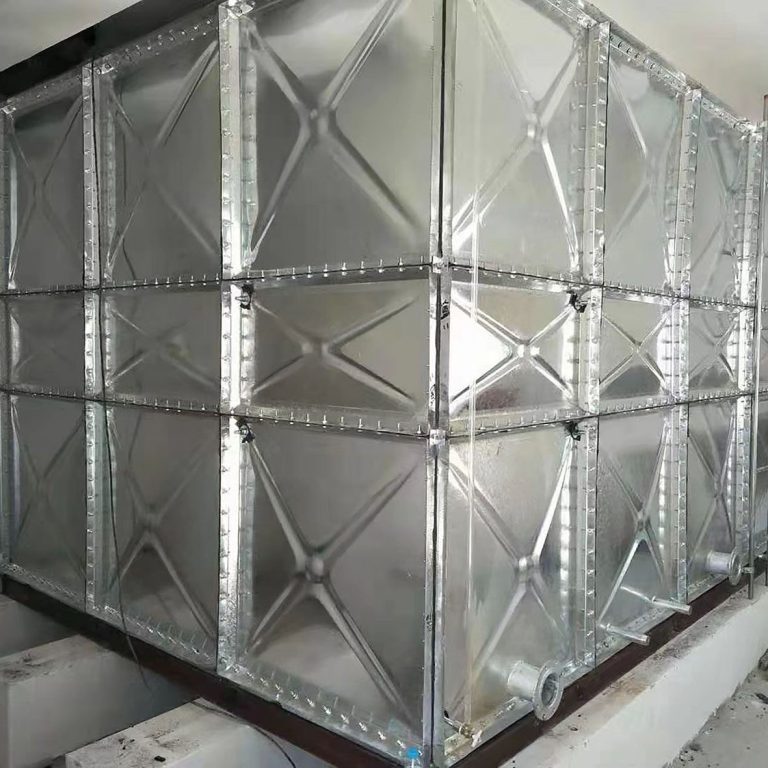
Bolted Stainless Steel Sectional Water Tank (SS304 / SS316)
Bolted stainless steel sectional water tank (SS304/316), also called modular or panel tank: flat-packed panels for potable, fire and process storage.
SS304 / SS316 stainless steel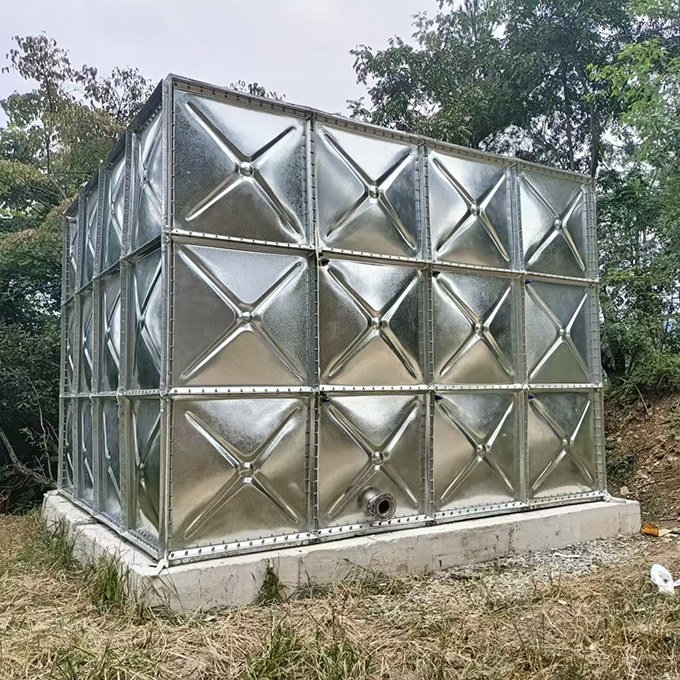
Hot-Dip Galvanized (HDG) Steel Bolted Sectional Water Tank
Hot-dip galvanized steel bolted sectional water tank (HDG / galvanised panel tank) for fire, irrigation and industrial water: flat-packed for export.
Hot-dip galvanized mild steel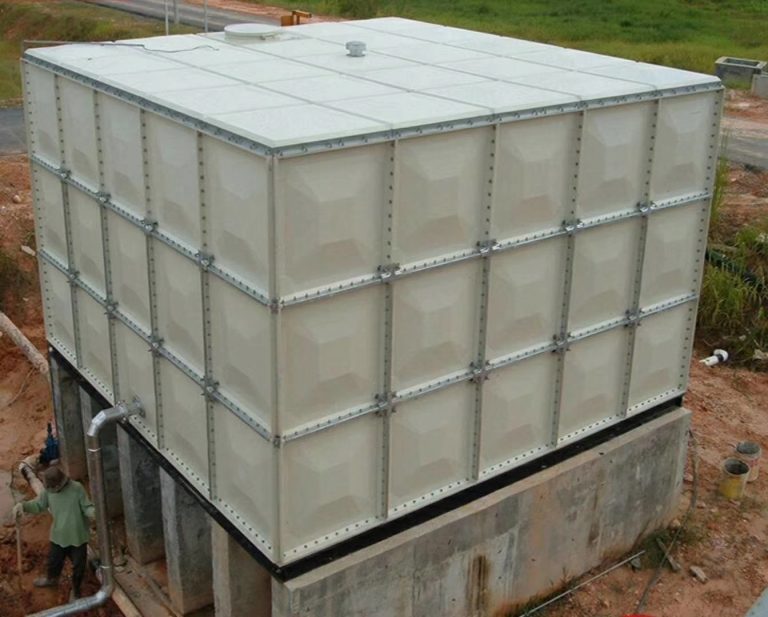
Glass-Fused-to-Steel (GFS) Sectional Water Tank
Glass-fused-to-steel (GFS) sectional water tank: factory-fused glass coating on bolted panels for municipal, wastewater, biogas and industrial storage.
Steel sheet with factory-fired glass (glass-fused-to-steel)Duplex-Coated Galvanized Steel Panel Water Tank (BDF)
Duplex-coated galvanized steel panel water tank (BDF) for potable, fire and rural water: modular, flat-packed and available with a project-approved coating.
Hot-dip galvanized steel with bonded protective coating (duplex)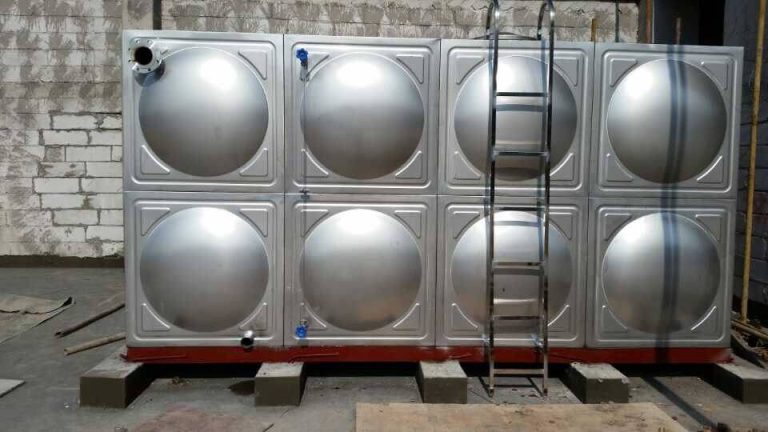
Welded Stainless Steel Water Tank (304 / 316)
Welded stainless steel water tank (SS304/316L) for potable, food, pharmaceutical and process duty, with factory or site welding and export documentation.
SS304 / SS316 / SS316L stainless steel, welded construction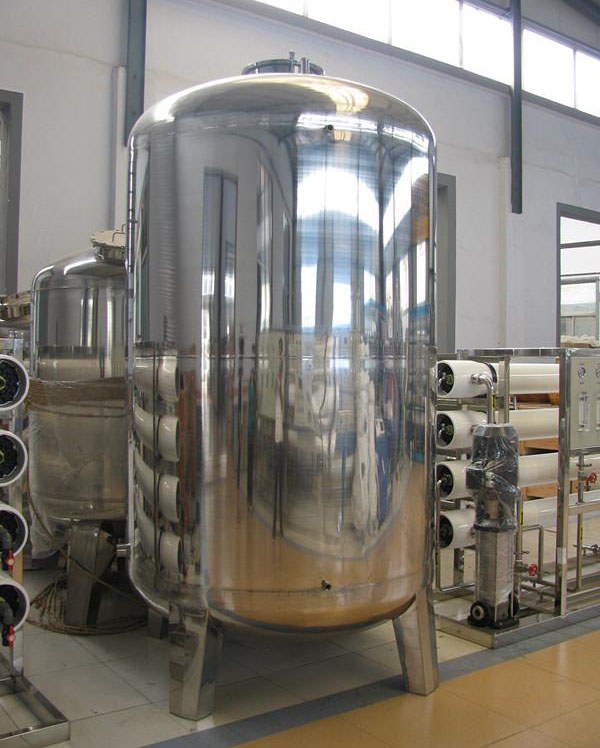
Aseptic Stainless Water Tank (SS304 / SS316L)
Aseptic stainless steel water tank (sterile/pharmaceutical purified water tank) in SS316L with 0.22 micron vent, CIP/SIP and nitrogen option.
SS304 / SS316L hygienic stainless steel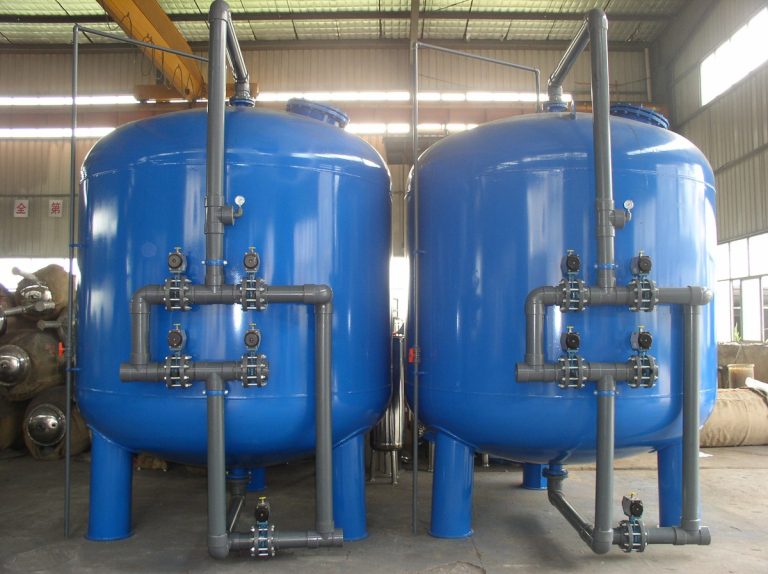
Mechanical Media Water Filter (Sand, Anthracite, Manganese, Carbon)
Mechanical media water filter, also called pressure sand filter or multimedia filter: steel, stainless or FRP vessels for turbidity and RO/UF pretreatment.
Epoxy-coated carbon steel; SS304/316; FRP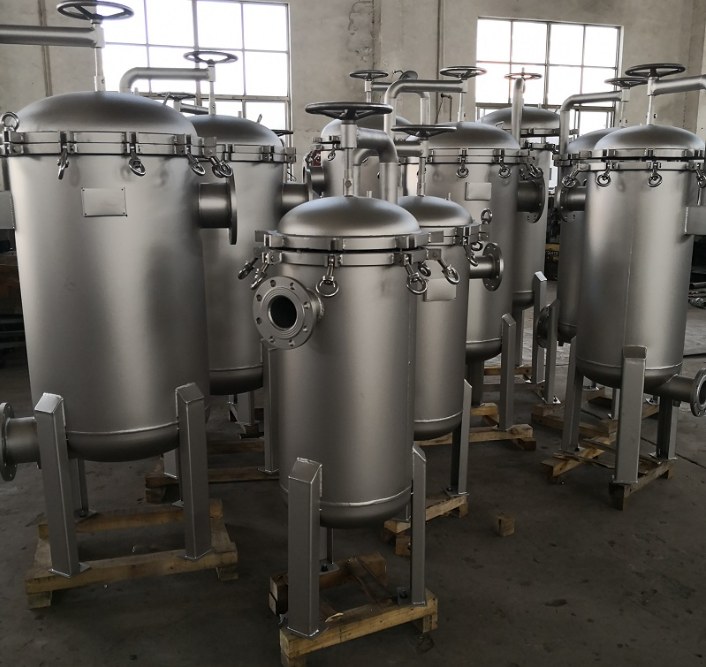
Bag Filter for Water Treatment (1-100 micron)
Liquid bag filter housing for water treatment: single and multi-bag units in carbon steel, SS304/316L or PP for RO guard and process…
Carbon steel, SS304/316L, PP; NBR/EPDM/FKM/silicone sealsFrequently asked questions
What does BDF stand for in water tanks?
BDF is a Chinese water-tank industry abbreviation for a type of duplex-coated bolted panel: a hot-dip galvanized steel panel with a bonded protective layer on the water-contact face. In international documents, describe it as a duplex-coated galvanized steel panel tank or a double-coated galvanized steel bolted tank. The abbreviation alone is not enough for a tender.
How does BDF compare with GFS panels?
GFS has a factory-fired glass coating, which generally offers higher chemical resistance and a longer coating life at a higher price. BDF has a bonded coating over galvanized steel, which is economical and robust but depends on the specific coating system and its approvals. The right choice depends on water chemistry, required design life, approval regime and budget.
Is BDF suitable for potable water?
Potable suitability depends on the coating system's approval for the destination market. Ask for the potable-contact certificate or test report that names the coating, factory and product family. If it does not cover the proposed tank, the quotation should state that before award. A generic food-grade statement is not sufficient for a tender or a water-authority review.
What is the design life of a BDF tank?
Design life depends on the coating system, water chemistry, temperature, handling and maintenance; it is not a fixed number. The project-specific figure should be stated for the actual water analysis and operating conditions. Compare that figure with the required design life, and include the inspection and repair plan in the comparison.
Can BDF panels be field-cut or modified?
Field cuts are possible but expose the steel and zinc at the cut edge. The cut area must be re-protected with the approved repair system, including surface preparation, priming, coating and cure. For potable water, the repair material must be approved for drinking-water contact. Where possible, order the panel to the correct size at the factory rather than cut it on site.
Do you supply BDF tanks with ladders and fittings?
Yes. Internal and external ladders, manways, level indicators, floats, inlet/outlet/drain/overflow connections and other accessories are supplied to the approved drawing. The quotation should list the accessories, their materials and the fasteners. A ladder supplied loose without fixing details is not a complete scope; the drawing should show how it attaches and how it is accessed safely.
Is BDF the same as an epoxy-coated tank?
They overlap: both add a barrier coating over galvanized steel. The difference is the specific coating chemistry, thickness, adhesion, curing and approval. Do not compare labels; compare the datasheet, test records and potable-contact approval. A BDF panel from one supplier may use a different coating system from another, and performance can differ even when the abbreviation is the same.
What water chemistry is unsuitable for BDF?
Strongly acidic water, high chloride, high temperature, solvents and some cleaning chemicals can attack the coating or the zinc. Exact limits depend on the coating system and exposure conditions. Give the supplier the full analysis and cleaning regime, and require a written compatibility confirmation for the proposed coating. If the chemistry is outside the supplier's range, do not select BDF on a generic coated-steel claim.
How are BDF panels packed for export?
Panels are packed with edge and moisture protection in steel-framed crates or on pallets. They are numbered to the erection sequence, and fasteners and seals are packed by tank and zone. The container plan accounts for panel weight, stacking limits and unloading order. At site, store panels on a clean, level surface, keep them dry and lift them with the approved method.
What documents are supplied?
The standard pack includes the approved general arrangement drawing, panel schedule and erection sequence, steel and galvanizing records, coating thickness and adhesion records, bolt and seal certificates, water-fill test record, packing list, installation manual, repair procedure and warranty document. Certificates are supplied only where a valid certificate covers the proposed product and factory.
Can BDF tanks be used for fire water?
Yes, subject to the fire code and the authority's requirement. Confirm usable volume, refill rate, outlet arrangement, suction conditions and inspection access. The tank must deliver the design flow, not merely hold the nominal volume. If the authority requires a specific wetted surface or lining, BDF may not be acceptable without modification.
How does BDF compare with stainless steel?
Stainless is simpler to inspect and repair, has no coating to chip, and is well understood for hygienic duty. BDF is usually lower cost at moderate water chemistry and can provide a cleanable barrier surface. The right choice depends on the water, approval regime, budget and maintenance capability. For small, highly hygienic potable duties, stainless often wins; for cost-sensitive, moderate-duty projects, BDF can be appropriate.